
Have you ever wondered why some people bounce back from a knee injury so much quicker than others?
Ligament sprains, like those affecting the medial collateral ligament (MCL), make up a staggering 40% of all knee injuries. This specific ligament runs along the inner side of your knee, connecting your thigh bone to your shin bone. It is highly vulnerable to sudden twists or impacts.
When this crucial stabilizer is stretched or torn, your body launches a complex healing process. Finding the most effective path forward is key. We explore the most efficient, evidence-based strategies for MCL sprain pain relief and treatment.
Our guide combines professional insights with proven at-home techniques. The goal is to help you recover safely and return to your daily activities with confidence.
Key Takeaways
- MCL sprains are one of the most common types of knee injuries.
- Immediate care focusing on reducing swelling is critical for a fast recovery.
- The grade of the sprain (1, 2, or 3) directly determines the healing timeline.
- A hinged knee brace often provides protection while allowing safe movement.
- Structured rehabilitation, including specific exercises, restores strength and stability.
- Severe MCL injuries are rare and seldom require surgery.
- Consulting a specialist ensures a recovery plan tailored to your specific injury.
Understanding MCL Sprains and Their Impact
Understanding the anatomy of the MCL clarifies why certain activities lead to sprains. This knowledge forms the foundation for effective prevention and care strategies.
Definition and Anatomy of the MCL
The medial collateral ligament (MCL) is a thick band of tissue. It runs along the inner side of the knee, connecting the thigh bone to the shin bone.
This collateral ligament acts as a critical stabilizer. Its primary job is to prevent the knee joint from buckling inward during movement.
Common Causes and Risk Factors
MCL injuries frequently happen during contact sports. A direct blow to the outer part of the leg is a common mechanism.
Sports like football, soccer, and rugby are primary environments for these knee injuries. Sudden pivots in skiing or basketball also pose a high risk.
The table below outlines typical causes:
| Cause Category | Common Activities | Injury Mechanism |
|---|---|---|
| Contact Sports | Football, Soccer, Rugby | Direct impact to the outer leg |
| Sudden Direction Change | Skiing, Basketball | Forceful twisting or pivoting |
| Accidental Trauma | Falls, Collisions | Knee forced inward violently |
Recognizing these risk factors helps us protect the knee during high-impact activities.
Recognizing Symptoms and Assessing Severity
Assessing the severity of your knee discomfort starts with identifying specific symptoms. Early recognition guides your next steps.
Identifying Pain, Swelling, and Instability
Common signs point to an MCL injury. You often feel sharp pain on the inner side of the knee.
Swelling may develop hours later. A feeling that the joint will buckle is a key sign of instability.
Physical therapist Kim Anderson, PT, DPT, classifies these injuries by grade. This system helps us understand the ligament damage.
A grade 1 injury means the MCL is overstretched. Grade 2 involves a partial tear. We identify a grade 3 injury as a complete rupture.
It’s crucial to distinguish MCL issues from other knee injuries, like ACL tears. Correct diagnosis ensures proper treatment.
| Grade | Ligament Damage | Key Symptoms | Typical Recovery |
|---|---|---|---|
| 1 (Mild) | Overstretching | Inner knee tenderness, minimal swelling | 1-2 weeks |
| 2 (Moderate) | Partial Tear | More pronounced pain, noticeable swelling, some instability | 3-6 weeks |
| 3 (Severe) | Complete Rupture | Significant instability, difficulty bearing weight, extensive swelling | 6+ weeks, possible bracing |
Knowing your grade determines if you need a brace or can start gentle exercises. This assessment is the first step toward an effective recovery plan.
What is the fastest way to heal MCL sprain?
Most medial collateral ligament issues resolve without invasive procedures when managed correctly. Our expert tips focus on proven, at-home strategies.
These methods prioritize protecting the ligament while safely restoring function.
Expert Recovery Tips and At-Home Treatments
Recovery for an MCL sprain typically takes about six weeks. This depends on the severity.
Grade 1 injuries often resolve in one to three weeks with consistent home treatment. We emphasize that surgery is rarely required.
The vast majority of MCL injuries respond well to non-surgical care. Targeted strengthening of the surrounding muscles is a cornerstone.
Overview of Non-Surgical Approaches
Our approach focuses on protecting the knee while allowing it to regain natural motion. Controlled, non-surgical rehabilitation methods are key.
By following a structured plan, you can manage pain. This helps avoid long-term complications of a higher grade tear.
We recommend consulting a professional. They can determine if your specific injury needs a hinged brace or if immediate at-home rehab is suitable.
The table below outlines common non-surgical interventions:
| Treatment Approach | Primary Goal | Typical Use Case |
|---|---|---|
| Rest & Protection | Minimize stress on the ligament | Initial 48-72 hours post-injury |
| Ice & Compression | Reduce swelling and manage pain | Applied multiple times daily for first week |
| Controlled Motion Exercises | Restore range of motion safely | Begins once acute pain subsides |
| Strengthening Regimen | Rebuild stability in the knee joint | Introduced after mobility returns |
This structured recovery path is effective for most MCL problems. It guides you from initial care back to full activity.
The Role of Physical Therapy in MCL Recovery
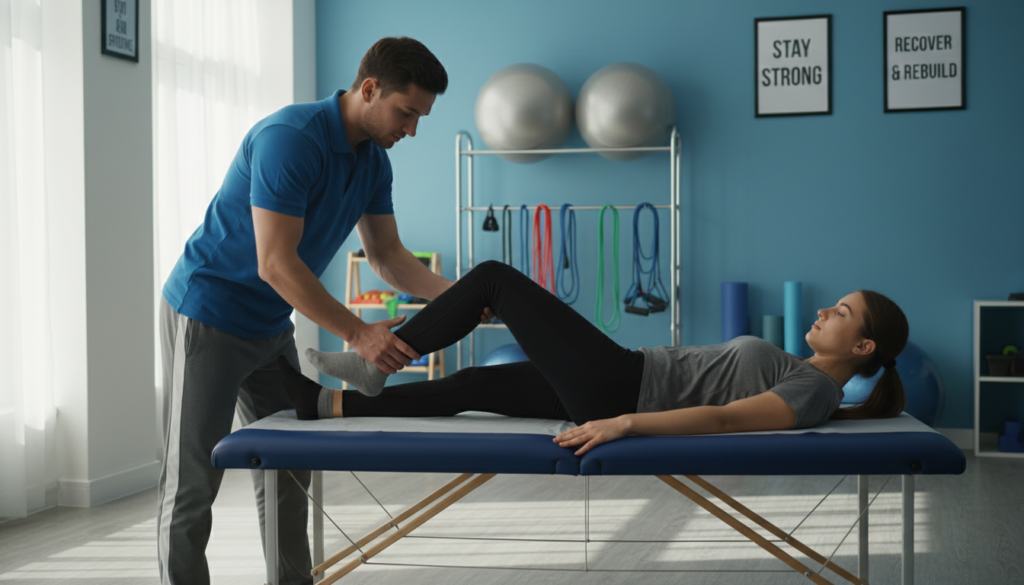
Structured movement under expert supervision is a cornerstone of effective rehabilitation. Physical therapy is widely recognized as a top treatment for joint and muscle pain following a ligament injury.
This professional guidance is essential for restoring strength and stability in the muscles around your knee. A weakened support system can delay healing and increase re-injury risk.
Benefits of Targeted Exercise Programs
We believe that movement is medicine. A skilled therapist helps you regain confidence in your knee joint while the ligament heals. Custom programs address your injury’s specific needs.
These regimens prevent muscle loss during recovery. You safely increase workout intensity without risking further damage. The goal is to provide tools for improved knee stability, a critical part of long-term care for all MCL injuries.
Engaging in physical therapy ensures your recovery is efficient and secure. It transforms a vulnerable knee into a strong, resilient joint ready for activity.
Effective Exercises to Restore Knee Range of Motion
A key phase in knee rehabilitation involves carefully restoring your joint’s natural flexibility. Understanding your expected MCL sprain recovery time can help set realistic goals for this process.
We focus on simple, controlled movements that protect the healing ligament. These foundational exercises are designed to rebuild confidence in your knee.
Quad Sets and Straight Leg Raises
Quad sets activate the quadriceps muscles connecting the femur to the tibia. This engagement is crucial for improving knee extension without moving the joint.
Straight leg raises build essential strength in your leg. They are effective exercises that avoid placing excessive stress on the injured MCL during early recovery.
Heel Slides and Hamstring Activation
Heel slides gently improve your range of motion. Use a towel to slide your foot toward your hips while sitting down.
Hamstring activation exercises are vital for restoring stability. These muscles support the knee joint and help you move your foot with greater control.
Consistency with these exercises is the key to regaining your full range of motion. It ensures your knee feels stable during daily activities after an injury.
Strengthening Surrounding Muscles for Better Knee Stability
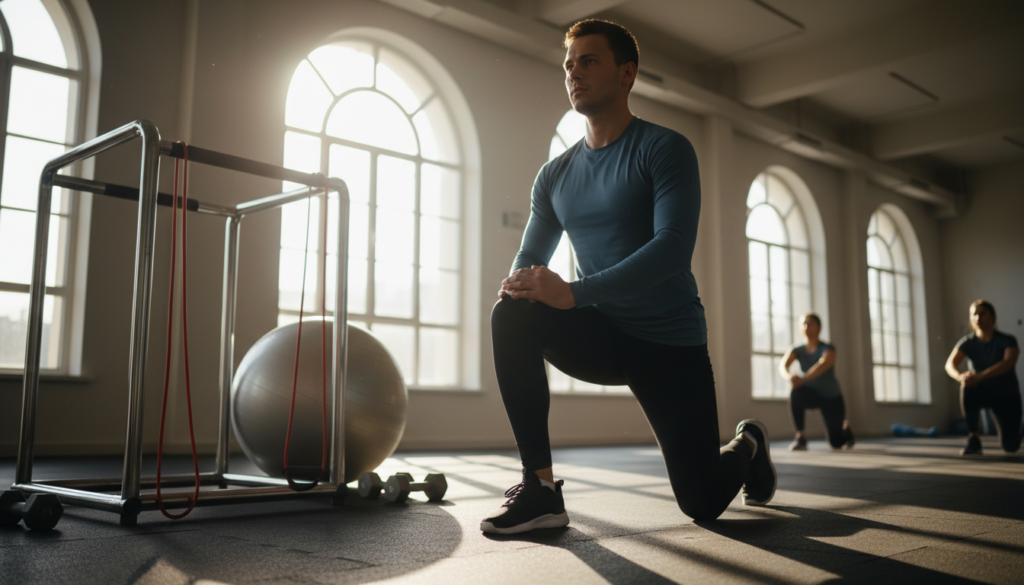
The true power behind a resilient knee lies not just in the ligament itself, but in the muscles that surround it. A robust muscular system acts as a dynamic shield for your joint.
We focus on building strength in key groups to enhance overall stability. This approach reduces strain on the healing MCL.
Focusing on Quadriceps, Hamstrings, and Glutes
Your quadriceps and hamstrings are primary shock absorbers. Strong muscles here decrease the force transferred to the inner side of your knee.
Glute strength is equally vital for MCL health. It prevents the knee from caving inward on the medial side during movement, a common mechanism for injury.
We design exercises that target these areas as part of a balanced lower body routine. Proper form is non-negotiable.
Move slowly to ensure your muscles perform the work, not the MCL. This method builds a protective environment around the knee joint.
Consistent training helps prevent future injury and supports long-term stability. These exercises are foundational for a full return to activity after an MCL issue.
Using Braces and Supports During the Healing Process
Using a brace is not about immobilization; it’s about enabling safe movement during recovery. The right support is a key part of your treatment plan for an MCL injury.
A hinged knee brace protects the MCL from the same sideways force that caused the initial damage. This is especially important when returning to sports or high-impact activities.
We advise against using a knee immobilizer. This rigid device can cause joint stiffness. It may actually prolong the time your body needs to heal.
A protective brace is most useful during dynamic movements. You should avoid wearing it during simple tasks like walking. This lets your muscles work and maintain natural stability.
The brace acts as an external support for the inner side of the knee. It allows safe motion while the ligament tissue repairs itself.
Always discuss options with your healthcare provider. They can recommend the best support for your specific injury.
| Support Type | Primary Function | Recommended Use Case |
|---|---|---|
| Hinged Knee Brace | Allows bending while blocking harmful sideways motion | Return to sports, rehabilitation exercises |
| Knee Immobilizer | Completely restricts knee joint movement | Rarely recommended for MCL; post-surgical cases only |
| Compression Sleeve | Provides mild support and reduces swelling | Daily activities after initial swelling subsides |
Choosing the correct support helps you move confidently. It protects the healing MCL without sacrificing your knee’s function.
Home Care: Rest, Ice, Compression, and Elevation
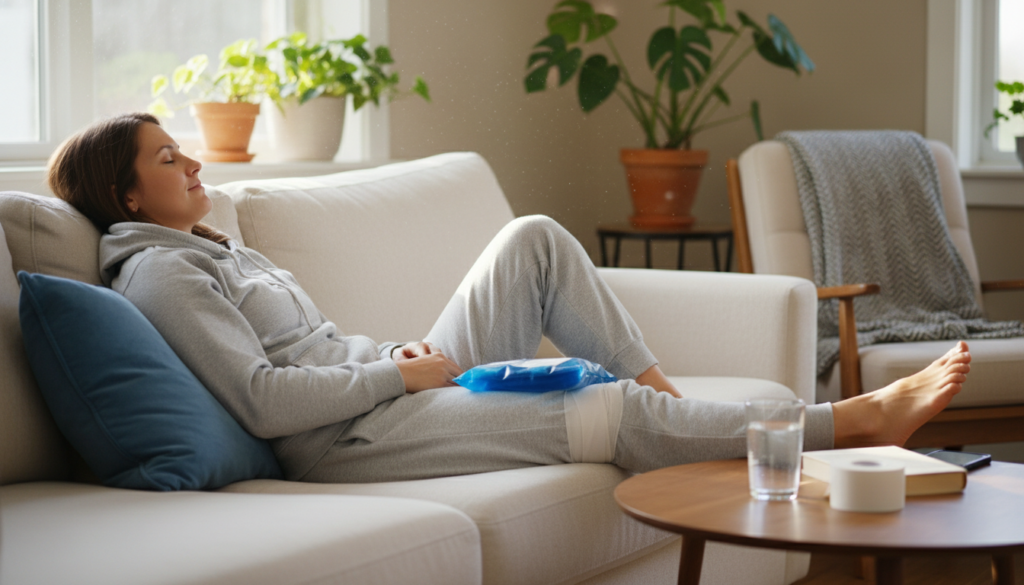
The initial hours following an MCL injury are critical for managing symptoms and setting the stage for healing. We advocate for the RICE protocol—Rest, Ice, Compression, and Elevation—as your first line of defense.
This method provides a structured framework to control initial inflammation and protect the damaged ligament tissue.
Managing Pain and Reducing Swelling
Immediate care focuses on minimizing pain and swelling. Apply an ice pack to the inner side of your knee for 10 to 15 minutes every two to three hours.
Combine this with a compression bandage and elevate your foot above heart level. This simple routine reduces fluid buildup and eases discomfort.
Managing these symptoms early prevents excessive stress on the healing MCL. If walking causes a limp or a feeling of instability, using crutches is a standard treatment to offload weight.
| RICE Component | Primary Action | Key Application Tip |
|---|---|---|
| Rest | Minimizes movement to protect the ligament | Avoid activities that cause pain in the knee |
| Ice | Constricts blood vessels to reduce swelling | Apply for 15-minute intervals, never directly on skin |
| Compression | Provides external support and limits inflammation | Use an elastic bandage, snug but not tight |
| Elevation | Uses gravity to drain fluid away from the injury | Prop your foot up on pillows while resting |
When to Seek Professional Help
This information guides your initial treatment, but know when to consult a doctor. Seek professional help if your knee pain does not subside after a few days of diligent home care.
A persistent feeling that the joint will “give out” is another red flag. These signs may indicate a more severe MCL issue requiring specialized evaluation.
Preventing Future MCL Injuries in Sports and Daily Life
Every step you take places significant force on your knee joints, making prevention a daily priority. Proactive habits shield the MCL from the stress of repetitive movements.
We build these habits into a consistent routine. This protects the inner side of your knee during all activities.
Proper Warm-Up, Stretching, and Movement Techniques
Start with a dynamic warm-up before any sports. This prepares the muscles connecting your femur to your tibia.
Maintaining leg strength is vital. Harvard Health Publications notes that walking puts 1.5 times your body weight on each knee.
Targeted physical therapy exercises build this foundational power. They are an integral part of a long-term plan.
Use proper movement techniques. Point your toes in the direction you want to go. This simple change reduces stress on the medial side.
Regular sports conditioning helps your body adapt. It prepares you for the demands of jumping and pivoting, common causes of ligament injuries.
Manage your weight and keep joints mobile. This reduces the load on your MCL. Gentle massage techniques can support mobility and tissue health.
| Preventive Strategy | Key Action | Biomechanical Benefit |
|---|---|---|
| Dynamic Warm-Up | Activate leg muscles before activity | Increases blood flow and range of motion |
| Strength Training | Build quadriceps and hamstring power | Absorbs force, protecting the knee ligament |
| Movement Technique | Align toes with direction of movement | Minimizes sideways stress on the joint |
| Sports Conditioning | Practice jumping and pivoting drills | Teaches the body safe movements for sports |
| Load Management | Maintain healthy weight and joint mobility | Reduces overall force on the knee, preventing injuries |
Integrating Digital Physical Therapy and Recovery Solutions
Digital platforms now bring professional guidance directly to your home, transforming the traditional therapy model. This integration provides a modern pathway for effective MCL recovery.
Access to continuous support is no longer limited by location. Online programs offer the same high-quality information as in-person sessions.
Leveraging Online Programs for Continuous Support
We see powerful results with digital physical therapy. Hinge Health members report an average 68% reduction in knee pain within 12 weeks.
These platforms deliver customized plans to your living room. Athletes and patients get the consistent support needed to heal an MCL injury at home.
Your personalized plan strengthens the knee ligament and surrounding muscles. Using an app to track progress keeps motivation high.
This modern approach to health management helps prevent future injuries. Digital therapy ensures your recovery stays on track, fitting any schedule.
It represents a significant advance in accessible physical therapy and overall joint health.
Conclusion
Empowering yourself with knowledge and consistent action is the foundation of effective knee recovery. Healing an MCL injury requires a blend of rest, targeted exercises, and professional guidance. This ensures the ligament regains its full strength.
We outlined how understanding your injury grade is crucial. For an MCL problem, a structured treatment plan is key to returning to sports.
Consistency with physical therapy and home care is vital. It remains the most efficient method to reduce pain and restore knee stability.
Focusing on muscle power and proper movement techniques protects your knee from future injuries. This maintains an active lifestyle.
This information aims to empower your journey. Take control of your MCL recovery and return to activities with confidence.