
Is that sharp pain on the inner side of your knee just a minor twist, or a sign of serious ligament damage?
Your knee’s stability relies heavily on a strong band of tissue called the medial collateral ligament, or MCL. This 8-10 centimeter ligament runs along the inner side of your knee joint.
When this crucial structure gets hurt, the severity can range from a mild sprain to a complete tear. Knowing the exact nature of your injury is the first, vital step toward proper treatment.
Our guide clarifies the symptoms, grade classifications, and recovery timelines for these common issues. We break down when surgery might be needed versus conservative care, helping you navigate the path to healing your damaged knee.
Key Takeaways
- The medial collateral ligament (MCL) is a key stabilizer on the inner knee.
- Injuries to this ligament are graded from mild (Grade I) to severe (Grade III).
- Accurate diagnosis is critical for determining the correct treatment plan.
- Recovery time varies greatly between a sprain and a complete tear.
- Not all MCL injuries require surgical intervention.
- Pain and instability on the inner knee are primary symptoms.
- Understanding your injury’s grade helps set realistic recovery expectations.
Understanding the Medial Collateral Ligament (MCL)
Imagine a strong, fibrous band tethering your thigh bone to your shin bone along the inner knee—that’s your MCL. This vital structure, the medial collateral ligament, is essential for joint integrity.
Anatomy and Function of the MCL
The medial collateral ligament is a thick, robust band of tissue. It spans from the femur to the tibia on the inner side of the knee. This connection forms a critical link in the joint’s architecture.
Importance of the MCL in Knee Stability
Without this collateral ligament, your knee would buckle inward under stress. It resists valgus forces, preventing a knock-kneed stance.
Daily activities like walking or running rely on this stability. The MCL is the primary ligament maintaining alignment during movement.
Any injury to this ligament compromises the knee’s fundamental support system.
Mechanisms of MCL Injury
A sudden blow to the outer knee while your foot is planted can instantly compromise the inner stability of the joint. This common event stretches or ruptures the medial collateral ligament.
How MCL Tears and Sprains Occur
Most damage happens when a valgus force pushes the knee inward. Imagine a hit to the side of your leg during a game.
The MCL resists this motion. If the force is too great, the ligament fibers stretch too far. This leads to a partial or complete tear.
In football, a player tackled from the side knee often suffers this injury. The foot stays fixed as the body twists.
Common Causes and Risk Factors
Athletes in high-impact sports like soccer or basketball face high risk. Quick stops and sharp turns apply extreme stress.
Poor landings during skiing or hiking are also culprits. An awkward twist or bend can overload the ligament.
Regular stress can weaken the MCL over time, reducing its elasticity. This makes it more prone to injuries from minor incidents.
For a deeper look at these mechanisms, review this resource on knee ligament injuries.
What is the difference between MCL tear and sprain?
The terms ‘sprain’ and ‘tear’ are often used interchangeably, but they describe different levels of ligament damage. Knowing this distinction guides your recovery path.
Defining a Tear versus a Sprain
A sprain means the ligament fibers are overstretched or partially damaged. It’s like a rope fraying but not snapping.
An MCL tear refers to a more significant rupture of those fibers. This is a more serious injury to the inner knee.
Grading the Severity of MCL Injuries
Doctors use a three-tier system to classify the severity of these injuries. This grade directly impacts your treatment.
Grade 1 is mild. Fewer than 10% of fibers are torn, causing minor pain but good stability.
Grade 2 is a moderate, partial tear. Your knee may feel loose when tested.
Grade 3 is severe. The ligament is completely torn, leading to major instability on the inner side.
Identifying your injury’s grade is crucial. It tells us if you need simple rest or intensive care.
Symptoms and Diagnosis of MCL Injuries
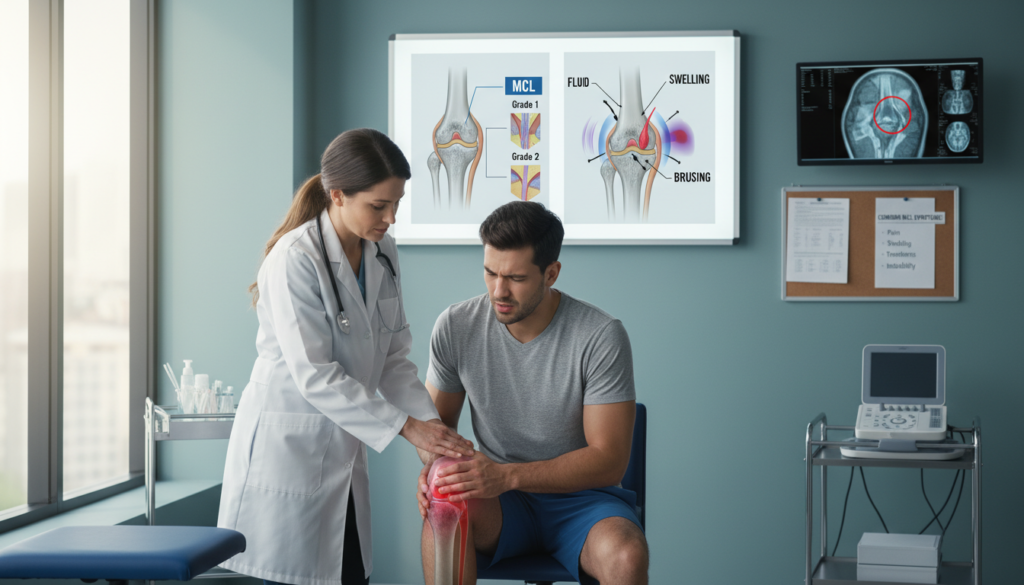
A distinct “pop” sound at the moment of impact is a classic warning sign of ligament trauma. Recognizing the specific symptoms is the first step toward an accurate diagnosis.
Common MCL symptoms include sharp pain on the inner side of the knee, noticeable swelling, and a feeling of instability. Patients often report a sensation that the joint might buckle or give way.
Recognizing Pain, Swelling, and Instability
Pain localized to the inner side of the knee is the most frequent complaint. This discomfort often worsens when trying to bend or put weight on the leg.
If you hear that pop during an injury, consult a doctor promptly. It can signal a significant ligament tear. Swelling within the joint itself may also point to damage in other structures, like the meniscus.
Diagnostic Tests and Imaging Options
Diagnosis typically starts with a physical exam. Your physician will perform a valgus stress test, applying pressure to assess your knee’s stability.
This hands-on evaluation helps gauge the severity of the MCL damage. To get a definitive view, imaging tests are often used.
An MRI or ultrasound provides detailed pictures of the soft tissue. These scans confirm whether you have a partial or complete mcl tear.
| Diagnostic Method | Primary Purpose | What It Reveals |
|---|---|---|
| Valgus Stress Test | Physical Stability Check | Joint laxity and probable MCL injury grade |
| Magnetic Resonance Imaging (MRI) | Detailed Soft Tissue View | Extent of fiber damage (partial vs. complete tear) |
| Ultrasound | Dynamic Ligament Assessment | Real-time imaging of the ligament under stress |
Using this combination of physical exams and advanced imaging, doctors can accurately pinpoint these injuries and plan the best treatment.
Conservative Treatment Options for MCL Injuries
Effective management of a damaged medial collateral ligament begins with proven, non-surgical methods. Many patients recover fully without an operation. This approach focuses on reducing symptoms and protecting the joint so it can heal itself.
RICE Method, Bracing, and Crutches
The RICE protocol is a cornerstone of initial care. Rest, Ice, Compression, and Elevation work together to manage pain and swelling after an injury.
Applying a knee brace provides necessary support. It limits harmful side-to-side motion. Using crutches helps you avoid putting full weight on the injured side knee.
Managing Pain and Inflammation
Over-the-counter NSAIDs like ibuprofen can ease discomfort. They also help control inflammation. Always follow the dosage instructions on the label.
This conservative treatment is often enough for an MCL tear. The ligament can mend naturally over several weeks. Keeping the knee stable with a brace is essential early on.
With proper care, most of these injuries heal well. The goal is to restore stability and function without surgery.
Physical Therapy and Rehabilitation Approaches
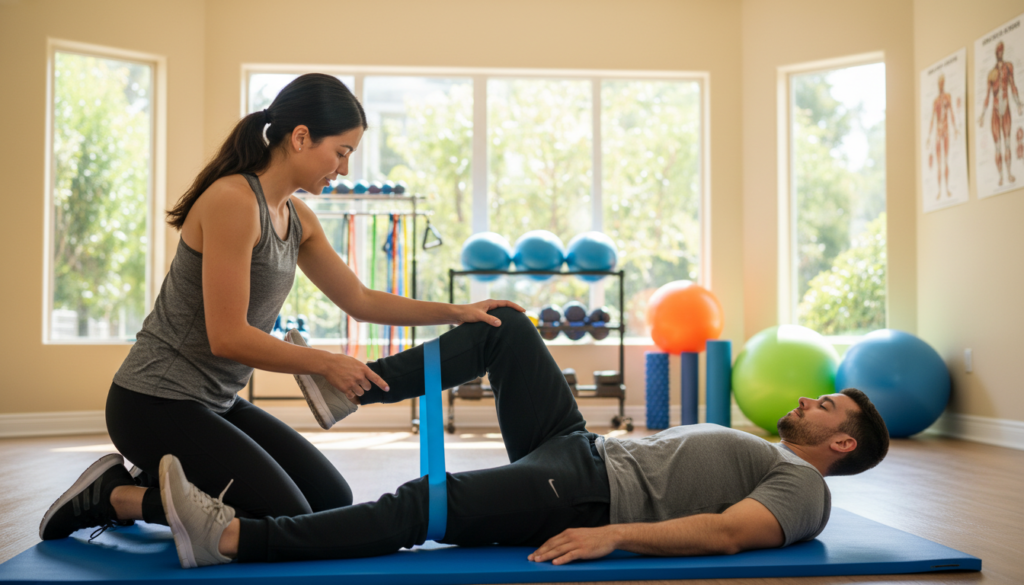
Healing the medial collateral ligament extends beyond bracing; it demands active rebuilding through physical therapy. This guided process restores function and prevents future problems.
Essential Rehabilitation Exercises
A qualified physical therapist designs a custom program. The goal is to rebuild strength in the muscles supporting your knee.
Key muscle groups targeted include:
- Quadriceps (front of thigh)
- Hamstrings (back of thigh)
- Hip abductors and adductors
- Gluteal muscles
You will typically perform these exercises two to three days per week. This schedule continues for four to six weeks to effectively heal an mcl tear.
Recovery Timelines and Physical Therapy Tips
Consistency is your greatest ally. Adhering to the program is the best way to regain stability and prevent re-injury.
Stretching the calf and hamstring muscles is vital. It maintains flexibility so the knee joint does not stiffen. Your therapist will also incorporate balance training.
This work rebuilds confidence in your knee’s stability during daily tasks. For a complete mcl tear, the timeline may extend, but focused exercises are always central to recovery on the inner side.
When is Surgery Required for an MCL Tear?
Deciding on an operation for your knee’s inner stabilizer hinges on specific, clear-cut criteria. Most medial collateral ligament issues heal with conservative care. We reserve surgery for cases where stability cannot be restored through bracing and therapy alone.
Indications for Surgical Intervention
Surgical intervention becomes necessary when the ligament is completely torn from its bony attachment site. This severe injury often causes significant joint instability.
Another key indication is when the MCL fails to heal after an extended period of non-surgical treatment. Combined injuries, like damage to the ACL, also typically require an operation.
Professional athletes frequently choose this path. It ensures the repaired knee can withstand the intense demands of their sport.
Overview of MCL Repair and Reconstruction
The procedure aims to restore stability to the inner side of the knee. Surgeons perform it through small incisions on the inner side knee.
There are two primary surgical techniques. A repair reattaches the torn tissue directly to the bone. A reconstruction uses a graft, often from the patient’s hamstring tendon, to replace the damaged ligament.
Timing impacts outcomes. MCL repair surgery often yields better results when performed within six weeks of the initial tear.
| Procedure Type | Primary Goal | Typical Graft Source |
|---|---|---|
| MCL Repair | Reattach native ligament tissue | Patient’s own torn MCL |
| MCL Reconstruction | Rebuild ligament with new tissue | Hamstring tendon or donor graft |
| Combined Procedure | Address multiple ligament injuries | Often uses autograft (patient’s tissue) |
This surgery is a precise solution for complex MCL problems. It helps patients return to full activity when other treatments are not enough.
Comparing Recovery Times: Sprain vs. Tear
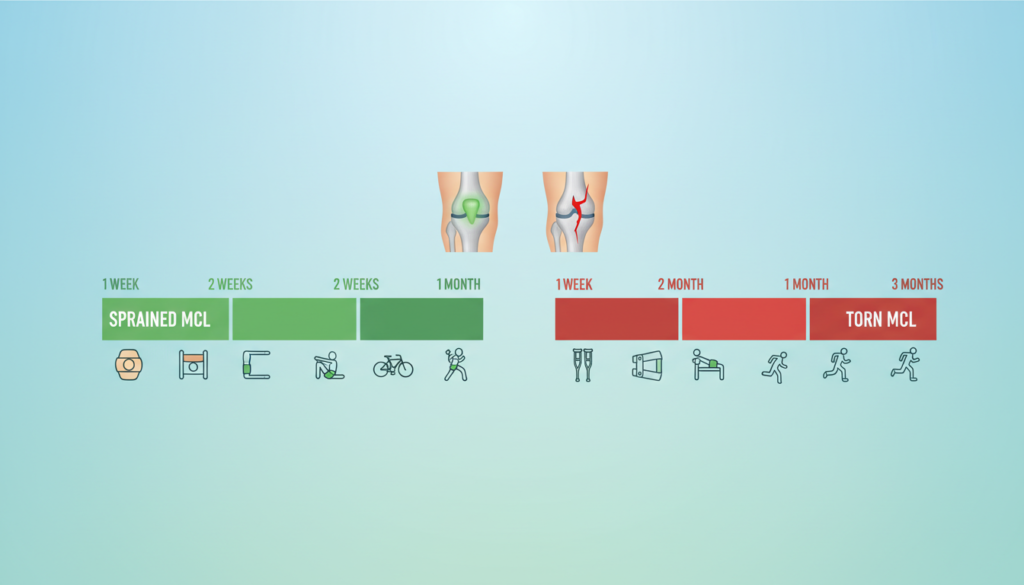
From a quick bounce-back to a lengthy rehab, recovery windows vary dramatically based on injury grade. Understanding your expected timeline helps set realistic goals for healing your inner knee.
Expected Recovery for Mild to Moderate Sprains
A Grade 1 mcl issue typically heals within 1 to 3 weeks. This mild injury involves minimal fiber damage.
A Grade 2 partial tear often requires 4 to 6 weeks of dedicated care. Conservative treatment like bracing and rest usually suffices.
Extended Recovery and Challenges with Complete Tears
A Grade 3 mcl tear, where the ligament is fully ruptured, demands six weeks or longer. Surgical repair adds to this recovery time.
Healing after surgery often spans six to eight weeks. Returning to competitive sports may require at least six months. Your age, overall health, and other knee injuries influence the total recovery period.
Patience is crucial. Rushing back risks re-injuring the knee during high-impact activities.
Prevention Strategies and Long-Term Care
Protecting your knee’s stability is an active process that begins long before any injury occurs. Smart habits can drastically reduce the risk of a painful ligament tear.
Focus on building resilience in the joint. This approach is your best defense against future problems.
Proper Training Techniques and Warm-up Exercises
A thorough warm-up prepares your body for strenuous activity. Cooling down afterward is just as important.
Building strength in your leg muscles is crucial. Strong quads, hamstrings, and glutes act as natural stabilizers for the knee.
Athletes in sports like football or basketball should prioritize this. It helps shield the medial collateral ligament from excessive force.
Using Knee Braces and Other Protective Measures
A knee brace can be a wise choice during training or competition. It limits harmful side-to-side motion that can lead to injuries.
Don’t overlook your footwear. Proper shoes provide essential cushioning and support. This reduces the risk of your foot buckling on the side, which stresses the inner knee.
| Prevention Strategy | Primary Benefit | Best For |
|---|---|---|
| Dynamic Warm-up | Increases blood flow and flexibility | Pre-activity preparation |
| Strength Training | Builds muscular support for the knee | Ongoing joint protection |
| Supportive Bracing | Limits valgus stress on the MCL | High-risk activities |
| Proper Footwear | Improves stability and impact absorption | All weight-bearing exercise |
Long-term care means continuing these strength exercises even after recovery. Maintaining stability is a lifelong commitment for a healthy knee.
Impact of MCL Injuries on Athletes and Daily Life
For those who live for competition, an MCL setback demands immediate adjustments to training and work. This damage is frequent in contact sports like soccer and basketball.
It forces a sudden pause in an active lifestyle. Daily tasks and athletic performance are both affected.
Adjusting Sports Activity and Work Routines
Athletes face a tough challenge. A significant mcl tear can hamper the ability to pivot or change direction quickly.
This impacts performance in many sports. Daily life also shifts temporarily. You may need to modify work duties or use support like crutches.
Pain and swelling must subside before normal routines resume. It’s a period of necessary adaptation for the injured knee.
Long-Term Management and Return-to-Play Considerations
Long-term care focuses on protecting the joint. Unlike an acl injury that often needs surgery, many mcl problems heal well without it.
Returning to play requires a doctor’s careful check. They ensure the ligament is strong enough for game demands. Rushing back risks re-injury.
Proper management ensures the inner side of the knee remains stable. For more on related symptoms, see our guide on meniscus tear symptoms.
Conclusion
Achieving a strong, stable knee after an injury hinges on accurate diagnosis. Understanding your specific condition, like an MCL tear, is the first step toward effective treatment.
We have explored how the MCL functions within the knee. Protecting this vital ligament is key to maintaining joint stability on the inner side.
Most MCL issues heal with conservative care. Surgery remains an option for severe injuries or a complete tear.
By focusing on physical therapy and prevention, you can return to activities with confidence. Your knee can regain full function with the right approach.