
Is a ‘simple’ knee sprain something you can just walk off, or could it be a hidden threat to your future mobility? Many people underestimate these common injuries, not realizing the potential for lasting joint problems.
The medial collateral ligament is a major structure on your inner knee. It provides crucial stability during movement. When this MCL gets damaged, the entire joint’s balance can be upset.
This type of knee injury often happens from a sudden force to the side. The immediate discomfort is clear, but the lingering effects are what concern us. Without proper care, initial trauma can lead to ongoing instability.
We explore this critical issue to help you understand the recovery journey. Our guide aims to minimize the risk of persistent complications. Knowledge is your first defense against a temporary setback becoming a permanent hindrance.
Key Takeaways
- The MCL is a key stabilizer on the inner side of the knee.
- A sprain here often results from a sudden sideways force.
- Proper understanding and treatment are vital for full recovery.
- Ignoring the injury raises the risk of long-term joint instability.
- This guide provides essential information to navigate healing.
- Preventing chronic issues starts with addressing the initial trauma correctly.
Understanding the Medial Collateral Ligament (MCL)
Located on the inner side of the knee, the medial collateral ligament is your joint’s first defense against valgus stress. This strong band of tissue is fundamental for stability.
We must understand its role to appreciate how damage occurs. Knowing its function helps explain the recovery process.
Anatomy and Function
The medial collateral ligament connects the femur to the tibia. Its primary job is to stop the knee from bending too far inward.
As a key collateral ligament, it works with other structures to keep the joint aligned during movement. This alignment is crucial for all physical activity.
Common Causes of MCL Injuries
These mcl injuries often happen during sports. A direct blow to the outside of the knee is a frequent cause.
This force pushes the knee inward, overstretching the ligament. Sudden pivoting in basketball or tennis can also create this damaging stress.
Proper diagnosis after such an injury is vital. Recovery often involves guided rehabilitation through specific physical therapy protocols.
What are long-term effects of MCL sprain?
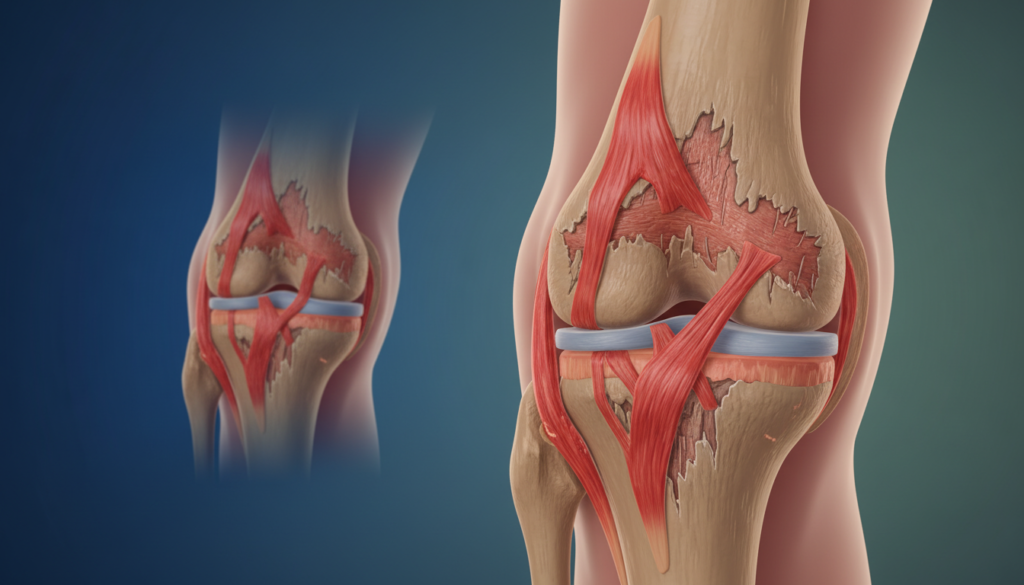
The true cost of a damaged medial collateral ligament often unfolds months or even years after the initial trauma subsides. When this ligament fails to heal correctly, it can set off a chain of persistent problems for the knee.
Potential Chronic Complications
Chronic pain is a common sign of improper healing. This discomfort can signal the early onset of arthritis within the joint over time.
If the MCL remains lax, the knee may feel persistently unstable. This instability alters your natural walking pattern. Such a gait change raises the risk of secondary issues in the hip or other parts of the leg.
Impact on Daily Activities
This lingering instability makes basic activities challenging. Simple movements like climbing stairs or pivoting can become difficult.
Ignoring initial symptoms like swelling compounds the stress on the inner side of the knee. A dedicated recovery plan is essential to prevent this injury from limiting your life long-term.
Recognizing Early Symptoms and Signs
Listening to your body’s first warnings after a knee twist or impact is critical for effective treatment. Early detection of an MCL injury can prevent a minor issue from becoming a major setback.
We see many patients who initially dismiss these signals. Recognizing them promptly is the first step toward a controlled recovery.
Pain, Swelling, and Instability
A distinct pop or snap often accompanies the moment of injury. This is usually followed by immediate, sharp knee pain on the inner side.
Significant swelling and bruising develop quickly around the medial ligament. This inflammation can make putting weight on the leg very difficult.
Persistent pain swelling and a feeling of the joint giving way are red flags. These symptoms indicate that the knee‘s stability is compromised.
An inability to move the joint comfortably should never be ignored. Our team stresses that these signs demand a professional evaluation.
| Symptom | Description | Immediate Action |
|---|---|---|
| Popping Sensation | Often felt or heard at the moment of injury. | Stop activity and avoid weight-bearing. |
| Localized Pain | Sharp discomfort on the inner side of the knee. | Apply ice and rest the leg. |
| Swelling & Bruising | Rapid inflammation and discoloration around the ligament. | Use compression and elevate the knee. |
| Instability | A feeling that the knee may give way during movement. | Seek a professional medical evaluation. |
Early recognition of these symptoms is crucial. It helps avoid a more severe MCL tear that requires a much longer healing period.
Diagnosing Your MCL Injury
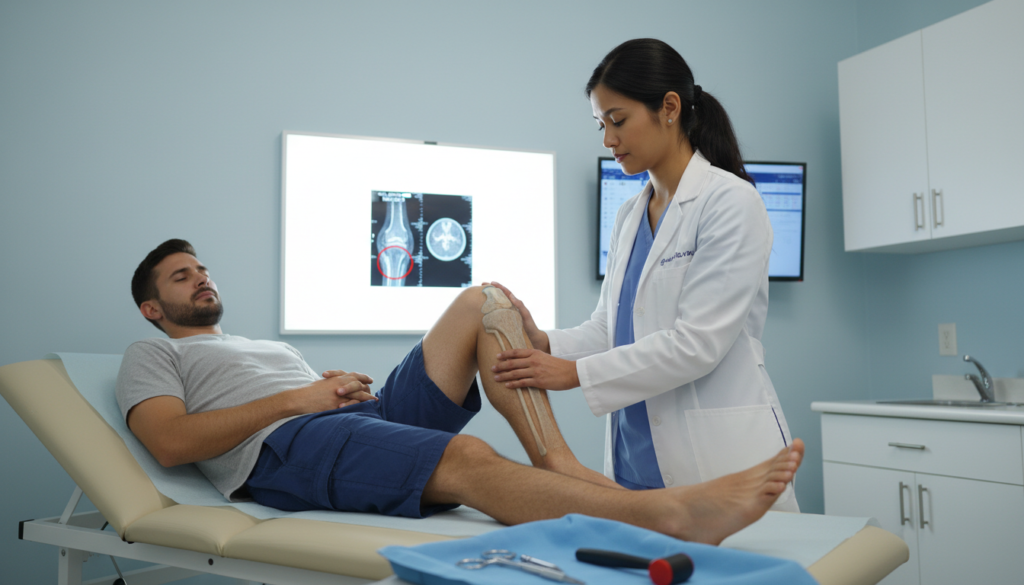
Doctors rely on a combination of hands-on assessment and advanced imaging to understand your MCL issue. An accurate diagnosis is the critical first step. It ensures your recovery plan matches the specific damage.
Importance of Physical Exams
A thorough physical exam is always the starting point. A specialist will test the stability of your knee joint by applying gentle stress.
This manual test checks for abnormal gapping or laxity in the ligament. It helps gauge the initial severity of the injury.
Role of MRI in Diagnosis
An MRI is often used to confirm the diagnosis. This imaging provides detailed pictures of the soft tissues.
It shows the exact extent of tear or damage to the MCL. This detail is vital for distinguishing a minor sprain from a complete rupture.
| Diagnostic Method | Primary Purpose | Key Information Provided |
|---|---|---|
| Physical Exam | Initial stability assessment | Detects joint laxity and pain response under stress. |
| MRI Scan | Detailed structural imaging | Visualizes ligament fibers to grade tear severity precisely. |
| Clinical Evaluation | Correlating symptoms with findings | Combines exam and imaging for a complete knee injury picture. |
Accurate assessment guides all treatment. For complex cases, consulting sports medicine specialists is wise. They ensure your rehab plan prevents future knee problems.
Grading the Severity of MCL Injuries
Not all MCL injuries are the same. They are systematically categorized based on the severity of ligament fiber disruption.
This grading system helps us predict recovery time and plan the right treatment. Knowing your specific grade sets realistic expectations for healing.
Understanding Injury Grades
A Grade I injury involves mild stretching of the ligament fibers. This minor sprain typically allows return to activity in 1-2 weeks.
We classify a Grade II issue as a partial tear. It requires more careful management, with functional recovery often taking 3-4 weeks.
A Grade III injury is a complete rupture of the MCL. This severe tear demands 6-8 weeks or more of dedicated rehabilitation.
| Injury Grade | Description | Typical Recovery Timeline |
|---|---|---|
| Grade I | Mild stretching of the ligament fibers. | 1-2 weeks |
| Grade II | Partial tear of the medial collateral ligament. | 3-4 weeks |
| Grade III | Complete rupture or tear of the ligament. | 6-8+ weeks |
Each grade dictates the treatment plan’s intensity. Accurate grading is the first step toward a successful knee recovery.
Recovery Timeline and Expectations
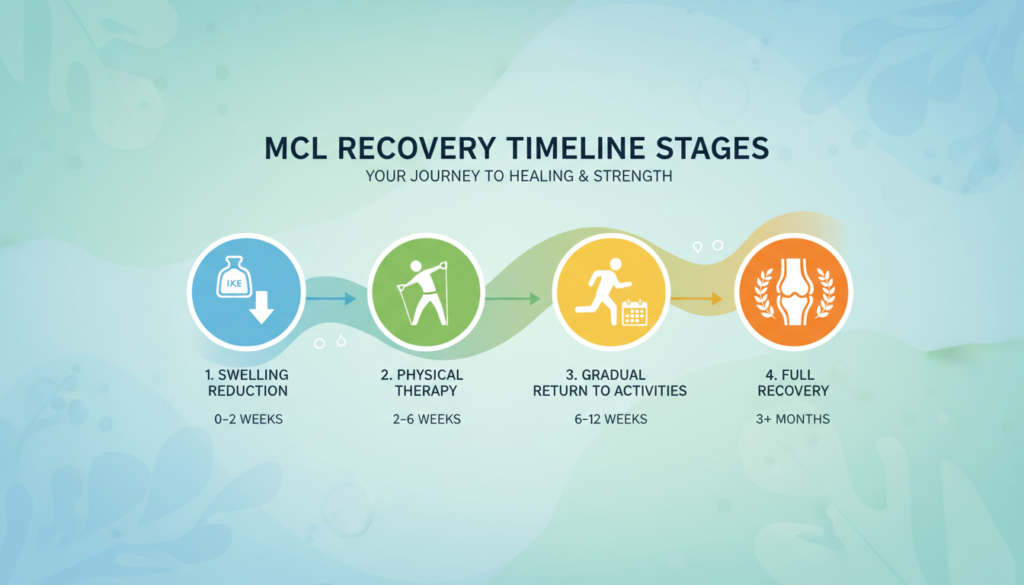
Knowing what to expect week-by-week transforms uncertainty into a manageable plan. We provide a clear roadmap to guide your healing journey.
This path is not one-size-fits-all. Your specific recovery time depends heavily on the initial damage to the ligament.
Healing Duration by Injury Grade
As outlined previously, the injury grade sets the pace. A mild Grade I sprain may allow a return to light activities in 1-2 weeks.
A partial Grade II tear often requires 3-4 weeks of careful rehab. A complete Grade III rupture demands a more dedicated approach, often spanning 6-8 weeks or longer.
Stages of Rehabilitation
Successful recovery follows distinct phases. Each stage builds upon the last to restore your knee‘s strength and function safely.
Rushing this process risks re-injuring the vulnerable ligament. Adherence to the plan is the most effective way to ensure proper healing.
| Stage | Primary Focus | Key Activities | Approximate Timeframe |
|---|---|---|---|
| Acute Phase | Reduce pain and swelling, protect the MCL. | Rest, ice, compression, gentle range-of-motion exercises. | First 1-2 weeks |
| Strengthening Phase | Rebuild muscle support around the knee joint. | Light resistance training, balance exercises, controlled weight-bearing. | Weeks 3-5 |
| Functional Phase | Prepare for return to normal activities and sport. | Agility drills, sport-specific movements, gradual intensity increase. | Weeks 6+ |
This structured approach balances rest with controlled movement. It ensures your knee regains full motion and strength over time.
The Role of Physical Therapy in MCL Recovery
Aquatic therapy offers a unique, low-impact environment to begin rebuilding strength after a significant ligament injury. This approach is part of a larger, essential framework. Guided physical therapy is the cornerstone of effective mcl recovery.
It focuses on strengthening the muscles surrounding the knee. This creates a natural brace for the healing ligament.
Benefits of Guided Rehabilitation
A structured program does more than manage symptoms. It actively accelerates the healing process. Therapists use targeted techniques to reduce swelling and restore full joint mobility safely.
Clinics like Lattimore Physical Therapy utilize aquatic therapy as a specialized tool. The water’s buoyancy supports body weight. This allows patients to move and strengthen muscles without placing excessive stress on the vulnerable knee.
Your therapist designs a plan for your specific injury. This customization ensures your mcl and supporting tissues are conditioned for a safe return to activity. Consistent therapy sessions build more than physical strength.
They rebuild confidence in your body’s ability. This reduces the fear often associated with moving after a serious injury. A guided path makes the entire healing journey clearer and more manageable.
Conservative Treatment Approaches
Effective management of a knee ligament injury starts with simple, proven first-aid principles. We focus on non-surgical methods to control the initial damage. This foundational treatment is crucial for all grades of mcl issues.
Rest, Ice, Compression, and Elevation (RICE)
The RICE protocol is the standard first response. Its goal is to manage immediate pain and swelling after the injury.
Rest is critical in the first few days. It prevents further strain on the healing ligament. Avoiding weight-bearing activity allows the body’s natural repair processes to begin.
Applying ice helps constrict blood vessels. This action directly reduces inflammation and swelling around the knee. It also numbs the area to ease discomfort.
Compression and elevation work together. They minimize fluid buildup in the tissues. Keeping the knee raised above heart level assists drainage.
| RICE Component | Primary Action | Key Application Tip |
|---|---|---|
| Rest | Prevents further damage | Use crutches if walking causes pain. |
| Ice | Reduces inflammation & swelling | Apply for 15-20 minutes every 2-3 hours. |
| Compression | Minimizes fluid accumulation | Use an elastic bandage; ensure it’s snug, not tight. |
| Elevation | Promotes fluid drainage | Prop the leg on pillows, ideally above the heart. |
This initial treatment stage stabilizes the mcl. It creates the optimal environment for more advanced rehabilitation to follow.
When Should We Consider Surgery?
While most MCL issues heal well without it, surgery becomes a necessary conversation in a few critical cases. This decision is never taken lightly. We reserve surgical intervention for specific damage patterns that compromise long-term knee function.
The most common scenario is a severe Grade III tear that fails to heal with conservative care. If the ligament has completely detached from the bone, an operation may be the only way to reattach it and restore stability.
Complex injury patterns also often require surgery. When an MCL rupture occurs alongside other tears, like in the ACL or meniscus, a combined surgical approach is usually needed. This ensures the entire knee joint can function correctly again.
Consulting an orthopedic specialist is essential. They will analyze your specific mcl damage and overall joint health. This expert evaluation determines if your tear is a candidate for continued non-operative care or if surgery offers the best path to full recovery.
Our analysis clarifies this decision-making process. Understanding when an operation is warranted helps you have an informed discussion with your doctor about fixing your damaged knee.
Strategies for Pain and Inflammation Management
Effectively controlling discomfort and inflammation is a cornerstone of successful MCL rehabilitation. We prioritize this management to create an optimal environment for healing. Proper symptom control allows patients to engage more fully in their recovery exercises.
Medication and Natural Remedies
Over-the-counter anti-inflammatory drugs can reduce swelling and ease pain in the short term. Always use these under a doctor’s guidance to avoid side effects.
Natural approaches complement medical treatment. Gentle cold therapy helps constrict blood vessels and numb the area. Later, mild heat can soothe stiff muscles around the knee.
Nutrition supports overall joint health. Foods rich in omega-3 fatty acids and antioxidants help the body manage inflammation naturally.
| Strategy | Primary Benefit | Key Consideration |
|---|---|---|
| OTC Anti-inflammatories | Rapid reduction of pain and swelling | Use short-term; consult a doctor |
| Cold Therapy | Numbs pain, reduces initial inflammation | Apply for 15-20 minutes at a time |
| Anti-inflammatory Diet | Supports body’s natural healing processes | Focus on fruits, vegetables, and fish |
Consistent management of these symptoms is crucial. It enables comfortable participation in physical therapy. This leads to stronger outcomes for knee health after an injury.
Integrating Sports Medicine for Optimal Recovery
Maximizing your recovery potential after a significant knee injury often hinges on accessing a higher level of specialized care. General rehabilitation is helpful, but a dedicated sports medicine approach brings targeted expertise. These specialists focus on the unique demands of healing an active knee.
Their deep understanding of the MCL and related structures leads to more precise interventions. This integration ensures your recovery plan is built for your specific lifestyle and goals.
Customized Treatment Plans
A one-size-fits-all program rarely works for a complex ligament issue. Sports medicine professionals create plans tailored to your exact injury grade and activity level. An athlete needs a different path than a weekend gardener.
Institutes like the Southern California Orthopedic Institute (SCOI) exemplify this advanced care. They use data-driven protocols to monitor your health and adjust your rehabilitation in real time.
This customized treatment is the gold standard. It provides access to the latest techniques in bracing and functional conditioning. Working with a sports medicine team builds a stronger, more resilient knee for the future.
Lifestyle Adjustments and Activity Modifications
Successful recovery extends beyond the clinic. It requires thoughtful changes to how you move each day. We focus on smart modifications to protect your healing knee.
Making these adjustments is a necessary part of the process. It is especially vital when returning to high-impact activities. Your daily movements must avoid stress on the inner part of the joint.
Reducing the riskof re-injury involves mindfulness. Be cautious with pivoting or twisting motions. These actions can strain the recovering ligament.
Simple tools can help. Using a supportive brace during strenuous activities offers protection. It supports the knee while it regains strength.
Our guide encourages a gradual return to your normal routine. This phased approach ensures your lifestyle supports long-term joint health. Patience here prevents future problems.
| Common Activity | Smart Modification | Key Benefit |
|---|---|---|
| Climbing Stairs | Use handrail, lead with your stronger leg. | Reduces direct load on the healing MCL. |
| Lifting Objects | Keep weight close to your body, avoid twisting. | Minimizes torque and stress on the knee joint. |
| Returning to Sport | Wear a functional brace, focus on controlled drills first. | Provides external stability and builds confidence. |
| Daily Walking | Choose even surfaces, wear supportive footwear. | Promotes safe gait patterns and prevents awkward steps. |
These changes create a safer environment for your MCL. They help you navigate recovery without setbacks. Consistent adaptation is the key to a full return to activity.
Returning to Sports and Maintaining Knee Health
A safe return to athletic competition hinges on a structured, step-by-step approach to rebuilding confidence and strength. We guide athletes through this critical transition to ensure their knee is truly ready for game demands.
Gradual Reintroduction of Activities
Jumping back into sports too quickly is a common mistake. A phased plan starts with light, controlled movements and basic activities. It slowly increases intensity as the ligament tolerates more stress.
This careful progression allows us to monitor joint response. It also provides time to screen for associated issues. A thorough diagnosis should check for an ACL tear, which often accompanies an MCL injury in contact sports.
Preventing Re-Injury
Our primary goal is to stop the same injury from happening again. Ongoing strength training for the supporting muscles is non-negotiable. This builds a natural brace that reduces future risk.
Athletes should follow a structured return-to-play protocol. This includes specific drills that mimic sport-specific actions. Maintaining joint health is a lifelong commitment.
Regular check-ups and a proactive approach to any discomfort are key parts of this process. Consistent care keeps you in the game for all your activities.
Conclusion
Navigating the aftermath of a knee ligament issue requires a clear roadmap to restore joint integrity and confidence. A precise diagnosis is the essential first step, guiding all subsequent treatment decisions for your MCL.
Your recovery journey demands patience and professional guidance. Adhering to a structured plan minimizes the risk of chronic issues like chronic valgus instability.
Commit to your joint health by working closely with your medical team. This partnership ensures your knee and ligament regain strength for the long term.
Thank you for trusting this guide on managing your injury. We wish you a full and successful return to activity.