
What if the secret to a resilient joint isn’t found in stillness, but in smart, guided motion? A sudden twist or impact can leave your medial collateral ligament damaged, but the path forward is clear.
Ligament sprains make up about 40% of all knee injuries. This fact highlights how common this setback is. The initial pain and stiffness can be daunting, making you hesitant to move.
We believe movement is medicine. A structured rehab program is your blueprint for returning to activity with confidence. It helps restore function to the damaged ligament safely.
Our guide provides the necessary steps to manage this process. You can navigate the early stages and build a foundation for long-term joint health. Following professional guidelines, like specific physical therapy protocols for MCL sprain, is crucial.
This approach ensures you regain stability without fear of your joint giving way. The goal is a full return to the activities you love.
Key Takeaways
- Ligament sprains are a very common type of knee injury.
- Smart, guided movement is a critical part of the healing process.
- A structured rehabilitation plan is essential for a safe recovery.
- Professional guidance helps restore function and build confidence.
- The right program aims for a full return to your favorite activities.
- Managing the initial pain and stiffness is a key first step.
- Long-term joint health is the ultimate goal of recovery.
Understanding MCL Injury and Knee Anatomy
Knowing what happens inside your joint when the medial collateral ligament is damaged guides your rehab journey. We must first look at the specific anatomy involved.
MCL Structure and Function
The medial collateral ligament is a critical band of tissue. It connects your thigh bone (femur) with your shin bone (tibia). This collateral ligament provides essential stability for the joint.
Its primary job involves resisting valgus forces. These stresses push the knee inward. A healthy medial collateral prevents excessive side-to-side motion.
Common Causes and Injury Grades
This ligament often suffers damage from a direct blow on the outside of the leg. Sports like football are common culprits. The force stretches or tears the medial collateral ligament.
Dr. Kim Anderson, a physical therapist at Hinge Health, explains that MCL injury grades range from mild to severe. Grade 1 involves overstretching. Grade 2 is a partial tear. Grade 3 is a complete rupture.
Research shows about 80% of Grade 3 tears involve other structures. Damage to the ACL or meniscus often accompanies severe injuries. Understanding this helps tailor your recovery plan.
Recognizing Symptoms and When to Seek Help
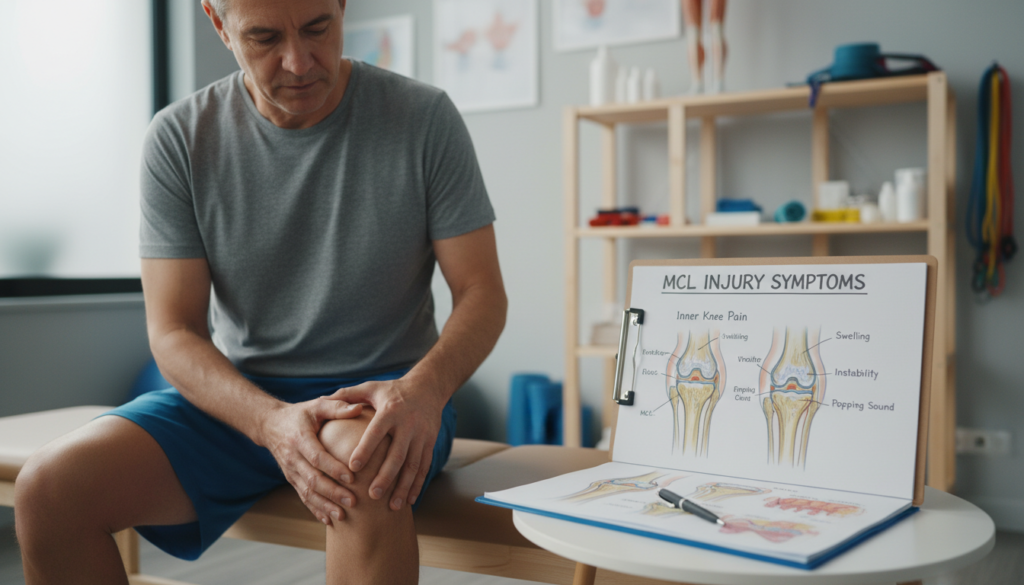
A sharp, localized pain on the inner side of your knee is often the body’s initial cry for help. This sensation typically follows a sudden pivot or an awkward slip. It signals that an MCL sprain may have occurred.
You might experience a sudden sense of instability, as if the joint will buckle. This feeling is a key symptom that should not be ignored. It directly relates to the ligament’s role in providing stability.
Significant swelling around the knee is another red flag. If bearing weight becomes difficult, it’s time to consult a professional. A medical examination can determine the injury grade and rule out other damage.
Persistent pain that doesn’t ease with rest points to a more severe injury. It may require imaging or specialized intervention. The sensation of your knee giving way is common and warrants assessment.
We emphasize that early recognition of these symptoms is crucial for an MCL issue. It allows you to begin the appropriate treatment path promptly. This proactive step helps prevent further damage to structures within your knee.
How to strengthen knee after MCL injury?
The journey back to full function begins with a tailored approach. It addresses both clinical exercises and home-based care. A comprehensive plan is vital for restoring stability and mobility in your knee.
Expert Physical Therapy Exercises
A structured physical therapy program helps you regain strength and mobility. Targeted movements support the healing of your knee joint.
Dr. Kim Anderson notes that Hinge Health members experience an average 68% reduction in pain within 12 weeks. This improvement highlights the value of professional guidance. Customized plans ensure your exercise program matches your specific needs.
At-Home Recovery Tips
Managing your MCL symptoms at home is possible without daily clinic visits. Consistency in your therapy routine is essential for knee recovery.
It helps restore joint function and prevents long-term issues like chronic stiffness. Simple habits, like prescribed stretches, can accelerate your recovery. Our digital platform provides access to tailored plans for safe MCL rehabilitation.
Effective Physical Therapy Exercises for Knee Stability
A stable joint relies on the coordinated power of its supporting muscle groups. Targeted physical therapy protocols are designed to rebuild this essential synergy.
We focus on activating key muscles that directly influence joint integrity. This approach forms the core of a successful rehabilitation plan.
Targeting the Quadriceps
The large quadriceps on the front of your thigh are primary stabilizers. Following an acute issue, these muscles can become inhibited.
Quad sets are a fundamental first step. They safely reactivate the quadriceps and help restore the ability to fully straighten the leg.
This simple exercise involves tightening the thigh muscle while your leg is straight. It builds a foundation for more dynamic movements.
Strengthening Hamstrings and Glutes
The hamstrings and gluteal muscles provide posterior support and power. Strong hamstrings work with the quadriceps to control joint motion.
Glute exercises ensure proper hip alignment, which reduces strain downstream. Together, they create a protective network for the joint.
| Muscle Group | Sample Exercise | Primary Benefit |
|---|---|---|
| Quadriceps | Quad Sets, Straight Leg Raises | Restores terminal knee extension |
| Hamstrings | Hamstring Curls, Bridges | Controls deceleration & posterior stability |
| Glutes | Clamshells, Hip Abductions | Stabilizes pelvis and aligns the limb |
Consistent engagement in these physical therapy exercises builds the strength needed for long-term knee stability. A progressive routine is key.
Improving Knee Range of Motion Post-Injury
The ability to bend and straighten your leg without restriction defines functional recovery. Regaining this knee range motion is a primary goal in the early phases.
It prevents the development of permanent stiffness. Gentle, consistent efforts are the safest path forward.
Heel Slides and Patellar Mobility
Heel slides are a foundational exercise. They gently encourage knee range without placing stress on the healing ligament.
Using a towel around your foot to assist the slide can help gradually increase your range motion. The key is to avoid forcing the bend.
This method allows you to control the motion. Consistency over time is more effective than aggressive pushing.
Patellar mobility exercises focus on your kneecap. They help reduce inflammation and prevent adhesions from forming.
These drills ensure the kneecap glides smoothly as you bend your leg. This supports overall joint motion and comfort.
| Exercise | Primary Benefit | Key Tip |
|---|---|---|
| Heel Slides | Increases flexion range | Use a towel for assistance, never force |
| Patellar Mobility | Ensures kneecap moves freely | Apply gentle, gliding pressure |
Dedicating time to these movements ensures your knee regains the flexibility needed for daily life. For a full set of structured MCL exercises, consult a professional plan. Understanding the typical recovery timeline helps set realistic expectations for your knee range progress.
Dynamic Balance and Single Leg Strength Training

Mastering your body’s stability on a single limb is a critical milestone in functional recovery. This phase moves beyond basic strength to train your joint for real-world demands.
We focus on dynamic control to prepare you for walking, running, and sports. These exercises rebuild the neural connections that protect your knee.
Single Leg Stance Techniques
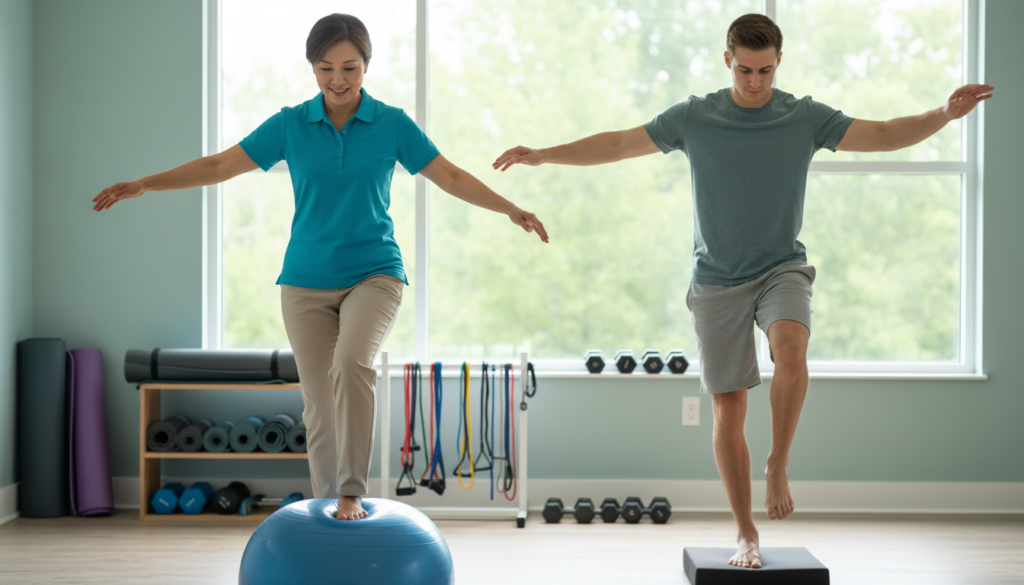
Standing on one leg is a fundamental drill. It builds the necessary strength and stability to support your joint during daily movement.
You can use a countertop for balance initially, but you should progress to standing on one leg unsupported.
This simple exercise challenges your proprioception. That is your body’s sense of position, which is critical for preventing future issues.
Progressions for Enhanced Balance
As your confidence grows, you can add challenges to your balance training. Closing your eyes removes visual cues, forcing your leg to work harder.
Standing on an unstable surface, like a cushion, further tests your knee stability. These progressions ensure your leg can handle dynamic forces.
We incorporate these methods to prepare you for a safe return to activity. They are essential for long-term joint health and athletic performance.
Integrating Resistance Bands and Recovery Tools
A simple band can transform standard exercises into targeted strength-building activities for the leg. Physical therapists highly recommend these tools for targeting specific muscle groups during MCL recovery.
They provide a versatile way to advance your rehabilitation outside the clinic. This approach adds a new dimension of challenge to your routine.
Using Resistance Bands Effectively
These bands allow you to perform exercises that target the medial collateral ligament and surrounding muscles. The controlled tension is key for safe progression.
Resistance bands are excellent for adding a new dimension of challenge to your MCL recovery routine at home. They allow for progressive loading without high impact.
We suggest keeping a band in your bag. You can perform your leg exercises even when traveling or busy.
Integrating these tools helps strengthen the collateral ligament. It provides consistent, low-impact resistance that promotes healing.
| Band Exercise | Primary Muscle Focus | Benefit for Knee |
|---|---|---|
| Resisted Leg Extension | Quadriceps | Builds anterior stability |
| Banded Hamstring Curl | Hamstrings | Supports posterior ligament |
| Side Steps with Band | Hip Abductors | Protects medial collateral complex |
Proper use ensures you are loading the knee joint safely. It builds the strength required for your return to activity.
This method supports the healing collateral ligament directly. Consistent, gentle resistance is ideal for your leg.
Your knee gains stability through these targeted exercises. They are a cornerstone of advanced rehabilitation.
Progressive Rehabilitation and Exercise Modifications
Progress in rehabilitation is not a straight line, but a dynamic process of adjusting your efforts based on feedback from your body. Your routine must evolve as healing advances. This approach ensures you are always working at the appropriate level for your current recovery.
Adapting Exercises as Pain Decreases
You must adapt your exercises as your pain decreases. Using your symptoms as a guide is the best way to determine when to progress to the next step.
Dr. Kim Anderson explains that if an exercise causes a spike in discomfort, you should scale back the intensity. This protects your MCL injury from further strain.
We emphasize finding the right balance between challenging your knee and allowing tissues time to heal. Progressive rehabilitation is about this careful equilibrium.
By monitoring your progress, you can safely increase the difficulty of your routine. This prevents setbacks in your recovery step.
| Pain Level | Exercise Modification | Recommended Action |
|---|---|---|
| Mild (1-3/10) | Maintain current intensity | Proceed with planned exercises |
| Moderate (4-6/10) | Reduce reps or resistance | Scale back to a comfortable level |
| Severe (7+/10) | Pause and rest | Consult your therapist before continuing |
Exercise intensity should be modified based on pain and swelling levels. This table provides a clear framework for your knee rehab.
Your MCL recovery depends on intelligent adjustments. Listen to your knee and respond with appropriate exercise changes.
This method helps you build strength without risking your injury. Consistent monitoring leads to a safer return to activity.
Strategies for Managing Knee Pain and Swelling
Controlling post-exercise swelling can make the difference between consistent progress and frustrating setbacks. Managing this pain and puffiness is a critical component of your MCL recovery. It allows you to stay active with your rehabilitation program.
We focus on simple, proven methods to reduce inflammation after your daily physical therapy. These strategies help you maintain the consistency required to return to normal activities safely.
Incorporating Ice and Compression
Dr. Kim Anderson suggests that incorporating ice and compression for 20 minutes can significantly improve comfort. This treatment reduces inflammation around the knee joint effectively.
We recommend elevating your leg to help drain excess fluid. This is a standard approach for acute injury management. Consistent use of these tools prevents excessive discomfort.
Proper pain management ensures you can continue strengthening your knee. It supports the healing MCL without being sidelined by swelling.
Maintaining Knee Stability Through Daily Activities
Protecting your healing ligament extends beyond exercise sessions into every movement you make. Consistent knee stability during routine tasks is essential for your mcl recovery.
It safeguards the joint while it heals from the initial injury. We focus on integrating support into your normal day.
Dr. Kim Anderson notes that while a brace can provide support, you should aim to progress to a level where your muscles provide knee stability.
You may use a hinged brace for eight to twelve weeks after your injury. This external aid offers mechanical support and builds confidence.
Your focus should be on controlled movement during every step. Ensure your knee remains aligned and supported by your muscles.
Gradually reducing reliance on a brace is a key step. It leads to the restoration of your natural joint function over time.
| Support Method | Primary Role | Target Progression Level |
|---|---|---|
| Hinged Knee Brace | Provides external stability & confidence | Weeks 1-12 post-injury |
| Muscle Activation | Creates internal, dynamic support | Ongoing, with reduced brace use |
| Conscious Movement | Ensures proper alignment during steps | Integrated into all daily activities |
This table outlines the shift from external to internal support. Your muscles must become the primary guardians of your knee.
We advise monitoring your comfort level as you move. This practice helps you safely advance in your mcl recovery journey.
Preparing for a Return to Activity Safely
A successful return to your active lifestyle hinges on two critical practices: a proper warm-up and a gradual increase in effort. This final step ensures your body is ready for the dynamic movements of sports and daily activities. We focus on building resilience against future injury.
Proper Warm-Up Techniques
Warming up increases blood flow and prepares the joints for the demands of physical activity. It is the essential first step in protecting your mcl.
Dr. Kim Anderson emphasizes that a proper warm-up is crucial before high-intensity activities. Engaging in specific warm-up exercises prepares your muscles and knee for action.
We recommend light cardio and dynamic stretches. These exercises raise your body temperature safely. They also improve the range of motion in your knee.
Gradual Exercise Progression
Preparing for a return requires a gradual exercise progression. This ensures your knee can handle new demands.
You must increase the level of your training slowly. Give your body time to adapt to new stressors. This careful step-by-step approach prevents re-injury.
Monitor your knee closely during this phase. Any significant pain means you should reduce the level of intensity. Following a structured plan leads to a safe return.
| Phase | Primary Focus | Recommended Duration | Success Indicator |
|---|---|---|---|
| Warm-Up | Increase blood flow & mobility | 5-10 minutes | Joint feels loose, no pain |
| Progression | Slowly increase load & complexity | Weeks to months | Pain-free completion of exercises |
By following these guidelines, you build a strong foundation. Your mcl and surrounding muscles become resilient. This process safeguards your knee for the long term.
Conclusion
Looking ahead, the path to full recovery is built on the foundation of consistent, guided effort. Regaining function after an MCL injury requires patience and adherence to a structured therapy plan.
We have detailed the essential exercises and treatment strategies to support your knee through each healing stage. Your commitment to this program is what will safely return you to favorite activities.
Remember, this process is a journey that takes time, but your diligent work pays off with restored function. Always listen to your body and consult a professional with any concerns about your progress.
By focusing on your rehabilitation now, you build a resilient joint for all future activities. This investment in your knee health leads to lasting stability and confidence in your daily activities.