
Have you ever wondered why a seemingly simple twist can sideline an athlete for months?
This sudden pivot or impact often leads to a medial collateral ligament sprain. Clinical research shows these MCL sprains make up about 40% of all knee injuries.
Understanding the nature of your ligament injury is the crucial first step. It’s the foundation for regaining your full mobility and confidence.
We explore the essential components of a safe and effective recovery plan. Our guide provides expert-backed strategies to navigate this process.
The goal is clear: to use targeted movement and rehabilitation. This approach helps you return to your daily activities stronger than before.
Key Takeaways
- A medial collateral ligament sprain is one of the most common knee injuries.
- It frequently happens during sudden pivots, twists, or direct impacts.
- Proper diagnosis and understanding are vital for a successful recovery.
- A structured rehabilitation plan focuses on restoring stability and strength.
- Targeted exercises and movement are central to regaining full function.
- Expert guidance ensures the recovery process is both safe and effective.
- The ultimate aim is a confident return to your normal activities and sports.
Introduction: Understanding MCL Injuries and Grade 2
When a forceful impact strikes the outer side of the leg, the inner knee ligament often bears the brunt. This crucial band of tissue is the medial collateral ligament. Understanding its role and how damage occurs is key to navigating recovery.
MCL Structure and Function
The medial collateral ligament consists of superficial and deep layers. These connect the femur to the tibia on the inner knee. It acts as the primary stabilizer against valgus and rotational forces.
A grade 2 mcl injury involves partial ligament disruption. This creates minor joint laxity, distinguishing it from milder or more severe tears. Kim Anderson, PT, DPT, at Hinge Health notes that mcl injuries are categorized into three distinct levels of severity.
How Injuries Occur
Many mcl injuries happen during high-impact sport activities. Football, skiing, or soccer often involve direct blows to the outer knee. This force stretches or partially tears the collateral ligament.
This type of injury often results in a feeling of instability. Proper rehabilitation is vital because the ligament requires specific loading to heal correctly. We emphasize that a medial collateral ligament sprain typically responds well to conservative, non-operative treatment plans.
What is Physical Therapy for MCL Grade 2?
Conservative care stands as the primary treatment path for many ligament injuries. Medical literature strongly supports non-operative management for isolated, partial tears.
Rehabilitation serves as the cornerstone of recovery. It focuses on restoring function through structured, progressive movement patterns.
Our approach addresses the specific needs of a level 2 sprain. We protect the healing tissue while gradually loading it.
Guided activities safely rebuild the strength necessary to support your joint. This process prioritizes movement as medicine.
You do not remain sedentary while your ligament heals. We provide a clear, step-by-step path to restore your pre-injury confidence.
| Rehabilitation Phase | Primary Focus | Key Activities |
|---|---|---|
| Early Phase (Weeks 1-2) | Protection & Pain Control | Rest, ice, compression, gentle range-of-motion |
| Mid Phase (Weeks 3-6) | Restoring Strength & Stability | Quad sets, straight leg raises, balance drills |
| Late Phase (Weeks 7+) | Return to Activity | Sport-specific exercises, agility work, plyometrics |
Detailed Anatomy and Mechanism of MCL Injuries
A detailed look at the medial collateral ligament shows its dual-layered structure and critical function. Knowing how this ligament works helps us build a smarter recovery plan.
MCL Structure and Function
The medial collateral complex has two distinct parts. A long, flat superficial band provides primary stability.
A deeper portion connects directly to the knee‘s medial meniscus. This connection is vital for overall joint integrity during motion.
Together, they form a robust collateral ligament on the inner side of your leg.
How Injuries Occur
An mcl injury frequently happens during athletic movements. A valgus stress force pushes the knee inward while the tibia rotates outward.
This combination stretches the soft tissue beyond its capacity, causing a partial sprain. We analyze this mechanism to protect the specific tissues that were damaged.
Understanding the precise anatomy allows us to tailor your rehabilitation. It ensures we load the healing structures correctly to prevent further injury.
Grade 2 MCL Injury: Characteristics and Symptoms
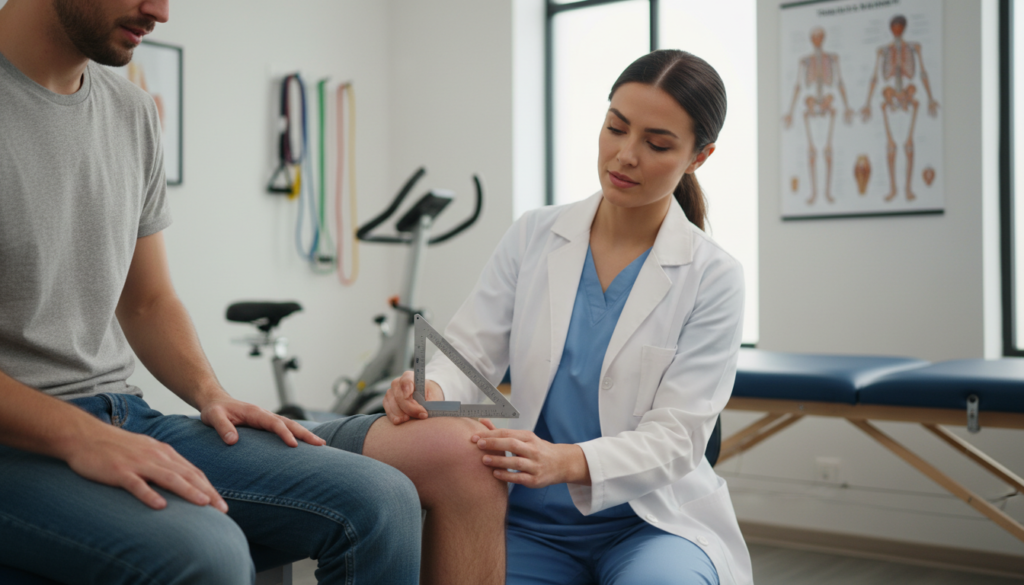
A distinct set of symptoms marks this specific ligament injury, guiding our clinical approach. A grade 2 mcl injury presents with minor joint laxity and partial ligament disruption.
This often causes a sudden sense of instability or discomfort on the inner side of the knee. Patients report a feeling that their joint might buckle during simple tasks.
We closely monitor common indicators like localized swelling and tenderness. These signs confirm a partial ligament sprain has occurred.
It’s normal for your knee to feel unreliable when walking or climbing stairs. This sensation directly results from the injury to the stabilizing tissues of your leg.
Our assessment pinpoints the exact level of laxity present. This ensures your recovery plan is both safe and appropriately challenging.
Managing the associated pain is a priority from day one. We implement gentle, protective movement strategies and introductory exercises to support healing.
Early Stage Rehabilitation Goals for MCL Recovery
Your first steps after a knee ligament injury are the most critical for long-term success. We establish clear objectives for the initial phase of your rehab. Our focus is on protecting the healing tissue while gently restoring essential function.
Managing Pain and Swelling
We prioritize creating an optimal environment for healing. Controlling inflammation and discomfort in the first few weeks is essential.
Techniques like ice application and compression help manage these initial symptoms. Gentle, pain-free movement is also introduced to promote circulation. This careful approach supports the ligament without stressing it.
Restoring Knee Range of Motion
Regaining your full knee range motion prevents stiffness and supports a normal walking pattern. A common early goal is achieving complete knee extension.
This means fully straightening your leg. We use simple exercises like heel slides to gently improve knee mobility.
This foundational work directly improves stability. It prepares the surrounding muscles as you begin to bear weight again.
Essential Physical Therapy Exercises for MCL Rehab
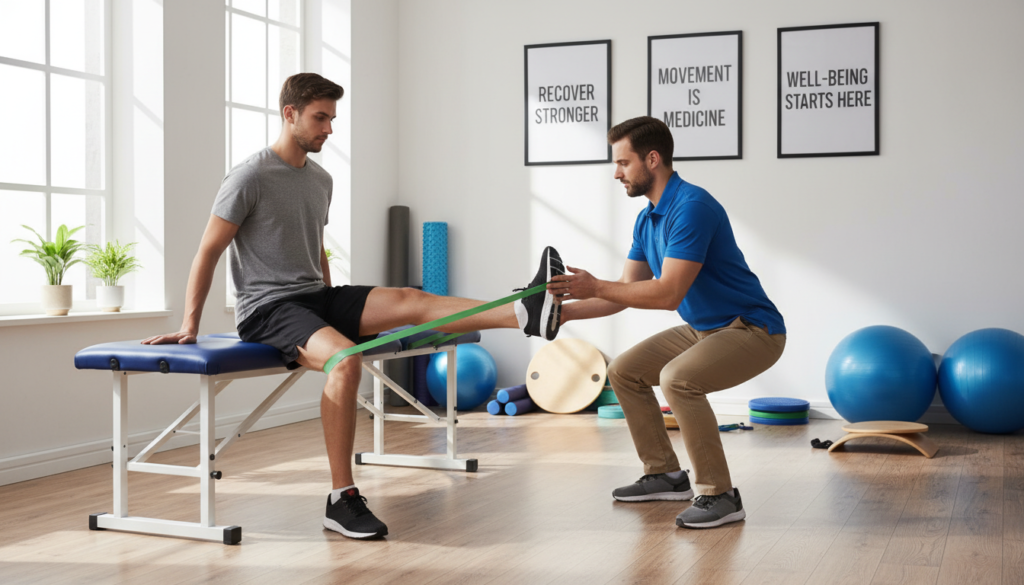
Building a strong foundation for your knee‘s recovery starts with targeted, controlled movements. We select specific exercises to rebuild strength and restore safe mobility after a ligament sprain.
Straight Leg Raises and Quad Sets
We begin with foundational drills that protect the healing tissue. A quad set involves squeezing your thigh muscles for several seconds.
This simple action helps you regain control and improve knee extension. The straight leg raise builds on this by lifting your entire leg while keeping the joint straight.
Both exercises activate key muscles without placing excessive stress on the inner knee. They are crucial for early-stage stability.
Heel Slides and Hamstring Curls
Regaining full range of motion is the next priority. Heel slides gently guide your foot toward your hip, easing stiffness.
We often incorporate standing hamstring curls into your rehab program. This movement supports the joint and further enhances overall stability.
These activities are designed to safely progress your knee function. They prepare you for the next level of your recovery journey.
Step-by-Step Guide to a Safe Recovery Plan
A structured recovery plan provides the roadmap to safely regain your knee’s full potential. We design this guide to progress your rehab without pushing too hard too soon.
Exercise Progressions
We guide you through exercise progressions, ensuring you only move to the next level when ready. Foundational moves like the quad set and straight leg raise build initial control.
Perform each raise with control, returning slowly to the starting position. This protects your healing knee while engaging the correct muscles.
Patient Tips for Consistency
Consistency and repetition are key for progress in your range of motion exercises. Track your daily repetitions and perceived effort to stay on course.
Our team provides tips to manage pain during strengthening work. Learn to slowly lower your leg during movements. This maximizes muscle engagement and protects knee stability.
Sticking to your program ensures steady improvement after an injury. This disciplined approach helps you rebuild confidence in your leg.
Role of a Physical Therapist in Your MCL Rehab Team
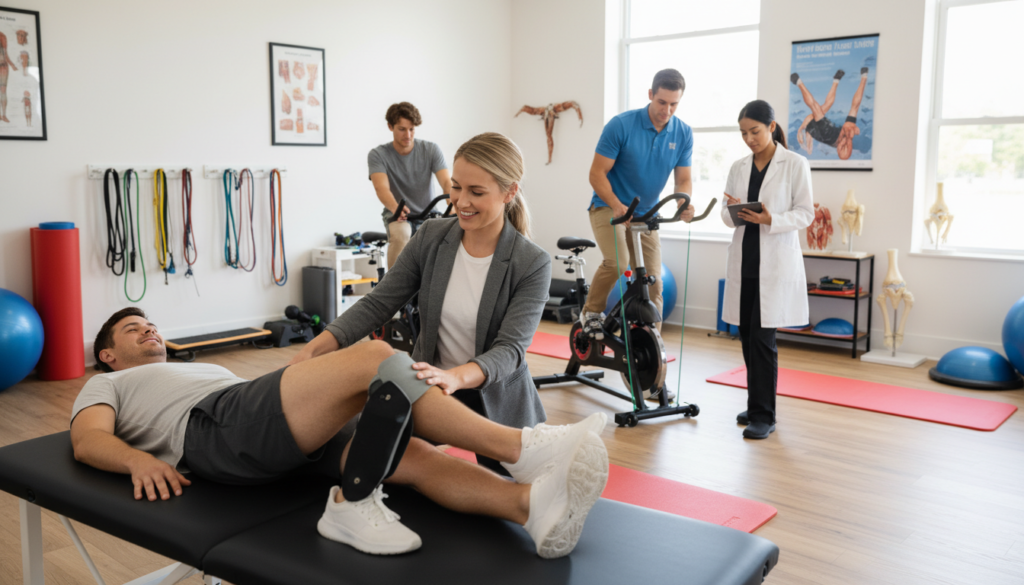
Navigating recovery from a knee ligament sprain is a collaborative journey. Your physical therapist acts as your guide and coach throughout this process. We provide the expertise to ensure your rehab program is both safe and effective.
A personalized care team supports you, tailoring the approach to your specific needs. This transforms standard physical therapy into a dynamic partnership for healing.
Customizing Your Treatment Plan
We do not use a one-size-fits-all approach. Your therapist assesses your current level of function and personal goals. This allows us to tailor every exercises to your unique situation.
Monitoring your progress is a vital part of our role. We adjust the intensity and complexity of movements as your knee heals. This prevents setbacks and promotes steady improvement.
“A personalized plan respects the unique timeline of each ligament injury,” notes a leading therapist.
Building stability in the joint is a primary focus. We select targeted exercises that strengthen the surrounding muscles. This enhances support for the injured mcl on the inner side of your leg.
Feedback on your form is another key service. Proper technique ensures you load the knee correctly. It maximizes benefits while minimizing risk.
| Therapist Action | Patient Benefit |
|---|---|
| Progress Monitoring | Ensures activities match your healing stage |
| Exercise Customization | Aligns movements with personal goals and ability |
| Form Feedback | Promotes safe range of motion and protects the foot and knee |
| Stability Focus | Builds strength in leg muscles for long-term support and mcl rehab success |
| Pain Management Guidance | Helps you exercise comfortably and confidently |
Home-Based Versus Clinic-Based Physical Therapy Approaches
Modern recovery offers two primary paths: guided sessions in a clinic or independent work at home. Both methods aim to restore your knee function after an mcl injury. The best choice often depends on your personal schedule and the level of support you need.
Home-based physical therapy lets you perform exercises in a comfortable setting. You can follow your rehab program on your own time. We provide digital tools to track your progress and maintain consistency.
Data shows this works. Hinge Health members report an average 68% reduction in pain within 12 weeks of their program.
Clinic-based sessions offer direct, hands-on guidance from a therapist. This is especially helpful in the early stages after your injury. A professional can manually assess your knee‘s range of motion and provide immediate feedback.
Both approaches build stability and strength in your leg muscles. Consistent, evidence-based movement is the core of each. We help you decide which path fits your lifestyle while ensuring you hit all recovery milestones.
| Feature | Home-Based Approach | Clinic-Based Approach |
|---|---|---|
| Environment | Comfort of your home, flexible schedule | Structured clinical setting with equipment |
| Guidance | Digital instructions & progress tracking | Direct hands-on correction from a therapist |
| Best For | Maintaining consistency & mid-late stage rehab | Early-stage recovery & complex mcl cases |
| Focus | Building leg strength and knee stability independently | Improving joint motion and protecting the injured side |
| Goal | Pain-free movement for daily tasks and foot coordination | Restoring full range and preparing for sport |
Digital Physical Therapy Programs: A Modern Approach
Recovery from a ligament sprain is entering a new era, powered by accessible, personalized digital programs. This modern method delivers expert-guided rehabilitation directly to you.
It bridges the gap between clinical expertise and daily life. You gain consistent support without frequent clinic visits.
Exploring Hinge Health’s Digital Solutions
Our digital physical therapy program connects you with a personal care team, including a licensed physical therapist. They provide guidance from the comfort of your home.
Customized exercises target your specific knee injury needs. The adaptive routine evolves with your improving capability level.
Building leg stability and muscles is a core focus. The structured plan aims to reduce pain and restore full range of motion.
You access your daily routine through a dedicated app. This makes sticking to your rehab simple and trackable.
| Feature | Benefit | Outcome |
|---|---|---|
| On-Demand Access | Exercise anytime, anywhere | Improved consistency in your program |
| Personalized Exercise Library | Movements tailored to your mcl recovery | Safer progression for the inner knee side |
| Direct Clinician Support | Professional feedback on form and progress | Confidence in each movement, protecting your foot and leg |
| Educational Content | Understand your injury and recovery process | Empowered self-management and long-term health |
This ongoing support helps you manage recovery effectively. It seamlessly integrates with guided targeted MCL exercises for a comprehensive approach.
Techniques to Enhance Knee Stability and Strength
Mastering your balance on one leg is a powerful step toward reclaiming full knee function after a ligament sprain. We focus on advanced methods that build resilience in the injured joint.
These techniques go beyond basic strengthening. They train your nervous system to support the knee during complex movements.
Single Leg Balance Drills
We incorporate single leg balance drills to directly challenge your knee joint and improve proprioception. This sensory feedback is vital for knee stability.
These exercises build the strength you need to return to your favorite sport with confidence. You learn to slowly lower your body during controlled movements.
This action enhances dynamic stability on the injured side. We focus on keeping your hips level throughout each drill.
Proper alignment ensures correct muscles engage. It protects your leg and foot during the rehab process.
Practicing these movements prepares your body for higher-intensity activities. It is a key part of a long-term program to prevent future injury after walking with a torn.
| Drill Level | Primary Focus | Key Benefit |
|---|---|---|
| Beginner | Static balance on flat surface | Builds foundational joint awareness |
| Intermediate | Balance on unstable surface (e.g., pillow) | Challenges and improves knee reactivity |
| Advanced | Dynamic single leg movements with arm reach | Prepares for sport-specific demands and protects the mcl |
Preventing Re-Injury: Long-Term Maintenance Strategies
The journey doesn’t end when pain subsides; preventing re-injury is the next crucial phase. We build a sustainable plan to keep your joint resilient.
This long-term approach focuses on two core pillars: smart preparation and consistent strengthening. Both are essential for lasting health.
Effective Warm-Up Routines
Warming up before activity increases blood flow and engages muscles. This prepares your medial collateral ligament for stress.
A proper routine reduces the risk of future mcl injuries. We recommend dynamic movements that mimic your sport.
Strengthening for Future Protection
Strengthening the hips, knees, and ankles is crucial for long-term knee stability. A consistent program targets supporting leg muscles.
You will continue to perform single leg exercises. This ensures balanced strength and maintains your knee joint integrity.
Incorporate a straight leg leg raise to keep quadriceps strong. Returning to sport requires a gradual increase in intensity.
| Component | Primary Purpose | Example Activity |
|---|---|---|
| Dynamic Warm-Up | Increase blood flow, prepare collateral ligament | Leg swings, walking lunges |
| Strength Training | Build muscle support for the knee | Single leg squats, calf raises |
| Balance Drills | Enhance knee stability and proprioception | Standing on one foot on a soft surface |
| Sport-Specific Drills | Adapt body to sport demands safely | Controlled cutting and pivoting at a low level |
Monitoring Progress and Adjusting Your Therapy Routine
Effective rehabilitation hinges on regularly assessing your capabilities and fine-tuning your activities. We monitor your advancement through specific functional milestones after a knee ligament injury.
Indicators for Success
Key signs of improvement include walking without a limp and completing exercises with minimal discomfort. Your physical therapist tracks your ability to perform a straight leg raise and other movements.
These metrics guide adjustments to your rehab program. Gains in knee range motion and strength determine when to progress.
Success also shows in better knee extension and balance during single leg drills. We ensure you’re ready for the next level by evaluating each session.
You’ll learn to listen to your body. Modify activities if you feel swelling or pain in your leg or foot.
This adaptive approach keeps your mcl rehab safe and effective. It prepares your knee for a return to sport and daily life, building resilient muscles.
Conclusion
Successfully navigating rehabilitation transforms an MCL injury into an opportunity for building stronger knee resilience. Recovering from a grade 2 medial collateral ligament issue demands a structured, patient approach.
We outlined essential exercises to regain strength and knee stability. Consistency remains the most critical factor for healing this collateral ligament over time.
By following this guide, you take the right steps to protect your knee. You can confidently return to your favorite sport with stable foot and proper alignment.
Work closely with your healthcare provider. Ensure your recovery program is safe and effective for your specific injury level.
Your commitment to these activities helps build a resilient knee. It will support your leg for years to come, preventing future MCL injuries.