
Dealing with a painful ankle issue can stop you in your tracks. It makes everyday tasks difficult and keeps you from the activities you love. At Integrity Foot & Ankle Associates in Lorain, OH, we specialize in helping people recover from lower extremity trauma.

best physical therapy sprain
Our focus is on conservative recovery methods. We believe in helping your body heal naturally whenever possible. This approach aims to restore your mobility and get you back to your daily routine without surgery.
Proper diagnosis is our first priority. We carefully assess your condition to understand the full extent of the injury. This allows us to create a personalized plan that addresses your specific needs for an ankle sprain.
Our team uses proven, evidence-based protocols. We are dedicated to providing the highest standard of care for every patient. Our goal is your long-term joint health and preventing future problems.
Key Takeaways
- We provide specialized, conservative care for foot and ankle injuries in Lorain, OH.
- Accurate diagnosis is the critical first step to effective recovery.
- Our treatment plans are personalized and based on proven medical evidence.
- We prioritize non-surgical methods to restore mobility and function.
- The focus is on long-term wellness and preventing re-injury.
- You gain access to a dedicated team committed to your full recovery.
Introduction to Physical Therapy and Sprain Recovery
Modern recovery science has shifted away from the old ‘rest and wait’ model for soft tissue damage. Many people mistakenly believe total immobility is the only safe way forward after an injury.
Research indicates that movement is a critical component of the healing process for ligament damage rather than complete immobilization.
Our approach focuses on restoring function through guided activity. This helps patients recover faster than those who remain sedentary for too long.

guided rehabilitation for ankle recovery
We educate on the importance of early intervention. Starting a structured program can significantly improve the long-term outcome of a sprained ankle.
By integrating professional guidance, we ensure you are actively rebuilding tissue integrity, not just masking symptoms. Techniques like targeted soft tissue work can be part of this comprehensive rehabilitation.
Our goal is to provide the tools and knowledge you need. This empowers you to navigate your recovery journey with confidence and professional support.
Understanding Knee Injuries and Traumatology Insights
Traumatology teaches us that injuries rarely exist in isolation, often affecting neighboring structures. While we specialize in foot and ankle care, a problem in one area can lead to compensatory issues elsewhere. An untreated injury here can disrupt your entire gait.

knee and ankle joint connection
We apply these medical principles to address related knee problems. When your ankle is hurt, your body naturally changes how you move. This altered walking pattern can place new, undue stress on your knee joint over time.
Targeted ankle exercises are essential for preventing future trauma and maintaining overall joint health.
Caitlin Shaw, PT, DPT, a physical therapist at Hinge Health
Our clinical insight allows us to treat the whole kinetic chain. We look at how your muscles and joints work together as a system. This ensures your recovery is balanced and prevents secondary complications.
By understanding these relationships, we provide a more holistic path forward. Our goal is to restore your natural, efficient movement patterns completely. This comprehensive approach is key to a full and lasting recovery.
Implementing the Best Physical Therapy Sprain Protocol
A successful recovery plan is built on a structured protocol that activates key muscle groups. We prioritize strengthening the tissues that surround your joint. This provides essential support to healing ligaments and enhances overall stability.

structured rehabilitation protocol for joint stability
Our method involves a carefully graded movement plan. Intensity increases slowly to match your healing stage. This approach safely rebuilds your natural function and prevents re-injury.
Consistency in your routine is the primary factor for lasting results. Our team monitors your progress closely. We adjust exercises to ensure they align with your current capabilities.
Following these evidence-based guidelines reduces the risk of chronic joint issues. You regain confidence in your body’s strength and resilience. The goal is a full, efficient return to your daily activities.
Step-by-Step How-To Guide for Sprain Rehabilitation
Your journey back to full mobility begins with understanding the timeline for healing. We create a clear, phased plan that matches your specific injury grade.
For a mild Grade 1 sprained ankle, recovery often takes 1-2 weeks. A more involved Grade 2 injury typically needs 3-6 weeks of dedicated rehabilitation. Severe Grade 3 cases usually require 8+ weeks of care.

step by step sprain rehabilitation guide
We start with the initial phase. Our focus is on gentle techniques that reduce discomfort. This careful approach maintains the health of your leg while healing begins.
As you progress, we introduce targeted strengthening exercises. These are designed to rebuild power in the muscles surrounding your ankle. This builds essential support for the joint.
Our step-by-step method ensures you never rush the process. Allowing your body the necessary time to repair is crucial. This patience leads to a stronger, more resilient ankle in the long run.
Essential Exercises for Ankle and Foot Mobility
Improving how your foot and ankle move is a critical step in the healing process. We focus on specific exercises designed to increase flexibility and joint range.
One of our recommended exercises is the “Ankle Alphabet.” You use your toes to write letters in the air. This simple movement improves your range of motion in all directions.
Another effective method involves using a towel. Place it around the ball of your foot and gently pull toward you. Hold this position for 15 to 20 seconds to increase flexibility.
These exercises are performed in a controlled range of motion. This ensures you do not put excessive stress on the healing joint.
Consistent practice of these mobility exercises is key. It helps you regain the full motion required for walking and other daily activities. Using a towel for a gentle stretch is a safe way to support your ankle and foot recovery.
Pain Management and Inflammation Reduction Strategies
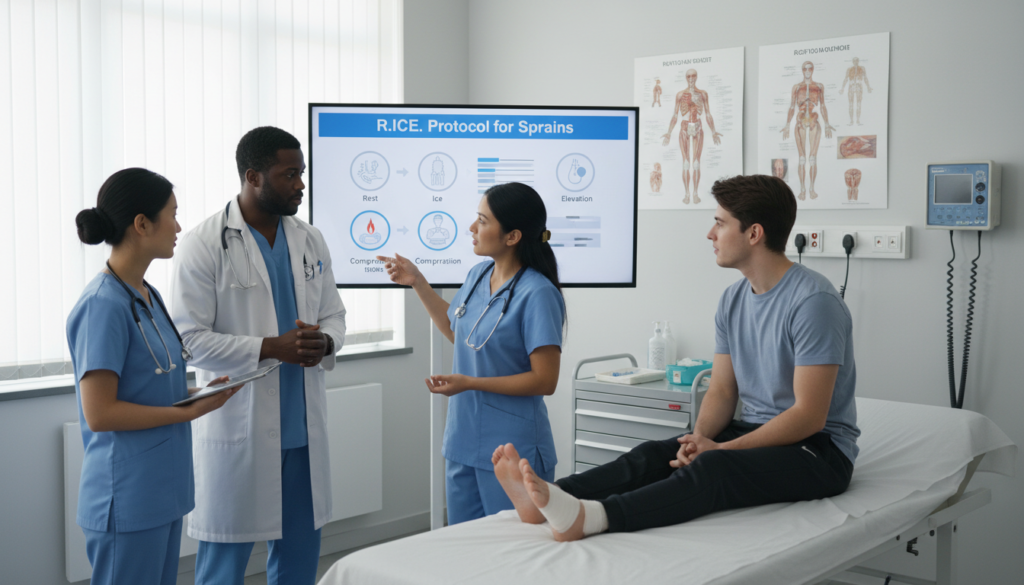
Our initial focus after a ligament injury centers on managing inflammation and easing pain. Immediate care follows the proven RICE principle: Rest, Ice, Compression, and Elevation. This approach directly controls initial swelling and provides crucial comfort.
We utilize targeted cold therapy and proper limb elevation. These methods significantly reduce fluid accumulation around the injured ankle. Reducing this swelling is a primary step in alleviating persistent pain.
Proper compression is another key technique we teach. Applying firm, even pressure to the side of the joint helps minimize further fluid buildup. This support makes the area feel more stable and directly alleviates discomfort.
Our strategies are designed to make your movement more comfortable. When pain is managed, you can participate more fully in your prescribed exercises. This active engagement is vital for a successful recovery journey.
Addressing these symptoms early prevents the development of chronic issues. We monitor your ankle‘s condition during every visit. This ensures our plan remains effective and responsive to your healing process.
Building Strength and Improving Balance
A resilient joint depends on more than just healing ligaments. It needs muscular support and neural control to function properly again.
We incorporate specific balance training into your program. A foundational technique is standing on one leg for 30 seconds.
This simple exercise dramatically improves your proprioception and joint stability. We can progress it by having you close your eyes or add arm movements.
Strengthening your leg muscles is crucial for supporting your ankle. We use effective exercises that can be performed safely on the floor.
You will practice holding these positions for 30 seconds at a time. This builds the muscular endurance needed to maintain your balance during daily tasks.
Our training techniques are designed to challenge your ankle in a controlled setting. This prepares you for uneven surfaces and unexpected shifts in weight.
By focusing on both strength and balance, we ensure your joint is resilient. You gain the confidence to handle the demands of an active lifestyle.
Tailored Rehabilitation Plans and Monitoring Progress
Your body’s healing process is unique, which is why a one-size-fits-all approach often falls short. We create a personalized plan based on your specific injury and daily life goals.
Our therapist works closely with you from the start. They adjust the exercise program as you heal, ensuring it targets key muscles effectively. This dynamic approach matches your current capabilities.
Regular check-ins are a core part of our process. We conduct ongoing evaluations to track your improvements. This careful monitoring ensures your return to normal activities is both safe and lasting, much like the principles behind a structured rehabilitation for ankle injury.
We pay close attention to how your muscles are responding and your overall movement patterns. This data lets us refine your strategy for the best outcome.
| Phase | Monitoring Focus | Key Metrics |
| Initial Healing | Pain & Swelling Reduction | Range of motion, comfort level |
| Strengthening | Muscle Activation & Endurance | Exercise repetitions, weight tolerance |
| Functional Integration | Gait & Balance | Walking pattern, single-leg stance time |
| Return to Activity | Joint Stability Under Load | Ability to perform sport-specific motions |
This detailed tracking allows us to modify your plan in real time. We focus on rebuilding the ankle joint‘s strength and your confidence in its ankle’s stability. Our commitment is to guide your entire recovery journey with expert support.
Integrating Expert Traumatology Advice into Your Recovery
The complex structure of your feet and ankles demands a nuanced approach informed by current medical research. We integrate expert traumatology insights directly into your care plan. This ensures your ankle injury is managed with the most advanced knowledge available.
Our method considers the intricate anatomy of your lower extremities. We provide specialized care that targets the root cause of your discomfort. This focus on the whole joint and surrounding muscles promotes safer, more effective healing.
Research published by the American Academy of Orthopedic Surgeons (AAOS) highlights the critical need for professional evaluation after any significant ankle injury. Following established professional guidelines protects your tissues throughout the entire process.
We emphasize the value of clinical oversight, particularly for a severe sprain. Our team continuously updates its practices based on the latest evidence. This commitment gives you access to the most effective and secure treatment options for your unique condition.
Leveraging External Resources for Continued Learning
Learning doesn’t stop when you leave our clinic; it continues with trusted digital tools. We encourage using reputable online programs to support your healing journey between appointments.
For example, members of the Hinge Health program report an average 68% reduction in pain within 12 weeks. A physical therapist in the app guides you through specific exercises using a resistance band.
You can perform these movements on the floor or near a wall. Focus on calf raises, side taps, and heel-to-toe walks. This training improves your balance and ankle stability effectively.
These resources offer step-by-step videos. They ensure you maintain proper form while strengthening your feet and ankles. This is a safe way to build strength in the supporting muscles.
The tools help you track progress over time. Many people experience significant pain relief and better mobility. By leveraging these external aids, you supplement in-person sessions with a therapist.
This approach helps you stay consistent with your rehabilitation plan. It empowers you to take an active role in returning to your favorite activities with confidence.
Conclusion
This journey transforms you from a patient back into an active participant in your life. We have outlined the core elements of an effective recovery path. Professional guidance and regular exercises form its foundation.
Adhering to a structured plan allows you to control discomfort and rebuild ankle strength and stability. Remember, healing is a process that requires patience. Our team is committed to supporting your every move.
Continue the prescribed movement and maintain the healthy habits you’ve learned. This protects your long-term joint health. Thank you for your trust. We are dedicated to helping you confidently return to the activities you enjoy.
FAQ
How soon after my ankle injury should I start moving it?
We recommend beginning gentle mobility exercises as soon as your pain allows, often within the first few days. Early, controlled movement can help reduce swelling and prevent stiffness. Always follow your specific plan from a healthcare professional.
What are the most important exercises for a sprained foot?
Key movements focus on restoring range of motion, building strength, and improving stability. Essential activities include alphabet exercises with your toes, calf stretches against a wall, and balance training on one leg. A tailored progression is crucial for healing.
Can I manage the swelling and pain at home?
Yes, initial strategies are vital. Use the R.I.C.E. method—Rest, Ice, Compression, and Elevation—for the first 48-72 hours. Over-the-counter anti-inflammatory medication, as advised by a doctor, can also help control inflammation and discomfort during rehabilitation.
Why is balance training part of my rehabilitation plan?
After an ankle sprain, the proprioceptive signals between your joint, muscles, and brain are often impaired. Balance exercises, like standing on one foot, retrain these pathways. This significantly reduces your risk of re-injury when returning to sports or daily activities.
How long does full recovery from a severe sprain typically take?
Recovery time varies based on the injury’s grade and your commitment to the program. While initial healing may take a few weeks, regaining full strength, mobility, and confidence can require several months of consistent training and guided support.
When should I consult a specialist in traumatology?
Seek expert advice immediately if you heard a popping sound, cannot bear weight, or have severe swelling and deformity. A traumatologist can diagnose the extent of damage, rule out fractures, and help design a safe, effective long-term recovery strategy.