
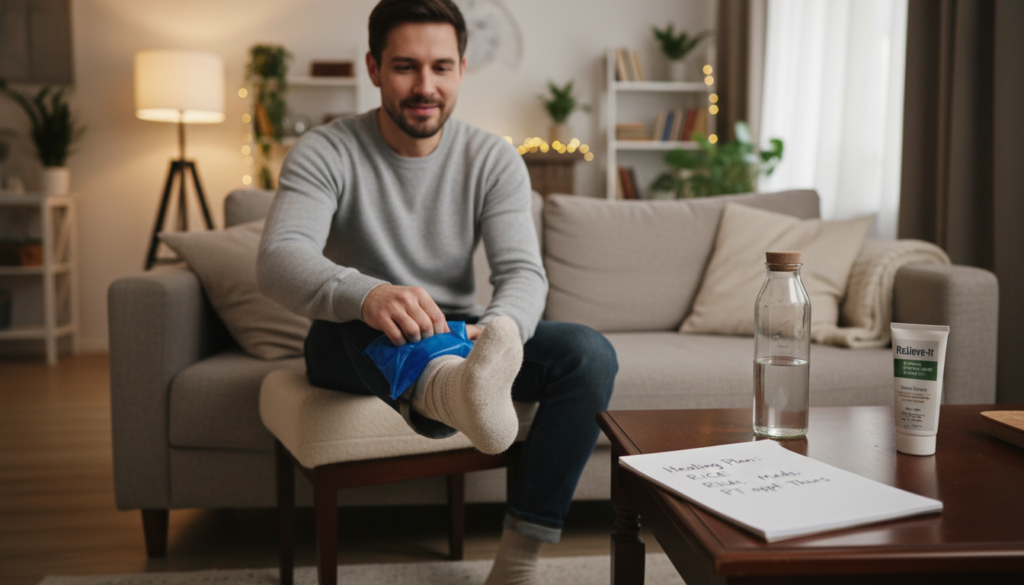

Every day in the United States, about 25,000 people twist an ankle. This frequent mishap can stop you from enjoying your favorite activities or sports.
essential sprain prevention tips
We created this guide to help you stay mobile and independent. Our team includes experts in traumatology and physical therapy.
Understanding how your body moves is the first step toward long-term joint health. Simple actions you take now can drastically cut your risk of a future, painful ankle injury.
Following our structured advice helps protect your joints. It also keeps your athletic performance steady all year. For instance, mastering proper squatting form is a smart way to guard your knees.
Key Takeaways
- Ankle twists are very common, occurring thousands of times daily.
- Expert advice from medical professionals can help you avoid common joint issues.
- Learning your body’s mechanics is vital for lasting musculoskeletal health.
- Proactive measures taken today greatly reduce the chance of a debilitating ankle problem tomorrow.
- Safeguarding your joints supports your mobility and active lifestyle.
- A planned approach ensures consistent performance in physical activities.
- Taking early action is a cornerstone of any effective health strategy.
Understanding Sprains: An Overview
The complex structure of the ankle joint makes it particularly vulnerable to sudden twists and turns during activity. Grasping the basics of these injuries helps us make smarter choices for our bodies.
Definition and Types
An ankle sprain is damage to the tough bands of tissue, called ligaments, that hold the bones together. The ankle is a hinge where the tibia, fibula, and talus meet.
Ligaments here limit motion to a safe range. When forced beyond this range, they stretch or tear.
| Type of Sprain | How It Happens | Ligaments Typically Affected | Common Severity |
| Inversion Sprain | Foot rolls outward onto its side. | Lateral ligaments on the outer ankle. | Mild to Moderate |
| Eversion Sprain | Foot rolls inward. | Deltoid ligament on the inner ankle. | Often More Severe |
| High Ankle Sprain | Outward rotation of the foot. | Syndesmotic ligaments between leg bones. | Can be Severe |
Inversion injuries are by far the most frequent. High ankle sprains are less common but can take longer to heal.
Common Causes and Risk Factors
What leads to these painful events? Uneven surfaces, sudden stops, or pivoting in sports are typical culprits.
Prior injury is a major risk factor. A weakened ankle is much more likely to be re-injured. Improper footwear and fatigue also play significant roles.
Understanding these common foot ankle issues is vital for your long-term joint health. Knowledge empowers you to avoid situations that heighten risk.
The Role of Traumatology in Injury Prevention
Recurrent ankle sprains are not just bad luck; they are a predictable pattern that specialized medical science aims to break. Traumatology experts highlight a startling fact: 70% of patients with an ankle sprain will experience another one. This creates a damaging cycle of weakness and re-injury.
Our approach in trauma care integrates advanced physical therapy methods. We target the primary and secondary dangers linked to chronic ankle instability. The goal is to halt the cascade of harmful biomechanical changes that start with the initial joint damage.
| Aspect | Traditional Response | Modern Traumatology Approach |
| Primary Focus | Managing immediate pain and swelling. | Addressing the root cause of instability to prevent the next injury. |
| Long-term Goal | Return to activity. | Build resilient joints and break the negative feedback loop for good. |
| Healthcare Impact | Repeated costs for episodic care. | Reduces economic burden by promoting lasting stability and health. |

traumatology injury prevention
We collaborate with health care systems to lessen the widespread economic load of these common musculoskeletal issues. By spotting specific risk factors early, we create targeted programs. These programs greatly lower the chance of suffering from recurrent injuries over time.
“The key is to intervene before the body learns instability. We must treat the first sprain as a high-risk event for future problems, not just an isolated incident.”
This proactive, science-based methodology is the cornerstone of effective long-term joint health. It moves beyond simple symptom management to offer a real strategy for reducing future likelihood of ankle problems.
Essential Sprain Prevention Tips
Consistent, tailored training is the cornerstone of durable joint health for active individuals. Athletic trainers have a unique advantage here. They work directly with players to build effective routines.
We recommend consulting a certified athletic trainer. Together, you can develop a plan that fits your physical needs and sport goals. This personalized approach is powerful.
Sticking to a regular routine is vital for lowering the chance of ankle sprains. This is especially true if you’ve had a prior joint issue. Our clinical review shows proactive care manages the public health load of these athletic injuries best.
Make your long-term joint health a priority. Weave these strategies into your daily fitness life. Good plans consider your unique body and the demands of your activity.
Mechanical Support Strategies
External aids have been a trusted part of joint care for over a century, offering a mechanical barrier against injury. Strategies like bracing and taping remain a cornerstone of modern care. They work by providing external support to vulnerable ligaments.

mechanical support strategies
Frederick Hackey patented the lace-up ankle brace back in 1887. This invention laid the groundwork for today’s devices.
Benefits of Bracing
Our review of the literature shows bracing is often more cost-effective than taping for long-term use. It is a smart choice for athletes focused on prevention. A good brace helps by stopping the joint from moving into a dangerous position.
This action directly lowers the risk of a new injury. It is especially useful for those with a history of joint issues.
Taping Effectiveness
Gibney introduced ankle taping as a treatment for ankle sprains in 1895. It is still a popular method for giving quick, firm support. The success of tape depends on the material quality and how it is applied.
A clinician must use the correct technique. When done right, taping can be very effective for a single game or practice.
Choosing the right aid is a key decision. Both methods help prevent ankle sprains. They should be part of a full plan that includes methods like targeted massage techniques for recovery and maintenance.
Neuromuscular Benefits and Proprioception
Proprioception, your body’s built-in GPS, is a critical but often overlooked shield against joint injuries. This sense tells your brain where your ankle is in space without you looking.
We call this whole system neuromuscular control. It combines improved proprioception, faster peroneal muscle reflexes, and better postural stability. Together, they form your best defense against a sudden twist.
Our prevention programs are built on this science. They focus intensely on enhancing balance and stability. This training protects the joint during high-intensity movements.
| Neuromuscular Component | Its Function | Training Focus |
| Proprioception | Spatial awareness of the joint. | Single-leg stands on unstable surfaces. |
| Peroneal Reflex | Rapid muscle response to correct a roll. | Perturbation training and reactive drills. |
| Postural Stability | Maintaining center of gravity over the base. | Dynamic balance exercise sequences. |
Taping and bracing may help this system. They are thought to stimulate skin receptors. This extra feedback can help your body maintain better balance during complex activities.
By incorporating specific programs, we optimize your dynamic stabilizers. These muscles learn to protect the ankle from sudden, awkward forces. Improving this internal control is a core strategy.
It directly lowers the risk of ankle sprains. It also boosts overall athletic performance and confidence. A strong, responsive ankle is a resilient one.
Psychological Aspects of Injury Prevention
The mind plays a powerful, often unseen role in how we move and protect our joints from harm.
Psychological factors are significant for injury prevention and avoiding these common ankle sprains. Feeling secure in your ankle stability boosts confidence during activity.

psychological aspects injury prevention
Investigators note that using supports enhances perceptions of stability. This mental reassurance lets athletes perform with greater freedom.
It can lower the risk of a future sprain. Natural movement patterns return when fear of re-injury fades.
Our programs address both physical and mental aspects of returning to sport. We work to rebuild an athlete’s trust in their ankle after a prior issue.
Confidence is a critical element for balance and coordination. Without it, even strong muscles may not react quickly enough.
By fostering a positive mindset, we help maintain focus on effective prevention programs. Dedication to the rigorous work required becomes more sustainable.
This mental edge supports better balance and dynamic balance control. It reduces the likelihood of ankle sprains. A confident ankle is a more resilient one.
Incorporating External Supports: Taping and Bracing Insights
A landmark 2013 systematic review settled a long-standing question in sports medicine. Evans and Clough determined that bracing was the best and least expensive intervention for preventing ankle sprains.
Our review of current evidence aligns with this finding. For many athletes, a brace offers the most effective and economical protection against these common injuries.
The choice between tape and a brace often comes down to personal preference. Sport-specific demands also play a key role in this decision.
Both methods provide proven external support. This support is crucial for reducing risk, especially after a prior ankle sprain.
We provide insights on properly adding these aids to your routine. Consistent use helps maximize protective benefits during training and games.
This approach helps maintain joint integrity. It can prevent long-term issues linked to chronic ankle instability, as detailed in this comprehensive clinical review.
Smart use of external aids is a cornerstone of intelligent prevention. It safeguards your ankle while you pursue your athletic goals.
Exploring Alternative Therapies
Some athletes turn to specialized taping methods like Kinesio and fibular-repositioning for perceived advantages. We explore these options to provide a complete view of the landscape.
Our clinical work involves a constant review of emerging techniques. It is important to understand what they offer.
Kinesio and Fibular-Repositioning Taping
Kinesio taping gained popularity for its claimed neuromuscular benefits. A 2012 meta-analysis by Williams et al, however, found little quality evidence supporting it over other elastic tapes.
The fibular-repositioning technique was introduced by Mulligan. It aims to correct anterior positional faults of the fibula bone.
Evidence for these methods in injury prevention remains largely equivocal. They are a subject of ongoing review in our work.
Additional Foot Orthoses Options
Custom foot orthoses represent another alternative path. They are designed to address specific biomechanical issues that may increase risk.
While some athletes prefer these newer therapies, traditional bracing and taping remain the gold standard. They are proven for stopping a serious ankle sprain.
We continue to monitor research for sport-specific prevention. Our advice is to focus on proven methods first.
Staying open to thoughtful developments can enhance any strategy against common ankle sprains. A balanced approach protects your joints best.
Warm-Up and Stretching Techniques for Sprain Prevention
Starting your workout with dynamic movements prepares your muscles and joints for the demands ahead. This practice is a cornerstone of intelligent injury prevention.
Effective Warm-Up Routines
We recommend a slow jog for two to three minutes before any intense training. This raises your core temperature and increases blood flow to the muscles.
Proper routines are vital for lowering your risk. A classic 1973 study by Garrick and Requa showed a 55% reduction in ankle sprains with taping, highlighting how proactive measures work.
Calf and Soleus Stretches
Stretching these key muscle groups maintains the flexibility your ankle joint needs. Hold each stretch for 20-30 seconds without bouncing.
Avoid a bouncing motion. This can place undue stress on the ligaments and may lead to further injury.
Consistent attention to your warm-up and recovery is part of the care required. It helps stop recurrent injuries and keeps you performing well.
Strengthening Exercises for Ankle and Knee Stability
The power to stop an ankle from rolling often comes from the muscles of the calf and the side of the leg. We design our training to build this specific strength. This focused work creates stable foundations for both the ankle and knee joints.
Calf Muscle Strengthening
Kevin McEnroy, a physical therapist at Brigham and Women’s Hospital, emphasizes challenging the calf. The gastrocnemius and soleus muscles are crucial for push-off and shock absorption.
We recommend single-leg calf raises. Perform them with your heel hanging off a step. This exercise builds the strength needed to handle forces up to twice your body weight.

strengthening exercises for ankle and knee
Side-to-Side Movement Exercises
Lateral stability is just as important. Strengthening the invertors and evertors improves side-to-side control.
Use a resistance band for these movements. Securing the band and moving your foot against it builds resilient ligaments and muscles. This directly supports the ankle joint and aids in knee alignment.
| Key Exercise | Primary Muscles Worked | Stability Benefit |
| Single-Leg Calf Raise | Gastrocnemius, Soleus | Improves vertical force control and balance |
| Band Inversion/Eversion | Tibialis Posterior, Peroneals | Enhances lateral stability to stop a roll |
| Single-Leg Balance | All lower leg stabilizers | Boosts proprioception and joint coordination |
Dedicate time to these exercises a few days per week. Consistent effort over several weeks builds lasting strength. This is a powerful strategy for injury prevention.
Customizing Athletic Footwear and Orthotics
Proper athletic footwear acts as a personalized foundation for every step you take. The right shoes support your entire body and lower your risk of common ankle injuries.
We integrate this into our prevention programs for active individuals. Smart choices here are a key part of long-term joint care.
Selecting Appropriate Shoes for Your Foot Type
Choosing shoes for your specific foot structure is crucial. It ensures proper support during training and daily exercise.
People with low arches need shoes that offer support under the arch and in the front. This design helps prevent foot pain and maintains balance.
Good footwear maintains the health of your foot ankle complex. It stops the stress that leads to many sports injuries.
When to Replace Athletic Shoes
Even the best shoes lose their protective cushioning over time. We advise runners to get new shoes every six months.
Avid runners may need to replace them more often. Worn-out shoes fail to absorb impact, straining your ankle muscles and ligaments.
Sport-specific shoes handle the unique motions of your activity. Using them is a smart step for injury prevention and better recovery.
Pay close attention to your gear. It supports your athletes and keeps your sport participation safe.
Tailoring Prevention Strategies for Sports Injuries
Sport-specific injury data reveals clear patterns. This information guides us to design targeted protection strategies for each activity.
Sport-Specific Risk Factors
Consider the demands of long-distance running. Research shows that 49% of stress fractures occurred in people who ran between 25 to 44 miles per week.
This statistic highlights the critical need for gradual increases in training volume. Pushing too hard, too fast, raises the risk of overuse injuries to the foot and ankle.
Soccer presents a different set of challenges. Collision injuries account for 30% of all soccer injuries.
Furthermore, ankle injuries make up 20 to 30 percent of soccer-related issues. These are often traumatic events during tackles or sudden direction changes.
Understanding these unique hazards allows for better guidance. Protecting your foot and ankle during intense competition requires sport-specific knowledge.
We emphasize training on the correct surface and increasing activity level slowly. These steps are fundamental to avoiding problems like ankle sprains in any sport.
Conclusion
The journey to resilient ankles is built on the strategies we’ve outlined throughout this guide. We have explored the necessary steps to keep your joints strong and healthy.
By integrating proper training, external support, and targeted exercises, you can significantly lower your risk of suffering a painful sprain. Consistent care and attention to your body’s signals are the best ways to stop recurrent issues.
Research, such as the systematic review on external supports, confirms that aids like bracing offer strong risk reduction benefits. This is especially true for athletes with a history of joint problems.
Our team encourages you to apply these methods to your routine. Doing so helps ensure you stay active and injury-free for years to come. Thank you for trusting our traumatology and physical therapy experts.
FAQ
What exactly is a sprain?
A sprain is an injury to the ligaments, the tough bands of tissue that connect bones at a joint. It occurs when these ligaments are stretched or torn, often from a sudden twist or fall. The most common site for this type of problem is the ankle joint.
How can I best protect my ankles during sports?
A multi-faceted approach works best. We recommend consistent strength and balancetraining for the muscles around the ankle and knee. Wearing proper, supportive footwear and using brace or taping in high-risk situations are also key injury prevention strategies to lower your risk.
What role does footwear play in avoiding ankle injuries?
The right shoes are crucial. They provide the foundation for stability and support. For athletes, selecting shoes designed for your specific sport and foot type is vital. Worn-out shoes lose their cushioning and stability, so replacing them regularly is a simple but effective part of care.
If I do get a sprain, what should I do first?
Immediate treatment focuses on the R.I.C.E. method: Rest, Ice, Compression, and Elevation. This helps manage swelling and pain in the first 48 hours. For a proper diagnosis and to rule out a fracture, it’s important to seek health care from a professional, like a doctor specializing in traumatology.
How long does recovery from a moderate ankle sprain typically take?
A: Recovery time varies, but a moderate ankle sprain often requires several weeks. The initial phase focuses on reducing swelling, followed by rehabilitation exercises to restore range of motion, strength, and balance. Adhering to a guided exerciseprogram is essential for a full return to activity and preventing recurrent injuries.
Are braces or tape better for preventing sprains?
Both offer mechanical support but in different ways. Bracing is often preferred for its ease of use and consistent support during high-risk activities. Taping, including methods like Kinesio taping, can provide support and enhance proprioception—your body’s sense of joint position. The best choice can depend on the sport and individual needs.