
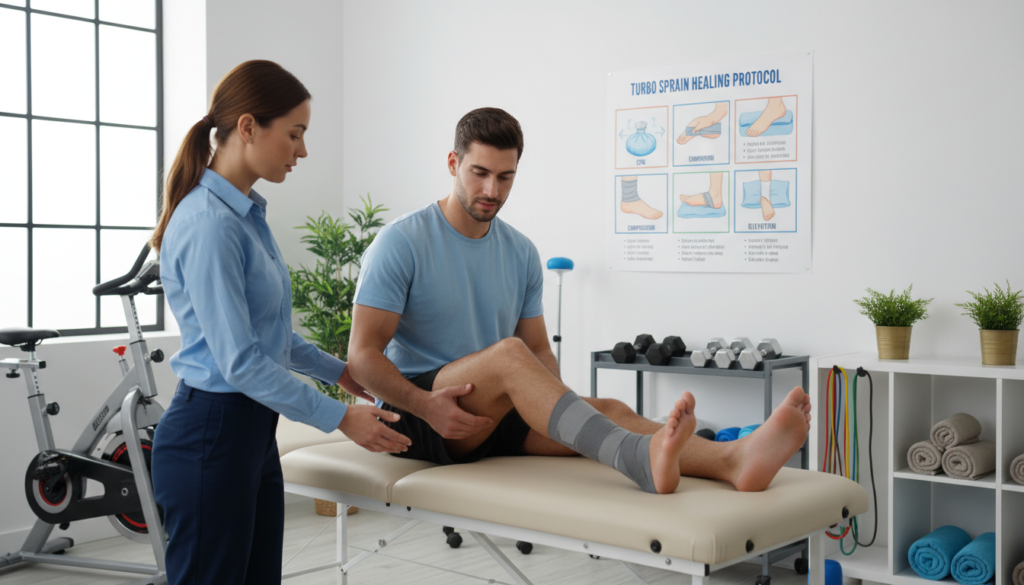
A significant knee injury can disrupt your life. The path to healing is often complex and personal. Our goal is to guide you through this process with clarity and support.

superior sprain rehabilitation
Led by Dr. Adam Anz, we provide specialized orthopedic care for the Pensacola and Gulf Coast communities. We understand the physical and emotional challenges a serious injury brings.
Every recovery journey is unique. That’s why we create a tailored plan for each patient. We use the latest evidence-based treatment protocols to ensure safety and effectiveness.
Understanding the specific nature of your knee issue is the crucial first step. From there, we focus on regaining mobility and strength. This structured approach helps you manage symptoms and work toward restoring full function.
Key Takeaways
- Recovering from a major knee injury requires a personalized plan.
- Specialized care is available locally in the Gulf Coast region.
- Understanding your specific diagnosis is essential for progress.
- Treatment should be based on proven, evidence-based methods.
- The ultimate goal is to restore your function and return to daily activities.
- A supportive medical team can make the recovery process more manageable.
- Proactive management of symptoms is a key part of successful healing.
Introduction: Overview of Our Superior Sprain Rehabilitation Guide
Healing is a journey with distinct phases, each critical for restoring function. This guide outlines those essential stages for patients dealing with knee issues.
We detail the necessary methods to address the root causes of your condition. Our focus is on promoting safe and steady progress.
What to Expect in This Guide
Our approach integrates the latest research in physical therapy. It provides you with a clear, personal roadmap for recovery.
Remember, all protocols are general guidelines. Patients should not move forward until they meet specific functional criteria set by clinical standards.
You will learn how to monitor your own healing. We’ll show you when it’s appropriate to advance to more challenging activities.
We strongly encourage you to consult with a qualified professional. They can ensure these general guidelines are perfectly adapted to your needs. For specialized care for knee injuries, our team is here to help.
Understanding Superior Sprain Rehabilitation
Located just below the knee on the outer side, a small joint plays a big role in movement. This structure, the superior tibiofibular joint, connects the tibia and fibula bones. It is vital for complex twisting actions and transferring load from your feet to your body.

superior tibiofibular joint anatomy
A primary goal in our care is to restore its normal motion. This focus ensures you can stand, walk, and handle weight-bearing tasks without significant discomfort.
We believe knowledge is power. A proper grasp of this anatomy helps any patient navigate their specific orthopedic condition. Healing is an active partnership built on education and consistent practice.
By addressing the mechanics here, you rebuild the confidence to move through your day. The result is improved stability and a stronger foundation for your entire recovery journey.
Causes and Mechanisms Behind Knee and Tibiofibular Sprains
Millions of people experience lower extremity injuries each year, often from specific activities or biomechanical factors. Understanding the root cause is essential for building an effective recovery plan.
We see two main categories: traumatic events and overuse patterns. Each has a distinct mechanism that affects the knee and the nearby tibiofibular joint.
Traumatic vs. Overuse Injuries
Traumatic injuries happen suddenly. A high-velocity twist or direct blow can damage ligaments. This is common in sports like rugby or lacrosse.
Overuse injuries develop slowly. Repetitive forces from running or jumping strain the tissues over time. Both types can affect the ankle and the stability of the leg.
| Injury Type | Primary Mechanism | Common Activities |
| Traumatic Injury | High-velocity single event | Collision sports (e.g., rugby, lacrosse) |
| Overuse Injury | Repetitive force over time | Running, jumping, repetitive training |
| Syndesmotic Injury | Twisting/rotation under load | High-impact sports and sudden direction changes |
Data shows syndesmotic issues make up 11% to 17% of all ankle sprains in athletes. This highlights the need for precise diagnosis.
Biomechanical Factors
Your body’s alignment plays a big role. A planovalgus foot posture, for example, can increase stress on the tibiofibular joint.
We analyze how the fibula and tibia move together. This helps us see why some athletes are more prone to a specific injury.
Knowing your personal mechanics lets us create a stronger plan. The goal is to prevent future damage to your ankle and knee.
Recognizing Signs and Symptoms of Knee Injuries
Your body sends clear signals when something is wrong with your knee joint. Learning to identify these cues is a vital part of your care. We help patients understand what their specific symptoms mean for their healing path.
Identifying Pain and Swelling
Persistent discomfort on the outer aspect of the knee is a primary indicator. This localized pain often points to a tibiofibular issue. We also monitor for swelling and redness around the area.
This inflammation shows your body’s response to the initial damage. In more involved cases, acute tenderness can travel up the leg. This happens when the connective tissue between the bones is affected.
Loss of Range of Motion
A noticeable reduction in your range of motion is another common sign. It can make simple tasks like walking or climbing stairs difficult. Patients frequently report a feeling of weakness or instability in the joint.
This sensation occurs when the knee’s structural support is compromised. Spotting these symptoms early is crucial. It helps prevent long-term issues and keeps your recovery on the right track.
Diagnostic Approaches in Superior Sprain Cases
Our diagnostic process combines hands-on clinical skill with advanced technology to create a clear injury profile. This dual-method strategy ensures we understand the full extent of the damage.
Clinical Exam and MRI Assessments
A thorough physical evaluation is the gold standard for detecting instability. We perform specific tests, like the external rotation stress test, with your knee bent at 90 degrees. This technique is highly reliable for assessing the syndesmotic joint.
We then use advanced mri scans to visualize soft tissue damage. This imaging helps rule out other injuries to surrounding structures. Radiographs provide additional data, like measuring the tibiofibular clear space.
A normal measurement is 6 mm or less on an X-ray. Combining these tools gives us a complete picture. It guides our decision on whether a surgical intervention is necessary.
| Diagnostic Method | Primary Purpose | Key Finding |
| Clinical Assessment | Evaluate joint stability and function | Positive external rotation stress test |
| MRI | Visualize soft tissue and ligament damage | Detailed view of tendon and ligament integrity |
| Radiographic Analysis | Assess bone alignment and spacing | Tibiofibular clear space >6mm may indicate disruption |
This accurate diagnosis forms the essential foundation for your personalized rehabilitation program.
Step-by-Step Rehabilitation Phases
A successful recovery journey is built upon distinct, progressive stages. Each phase has specific goals and benchmarks to ensure safe progress.

rehabilitation phases
Phase I: Protection and Pain Management starts immediately. For certain injuries, this can mean 4 to 6 weeks without putting weight on the leg. The joint is protected to allow initial healing.
Next, Phase II: Range of Motion and Strengthening begins. We introduce gentle movements to restore flexibility. Targeted exercises rebuild muscle mass and improve control. For a detailed step-by-step exercise guide, we provide specific protocols.
Phase III: Return to Sports and Functional Activity prepares you for high-level demands. We integrate agility drills and sport-specific training. This final stage ensures you regain confidence and performance.
Each part of our rehabilitation program builds on the last. If surgery is needed, the recovery time is longer. We then adjust the entire plan for post-operative healing.
The Role of Physical Therapy in Our Recovery Journey
Physical therapy stands as a cornerstone in rebuilding strength and confidence after a setback. It provides the structured guidance needed to navigate each phase safely.
Tailored Treatment Plans
We believe every person’s path is unique. That’s why we create custom treatment plans for each individual. These plans account for the specific nature of your injury.
In an ideal situation, 16 to 40 visits during the first two to three months create the best environment for healing. A patient typically comes in two times per week at the start.
Our therapists closely monitor your progress at every session. They adjust exercises to optimize your body’s natural response. This ensures your training remains safe and highly effective.
Working with a professional prevents improper technique. It also avoids advancing activities too soon. Consistent care is the most reliable way for a patient to regain full strength.
This dedicated approach helps you return to the sports and activities you love.
Effective Exercise Strategies for Regaining Mobility
Moving well again requires a smart plan of targeted physical activities. Our strategies are phased to match your healing stage. We often use low-intensity resistance training (LIRT) to safely stimulate your body’s natural repair systems.

effective exercise strategies for knee mobility
Isometric and Dynamic Exercises
We start with isometric exercises. You hold a muscle contraction without moving the joint. This builds foundational strength safely.
Next, we introduce dynamic movements. These controlled actions improve your joint’s mobility and control. They prepare you for complex tasks like climbing stairs.
| Exercise Type | Primary Goal | Example Activity |
| Isometric Exercises | Build strength without joint stress | Quadriceps set (tightening thigh muscle while leg is straight) |
| Dynamic Exercises | Improve range of motion and control | Heel slides to gently bend and straighten the knee |
Balance and Coordination Drills
These drills retrain your body’s sense of position. This skill, called proprioception, is often lost after an injury.
A simple drill is standing on one leg. This rebuilds the stability you need for walking and turning. Better balance directly supports a safe return to your favorite activities.
Together, these strategies rebuild the power and endurance for daily life and sports.
Integrating Advanced Techniques: BFR and Neurocognitive Rehabilitation
We enhance traditional physical therapy with evidence-based methods that target both muscle and mind. This modern approach to rehabilitation ensures you benefit from the latest science.
These strategies are designed to accelerate progress safely. They work by stimulating your body’s innate repair systems in new ways.
Blood Flow Restriction Therapy Benefits
Blood Flow Restriction (BFR) therapy has compelling evidence for improving the systemic healing response. It is used alongside controlled resistance training.
This technique allows for effective muscle work while minimizing mechanical load on the joint. It is a safe way to build strength during delicate phases of recovery.
Neurocognitive Rehabilitation Methods
Progressive programs now combine neuromuscular training with neurocognitive methods. This addresses the vital brain-muscle connection.
These methods retrain the brain to coordinate movements. This is crucial after a traumatic event that disrupts normal patterns.
By focusing on both physical and cognitive aspects, we provide a holistic approach to your long-term health and healing.
Home Practice Tips and Long-Term Recovery Strategies
Your recovery extends beyond the clinic walls, making a structured home routine vital for lasting results. The work you do independently reinforces every session with your therapist.
We empower you with clear strategies for self-management. This ensures your progress continues steadily between appointments.
Self-Care and Monitoring
Pay close attention to how your body feels during daily tasks. Note any increase in swelling or discomfort. These are signals to modify your activity level.
Proper self-care includes regular icing and planned rest. These simple actions support bone and soft tissue healing. They are foundational for long-term joint stability.
Always discuss symptom changes with your physical therapist. This feedback loop is crucial for adjusting your plan.

home practice tips for knee recovery
Creating a Structured Home Program
A personalized home program locks in the gains from your clinical visits. It provides a daily framework for success.
You will learn specific movement patterns that build strength and flexibility. Consistency with this program is the key to avoiding setbacks.
| Program Component | Primary Purpose | Example Activity |
| Symptom Log | Track pain and swelling to guide activity | Daily notation of pain level on a 1-10 scale |
| Strength Exercises | Rebuild muscle support around the joint | Seated leg lifts with light resistance |
| Range of Motion Drills | Maintain and improve joint flexibility | Gentle heel slides for knee bending |
| Balance Practice | Enhance proprioception and stability | Single-leg stance near a counter for support |
This disciplined approach turns recovery actions into healthy habits. It builds the confidence for a full return to your active life.
External Resources and Expert Guidance in Physical Therapy
Connecting with the right professional guidance can significantly enhance your long-term outcomes. This final piece of your recovery puzzle involves knowing where to find trusted information and local support.
Trusted Medical Sources
Our evidence-based protocols are built on a foundation of peer-reviewed studies. These resources provide deep insights into conditions like ankle syndesmosis and complex joint injuries.
Professional organizations dedicated to orthopedic health and traumatology are also invaluable. They publish the latest research on surgical recovery and healing techniques. Utilizing these sources keeps you informed about advancements in care.
Local Physical Therapy Clinics
For personalized care, we recommend consulting a qualified specialist. Dr. Adam Anz provides expert orthopedic and surgical care to the Pensacola and Gulf Coast communities.
Local clinics are vital for athletes aiming to return to their sport. They offer hands-on techniques, like specific taping to stabilize the tibiofibular joint and reduce symptoms.
This direct expert guidance ensures your exercises and movements are perfectly tailored. It helps patients rebuild mobility and strength safely, managing pain effectively.
Preventing Future Injuries and Maintaining Knee Stability
The final goal of any effective treatment plan is not just to heal, but to build resilience against future setbacks. This proactive strategy is central to our approach. Biomechanical correction of the knee and ankle joint is essential for reducing risk.
Injury Prevention Techniques
We teach all our active patients several core techniques. A proper warm-up and stretching program prepares your muscles for the demands of exercise. This simple step is vital for joint health.
Correcting muscle imbalances in the lower limb is a primary technique. It ensures your strength is evenly distributed. This support is crucial for maintaining stability during sports.
Wearing appropriate footwear provides necessary support. It helps prevent an accidental injury during activity. We also advise athletes to avoid sudden increases in training intensity.
This strategy prevents overuse injuries that can sideline anyone. These methods are supported by recent research on effective rehabilitation. Following them helps protect your knee for a long, active life.
Conclusion
This guide has equipped you with the knowledge to take charge of your healing process. We have provided a comprehensive roadmap to navigate your recovery from a knee injury.
By understanding the cause of your issue and following a structured program, you can regain mobility and confidently return to sports. Consistent physical therapy and proper self-care are the most effective ways to manage pain and restore joint function.
We encourage you to work closely with your medical team. This collaboration ensures your rehabilitation path is safe, effective, and tailored to you.
Your dedication to this process is the most important factor. It leads to a successful outcome and maintains your long-term health and activity levels.
FAQ
How do we know if a knee injury involves the tibiofibular joint?
Pain on the outer side of your leg, just below the knee, is a key sign. This joint connects the fibula to the tibia. During a clinical exam, we check for tenderness there and assess stability. An MRI can confirm damage to these specific structures, like ligaments, which is crucial for an accurate diagnosis and treatment plan.
What does the initial phase of recovery focus on?
The first stage prioritizes protection and managing your symptoms. We aim to control swelling and pain to create the best environment for healing. This often involves rest, compression, and specific modalities. Protecting the injured structures early on helps set the foundation for a smoother and faster return to movement.
When can I start strengthening exercises after a sprain?
We introduce gentle strengthening once initial pain and swelling are managed. This typically begins in Phase II with isometric exercises, where you contract muscles without moving the joint. As stability improves, we progress to dynamic movements and resistance training to rebuild muscle strength around the knee and ankle for better support.
What role does physical therapy play in my journey back to sports?
Our physical therapists design a tailored program that progresses through specific stages. They guide you from restoring range of motion to rebuilding strength and, finally, to sport-specific drills. This expert supervision ensures your body heals properly and you regain the coordination and stability needed for a safe return to activities.
Are there advanced techniques that can speed up my healing process?
Yes, we may integrate methods like Blood Flow Restriction (BFR) therapy. BFR allows for strength training with lighter loads, which is beneficial when the joint is still recovering. Neurocognitive rehab is another technique that uses specific brain-based exercises to improve movement control and stability, enhancing overall functional recovery.
How important is home practice for long-term recovery?
Consistent home practice is essential. The work done in the clinic must be reinforced daily. We provide a structured home program with clear exercises for mobility, strength, and balance. Diligent self-care and monitoring your body’s response are key factors in achieving full recovery and preventing future issues.
What can I do to prevent this type of injury from happening again?
Prevention focuses on maintaining joint stability and body awareness. We emphasize continued strength training for the legs and core, along with balance and coordination drills. Proper warm-ups before activities and listening to your body to avoid overuse are critical habits for keeping your knees and ankles healthy long-term.