
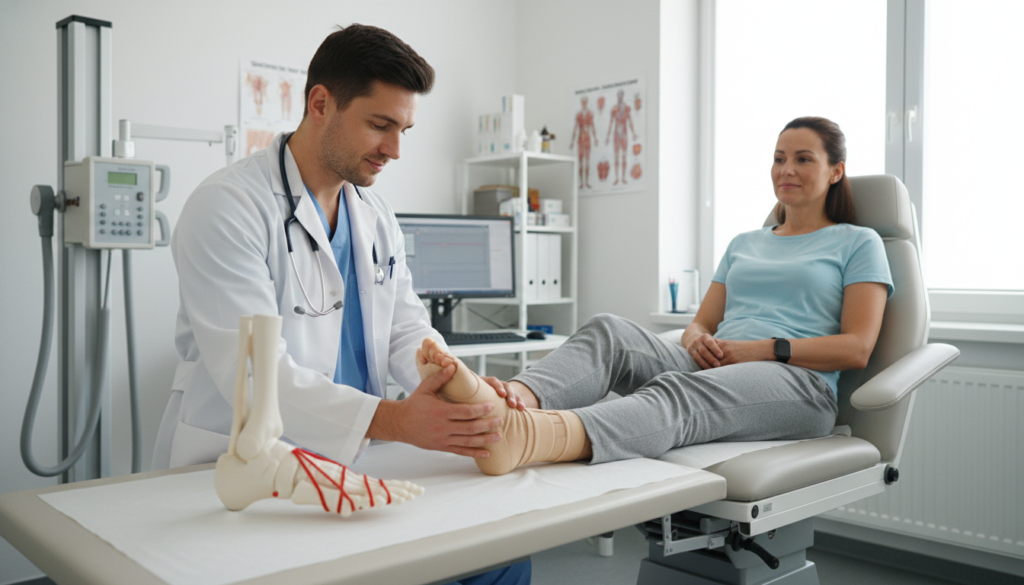
We provide this comprehensive guide to help you manage an ankle injury effectively. Our goal is to share the best methods for healing, backed by medical science and professional therapy insights.

maximum sprain pain reduction
This resource explores how to care for a common ligament issue. We use the latest research from leading institutions, like the University of Iowa Health Care.
You will learn to navigate the recovery process. Our focus is on minimizing long-term complications and chronic joint instability.
We emphasize early diagnosis and proper care. Correct steps after a traumatic musculoskeletal event ensure your body heals the right way.
This guide serves as a primary resource. It helps patients understand the difference between a simple strain and a more severe tear.
Key Takeaways
- Learn evidence-based medical protocols for effective injury management.
- Understand the critical difference between a minor strain and a significant ligament tear.
- Navigate the recovery journey to minimize the risk of long-term joint problems.
- Recognize the importance of an early and accurate diagnosis for proper healing.
- Utilize professional physical therapy insights to support your body’s natural recovery.
- Access trusted information from leading health institutions to inform your care plan.
- Follow steps designed to promote stability and prevent future discomfort.
Introduction to Maximum Sprain Pain Reduction
Our guide demystifies the recovery process for a common but often misunderstood joint injury. Clinical data reveals a startling fact: ankle sprains account for 75 percent of all ankle injuries. Each year, about one million people in the U.S. visit a doctor for acute ankle issues.
This highlights the need for clear, actionable information. We are here to provide it.
What You Can Expect from Our Guide
We break down the complex nature of an ankle sprain into simple steps. Our advice starts from day one. You will learn essential treatment protocols to manage swelling and support healing.
We explain why some injuries need more professional care than others. Understanding your ankle’s anatomy is key to this.
The guide also analyzes the recovery time for different grades of sprains. This helps you set realistic expectations. Our structured advice aims to protect your ankle from future problems during sports or daily life.
| Common Misconception | Our Guide’s Approach |
| Rest alone is sufficient for healing. | Structured rehabilitation prevents chronic joint instability. |
| All ankle injuries require the same care. | Treatment plans vary significantly by the grade of the sprain. |
| Swelling means you must stop all activity. | Controlled, early motion can aid recovery and reduce downtime. |
| Recovery time is the same for everyone. | Healing timelines are personalized based on injury severity and individual response. |
By following our insights, you gain the knowledge to navigate your recovery confidently. The goal is a strong, stable ankle.
Understanding the Injury: Anatomy, Mechanism, and Diagnosis
Accurate knowledge of anatomy and injury mechanics forms the foundation for proper diagnosis and care. Understanding an ankle sprain begins here.
Ankle Sprain vs. Strain Explained
A ligament injury, or sprain, differs from a muscle strain. The anterior talofibular ligament is the most vulnerable structure during an inversion event.

ankle sprain anatomy
Common Mechanisms and Diagnostic Insights
The most common mechanism involves plantar flexion with inversion. This frequently occurs during sports activities.
Doctors often apply the Ottawa Ankle Rules for diagnosis. These guidelines determine if an X-ray is necessary for a foot or ankle injury. They are highly sensitive for detecting fractures.
The deltoid ligament provides strong medial stability. This makes medial ligament issues less common than lateral ones.
| Feature | Sprain (Ligament Injury) | Strain (Muscle/Tendon Injury) |
| Structures Involved | Ligaments | Muscles or tendons |
| Common Causes | Sudden twist or roll | Overstretching or overuse |
| Primary Symptoms | Joint instability, swelling | Muscle cramping, weakness |
For diagnostic protocols, see Traumatology resources. Effective Physical Therapy relies on this foundation. Accurate assessment is as crucial here as in managing Knee Injuries.
Evaluating the Severity: Grades of Sprains and Associated Injuries
Not all ankle sprains are the same. A grading system helps clarify the level of trauma. This classification guides your treatment plan and sets realistic recovery expectations.
Identifying Grade I, II, and III Sprains
We categorize these injuries into three grades based on ligament damage. Each level has distinct symptoms and healing needs.
- Grade I: This is a mild, partial tear. You may feel slight tenderness with little swelling. There is no joint instability.
- Grade II: A moderate tear causes more noticeable discomfort. Swelling is often significant, and using crutches for a few days is common for support.
- Grade III: This is a severe, complete ligament tear. It leads to mechanical instability and often requires immobilization and a longer period of professional care.
Severe swelling, often measuring over 4 cm, is a key indicator of a high-grade injury. Understanding these differences helps you know when a minor stretch needs simple care versus when a significant tear requires specialized intervention.
Acute Management: RICE and Immediate Care Protocols
Dr. Gabe Mirkin’s 1978 RICE acronym remains a cornerstone of initial sports injury management. The first hours after trauma are crucial for controlling the body’s response.
Proper immediate care limits tissue damage. It also sets the foundation for a smoother, faster healing journey.
Implementing Rest, Ice, Compression, and Elevation
We break down this proven protocol. Rest means avoiding activities that cause discomfort. It does not mean complete immobility.
Ice, or cryotherapy, constricts blood vessels to manage swelling. Apply a cold pack for 15-20 minutes every two to three hours during the first 48 hours.

Delete
RICE protocol for ankle injury
Compression with an elastic bandage provides external support. Wrap it snugly, but not tightly, to avoid cutting off circulation.
Elevation is key. Prop the injured foot above heart level. This uses gravity to drain fluid and ease the inflammatory process.
Recognizing Red Flags and When to Seek Medical Help
Some signs indicate a more serious problem. Do not ignore them. Seeking prompt professional evaluation is essential.
A major red flag is being unable to bear any weight on the foot. Significant joint deformity or a misshapen ankle also requires an immediate emergency department visit.
Numbness, intense discomfort, or skin that appears pale or blue are critical warnings. These symptoms suggest potential nerve or vascular involvement.
| Proper RICE Technique | Common Mistakes to Avoid |
| Ice applied for 20-minute intervals. | Leaving ice on for over 30 minutes, risking skin damage. |
| Compression bandage snug but comfortable. | Wrapping too tightly, which can interrupt blood flow. |
| Elevating the ankle above the heart. | Resting the foot only slightly raised. |
| Using rest to mean “relative rest.” | Stopping all movement, which can stiffen the joint. |
Step-by-Step Guide to Maximum Sprain Pain Reduction
Moving beyond initial first aid, a structured rehabilitation plan is vital for full ankle recovery. We focus on a phased approach that transitions from acute protection to active therapy.
This ensures a safe return to your daily activities and sports. The goal is to restore function while minimizing downtime.
Start gentle range of motion exercises as soon as your discomfort allows. Simple movements like drawing the alphabet with your toes prevent the joint from stiffening.
Monitor your progress closely over the first few days. Your swelling and discomfort should consistently improve with proper care.
We suggest using over-the-counter anti-inflammatory drugs only as your physician directs. They help manage the inflammatory process in the early stages.
By following these structured steps, you effectively manage your healing journey. This reduces the risk of developing chronic ankle instability.
Understanding the nuances of different ligament issues, like comparing a meniscus tear symptoms vs MCL sprain, highlights why tailored care matters.
Advanced Physical Therapy Techniques and Rehabilitation
Professional rehabilitation moves beyond basic first aid to rebuild ankle strength and stability. This phase focuses on restoring full function and preventing future issues.

advanced physical therapy techniques
Establishing Range of Motion and Strengthening Exercises
We emphasize that structured physical therapy is essential after an ankle sprain. Begin gentle Achilles tendon stretches within 48 to 72 hours. This maintains your range of motion and counters stiffness.
Initial exercises should be isometric. Push against an immovable object to build strength safely. This method avoids stressing the injured ligament.
As swelling decreases, progress to dynamic movements. Toe curls and marble pickups improve your foot’s functional strength. These activities retrain small stabilizing muscles.
Later, use resistance bands for isotonic work. Focus on both concentric and eccentric contractions. This ensures the muscle groups can stabilize the joint during all movement.
This progressive approach is key to a complete recovery. It systematically rebuilds the ankle for a return to daily activity and sports.
Embracing Proprioceptive Training for Optimal Recovery
Proprioception, your body’s built-in GPS, is often the silent casualty of a significant ankle injury. This sense tells your brain where your joint is in space without you looking. After a ligament issue, this feedback system can become impaired.
Enhancing Balance and Stability
Retraining this sense is a cornerstone of advanced physical therapy. It moves healing beyond simple strength building. The goal is to restore dynamic joint stability for daily life and sports.
We recommend specific drills to enhance neuromuscular control:
- Wobble Board Drills: Using a circular balance board challenges your ankle in a controlled way. It forces small, stabilizing muscles to engage constantly.
- Uneven Surface Training: Practicing on soft mats or foam teaches your foot to adapt. This is crucial for preventing new injuries during unpredictable movements.
- Eyes-Closed Balance: Once basic balance is good, try drills without visual input. This deeply strengthens the body’s intrinsic position sense.
Consistent practice with these methods rebuilds confidence in your ankle. It ensures your recovery is complete and durable, significantly lowering the risk of future problems.
Pain Management and Anti-Inflammatory Strategies
Managing discomfort and inflammation requires a balanced, informed strategy. We focus on methods that support your body’s healing while improving comfort.
Topical treatments like Voltaren gel offer targeted relief. This FDA-approved NSAID delivers medication directly to the injured ligament.
Oral anti-inflammatory drugs, such as ibuprofen, are common. We advise consulting your doctor before using them for more than ten days.

pain management anti-inflammatory strategies
Effective pain control allows you to engage in essential therapy. Without it, exercises become difficult, slowing your overall recovery.
Some experts debate the use of ice. They argue it may slow the natural inflammatory process needed for repair.
| Approach | Primary Benefit | Consideration |
| Topical NSAIDs | Localized relief with minimal systemic effects | Ideal for managing mild to moderate discomfort |
| Oral NSAIDs | Reduces widespread inflammation | Requires medical guidance for long-term use |
| Controlled Ice Application | Numbs acute pain in the first hours | Limit use to avoid interrupting healing signals |
| Balanced Activity | Promotes blood flow and joint movement | Prevents stiffness without risking re-injury |
Our approach balances immediate relief with your body’s long-term recovery process. For more on managing acute injuries, explore professional strategies.
Preventing Chronic Instability and Recurrent Sprains
Long-term ankle health depends on proactive steps taken after initial healing. We focus on stopping the cycle of re-injury. This is crucial for athletes and active individuals.
A previous ankle issue is the biggest risk factor for future joint instability. The ligament can heal in a weakened state. This makes the joint more vulnerable during activity.
Utilizing Supportive Braces and Protective Devices
External support is a key part of a safe return to sports. A supportive brace should be worn for four to six weeks during this transition. It provides confidence and extra stability.
For a severe injury, proper immobilization is essential. It prevents the ligament from healing in a stretched position. This protects the joint’s long-term function.
Certain foot shapes, like a high arch, can increase your risk. These deformities affect how weight is distributed. They may require custom orthotics alongside bracing.
| Preventive Measure | Primary Function | Recommended Duration |
| Lace-Up Ankle Brace | Provides moderate support for sports activity | 4-6 weeks post-recovery |
| Rigid Walking Boot | Immobilizes severe ligament injuries | As prescribed by a doctor |
| Proprioceptive Training | Rebuilds neural balance and control | Ongoing, part of long-term care |
| Custom Foot Orthotics | Corrects biomechanical imbalances | Long-term use for specific foot types |
If instability continues despite dedicated therapy, consult an orthopedic specialist. Surgical stabilization might be discussed. This option is for cases where non-surgical care is not enough.
Integrating Expert Advice and Sports Medicine Insights
Expert guidance from sports medicine and orthopedics transforms a standard recovery into a strategic, evidence-based journey. We synthesize insights from leading clinicians to optimize your healing.
Consider this data point: ankle sprains account for 10% of all emergency department visits, as noted by Dr. Aly M. Fayed, an orthopaedic surgeon at University of Iowa Health Care. This statistic underscores the need for precise, expert-driven care from the start.
Perspectives from Orthopedic and Physical Therapy Experts
Specialists like Dr. Fayed emphasize distinguishing an acute injury from chronic joint instability. The treatment path for each is vastly different.
Supervised physical therapy is the gold standard for regaining functional range of motion after a severe ligament issue. A therapist tailors exercises to your specific needs, ensuring your muscles and joints regain strength safely.
Applying Best Practices from Sports Medicine
Sports medicine professionals advocate for a gradual return to activity. This gives the injured ligament sufficient time to heal without re-injury.
Institutions like University of Iowa Health Care utilize enterprise solutions to arm physicians with the latest clinical protocols and resources. Applying these best practices minimizes long-term complications.
You can return to your sport with confidence by following this integrated expert approach. It bridges the gap between clinical knowledge and your daily recovery process.
Maximizing Recovery Time: Best Practices and Cautions
A successful healing journey hinges on respecting your body’s natural timeline and avoiding common pitfalls. We advise against rushing your recovery. Giving the injured ligament adequate time to heal is the most effective way to prevent a new injury.
You should monitor your progress for several weeks. Studies show residual pain can persist in 10-30% of patients one year later. This highlights the need for consistent care.
We recommend maintaining a positive outlook. Optimism is a key part of the LOVE (Load, Optimism, Vascularization, Exercise) recovery method. A good mindset supports the entire healing process.
Avoid the “no pain, no gain” philosophy early on. Your body is in an acute phase. Gentle rest and controlled motion are better than pushing too hard.
By following these best practices, you maximize your recovery period. This ensures your ankle returns to its full strength for daily activity and sports.
Conclusion
Your journey to a strong, stable ankle begins with applying these evidence-based steps. We have covered everything from immediate care in the first hours to advanced physical therapy.
Early diagnosis and proper treatment are your best defenses against long-term joint issues. If swelling or discomfort does not improve, seek a medical opinion promptly.
Prioritizing balance training and muscle strengthening protects your ankle for years. This approach supports a full return to sports and daily activity.
We hope this resource gives you the confidence to manage your recovery effectively.
FAQ
What’s the difference between a sprain and a strain?
We often hear these terms used together. A sprain involves the overstretching or tearing of ligaments, which connect bone to bone. A strain involves an injury to a muscle or tendon, which connects muscle to bone. Understanding this helps target the correct treatment.
How do I know how bad my ankle injury is?
We classify these injuries into three grades. Grade I is mild with slight stretching. Grade II involves a partial tear with more swelling. Grade III is a complete ligament tear, causing significant instability. A proper diagnosis from a healthcare professional is crucial for the right care plan.
What should I do immediately after the injury happens?
We recommend starting the RICE protocol right away. This stands for Rest, Ice, Compression, and Elevation. Applying ice and using a compression wrap in the first 48 hours are key steps to manage inflammation and swelling effectively.
When is it essential to see a doctor for a sprained ankle?
You should seek medical help if you cannot bear any weight on the foot, if the joint looks deformed, or if you have numbness. Severe pain that doesn’t improve or signs of infection are also red flags requiring expert evaluation.
What role does physical therapy play in recovery?
A> Therapy is a cornerstone of healing. A specialist will guide you through a tailored program. This includes gentle range of motion exercises early on, followed by progressive strengthening to support the joint and prevent future problems.
How can I prevent my ankle from giving way again?
Preventing re-injury involves dedicated proprioceptive training. We focus on exercises that retrain your balance and stability, like standing on one leg. Using a supportive brace during high-risk activities can also provide extra security as you return to sports.
Are over-the-counter anti-inflammatory drugs helpful?
Medications like ibuprofen can be part of a management strategy to reduce inflammation and discomfort. However, we advise using them as a short-term aid alongside other methods like ice and elevation, not as a sole solution.
How long does it typically take to recover fully?
Recovery time varies greatly by severity. A mild issue may allow a return to activity in a few weeks. More significant ligament damage can take several months. Consistent rehabilitation and following your therapist’s advice are the best ways to maximize your healing process.