
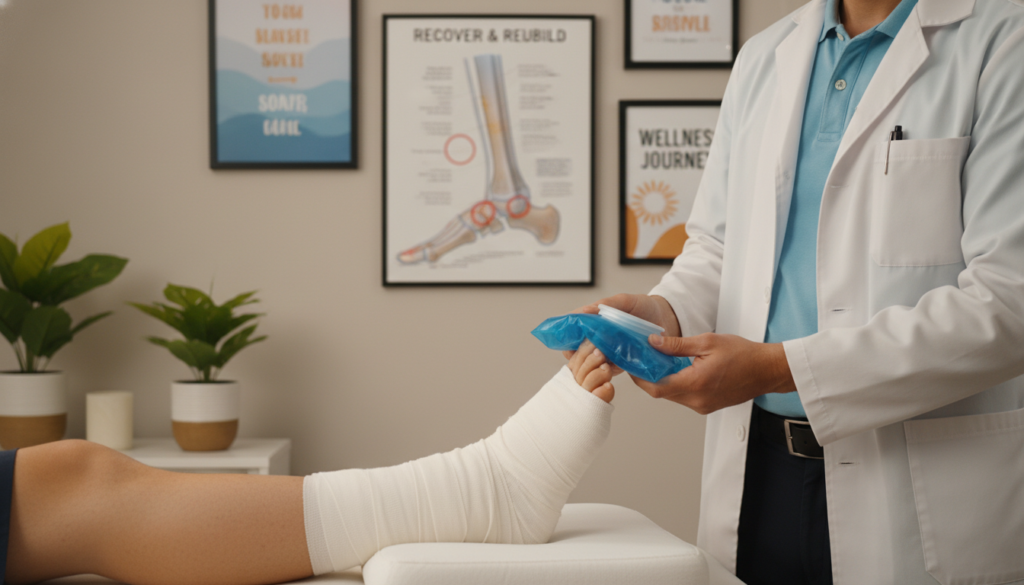
Suffering a joint or ligament injury can sideline you from the activities you love. The road back to full health often feels long and uncertain. We are here to explore the modern methods that aim to restore your body to its optimal state after such a setback.
Ligaments are the tough, cable-like structures that hold your bones together. They provide stability and allow for normal movement. When they are damaged, the body initiates a complex healing process known as inflammation.

revolutionary sprain therapy
This natural response is the first step in repairing the damaged tissues. However, managing pain and guiding this process effectively is crucial for a successful recovery. Today’s advanced medical techniques focus on supporting and accelerating this innate healing journey.
By understanding how your body works to mend a torn ligament, you can make informed decisions about your care. Our goal is to provide insights that help you return to normal life without chronic pain. A complete recovery is about more than just time; it’s about smart, supportive therapy.
Key Takeaways
- Ligaments are crucial structures that connect bones and stabilize joints.
- The body’s natural healing response to ligament damage is inflammation.
- Modern treatment approaches support and can accelerate this recovery process.
- Effective pain management is a key component of successful rehabilitation.
- Understanding the biology of repair helps patients achieve better long-term outcomes.
- A full return to activity relies on restoring the ligament’s original strength and function.
Introduction to Revolutionary Sprain Therapy
When a sudden twist or fall happens, the body’s connective tissues face a critical test. Ligaments are flexible but do not stretch very far. This can lead to damage during high-force impacts.
Background and Medical Relevance
We investigate the medical relevance of ligament health. Injuries often occur when the body is subjected to excessive force or strain.
Adjacent muscle spasms are a common protective action. They work to stabilize the unstable joint. This is the body’s initial response to injury.

ligament healing and recovery
Our Perspective on Healing and Recovery
Our perspective on recovery emphasizes a complex biological process. It involves increased blood flow and cellular activity in the injured area.
Specialists in physical therapy and traumatology guide this healing. They use specific techniques to restore proper joint motion and strength. Targeted MCL pain exercises are a key part of this treatment.
Future research into biomechanical patterns is promising. Better training programs can help athletes maintain a high level of health. The goal is to prevent chronic tears and damage to these vital tissues.
Comparative Analysis of Sprain Therapy Options
Medical care for ligament injuries has evolved dramatically from ancient practices to today’s targeted methods. We examine the core differences to help you understand your path to recovery.

comparative analysis of sprain therapy options
Reviewing Traditional vs. Modern Techniques
The concept of stimulating the body to heal is not new. Historical records show Hippocrates used early injection methods on Olympic athletes to address loose shoulder ligaments.
This idea was refined in the 1930s by medical doctors. The traditional focus was often on prompting a localized healing response. Modern techniques build on this but integrate advanced understanding of tissue biology.
Key Differences and Benefits
Today’s approach is more holistic. It combines supportive care with active rehabilitation from the start. The table below highlights the main contrasts.
| Aspect | Traditional Care | Modern Integrated Approach |
| Core Technique | Rest, immobilization, basic injection | Precise injection coupled with guided motion |
| Primary Goal | Reduce initial pain and inflammation | Promote functional healing and restore strength |
| Recovery Process | Often passive, waiting for the body | Active, with early, safe physical therapy |
| Key Consideration | Risk of muscle weakness after rest | Managed by professionals to minimize side effects |
Insights from Medical Research
Current research from major institutions informs best practices in physical therapy and traumatology. Studies help us design better training programs for athletes.
This evidence guides specialists in reducing long-term damage risk. For a severe knee injury, consulting a qualified knee injury surgeon is crucial. They understand the latest advances for optimal health.
Understanding Ligament Healing and Inflammation
After a ligament sustains damage, the body immediately launches a complex, multi-stage repair program. This process, called the healing cascade, is essential for a full recovery.

ligament healing phases
The Phases of the Healing Cascade
The first stage is acute inflammation. It lasts about 100 hours after the initial injury.
During this time, leukocytes flood the area. They manage swelling and fight infection.
Next, special cells called macrophages arrive. They clean up broken cell parts. This crucial step signals the shift to the next phase of healing.
| Phase | Key Cells | Primary Action |
| Acute Inflammation | Leukocytes | Control swelling, initiate repair |
| Granulation & Cleanup | Macrophages | Remove debris, secrete enzymes |
| Rebuilding & Maturation | Fibroblasts | Produce collagen, restore strength |
Biological Processes Behind Tissue Recovery
After cleanup, fibroblasts get to work. They produce collagen, the protein that gives ligaments their strength.
The body also uses a process called wound contraction. It gently pulls the torn ends of the ligament closer together.
This natural healing can be supported. A professional treatment technique helps guide it. The goal is to restore function without long-term pain or joint laxity, reducing re-injury risk.
Exploring Revolutionary Sprain Therapy in Knee Injury Treatment
The high incidence of ligament damage in sports underscores the need for advanced treatment options. Consider that one in four Major League Baseball pitchers has required Tommy John surgery for a UCL injury.
This statistic highlights a critical demand for better preventive and restorative care. Modern methods aim to meet this need head-on.

knee injury treatment comparison
Direct Comparison with Ligament Injection Therapy
Ligament injection therapy has evolved. A modern option is the P2G solution, made of glucose, glycerin, and phenol.
This formula works differently than older injections. It stimulates the body’s own repair process in the injured area.
| Feature | Traditional Ligament Injection | Modern P2G Solution |
| Primary Components | Often corticosteroids | Glucose, glycerin, phenol |
| Mechanism of Action | Reduces inflammation and pain | Stimulates blood flow and tissue healing |
| Impact on Tissue Recovery | Can weaken collagen long-term | Promotes natural repair of damaged tissues |
| Integration with Rehab | Often requires waiting period | Allows for earlier guided motion |
Relevance to Physical Therapy and Traumatology
These advanced treatments are most effective when combined with expert rehabilitation. Physical therapy focuses on restoring safe joint motion and strength.
Traumatology and orthopedic surgery complete the picture. Surgeons work to stabilize the joint, allowing the healing process to succeed.
For complex cases, consulting a qualified knee injury surgeon is vital. Organizations like the American Physical Therapy Association support ongoing education in this field.
This integrated approach helps athletes manage their recovery. It reduces the risk of re-injury and chronic pain.
Innovative Advances in Physical Therapy and Rehabilitation
Technology is reshaping how we approach physical rehabilitation after a ligament injury. New tools provide unprecedented support for a safe and effective return to activity.
Role of Robotic-Assisted Rehabilitation
Robotic exoskeletons are now vital for athletes rebuilding walking patterns after severe tears. These devices offer consistent, repeatable motion to guide the body correctly.
Ankle rehabilitation robots use multi-directional platforms. They help patients regain balance and strength following complex ligament reconstructions.
Integration of AI and Real-Time Biomechanical Feedback
Artificial intelligence adds a smart layer to these physical therapy innovations. AI systems analyze movement in real time.
This instant feedback ensures patients follow correct patterns during their recovery programs. It significantly lowers the risk of secondary injury.
These technologies also help manage pain by promoting optimal healing motions. The process becomes more efficient and tailored.
Future advancements may bring autonomous devices that adjust to a patient’s neuromuscular responses. This will further personalize and optimize the recovery journey.
Navigating Treatment Risks, Patient Feedback, and Future Research
Navigating the path to full recovery requires a clear view of both the potential hurdles and the supportive evidence. We examine the safety profile of modern techniques and what patients report from clinical practice.
Understanding Potential Risks and Side Effects
Any injection-based treatment carries a small risk of infection or increased local pain. In modern practice, serious complications are extremely rare.
Safety data is reassuring. For instance, deaths from prolotherapy have not been reported in the last 25 years. This makes it a safe technique when performed by trained hands.
The success of any treatment technique heavily depends on the practitioner’s skill. Patient adherence to recovery programs is equally vital for restoring physical strength.
| Consideration | Potential Impact | Clinical Guidance |
| Over-the-Counter Pain Relievers | May suppress natural healing pathways | Avoid NSAIDs like aspirin during initial recovery phase |
| Practitioner Experience | Directly influences technique precision and safety | Seek providers trained in modern injection methods |
| Patient Adherence to Rehab | Critical for restoring ligament strength and joint motion | Follow prescribed physical therapy programs closely |
Feedback from Clinical Practice and Research Trends
Clinical feedback offers crucial insights. Patients are often advised to avoid aspirin and NSAIDs during the active healing process.
These drugs can interfere with prostaglandin-growth factor pathways. This suppression may slow the body’s natural tissue repair.
Looking ahead, research trends point toward a hybrid future. The goal is to combine proven techniques with advanced, data-driven rehabilitation.
By understanding these risks and benefits, patients can make informed decisions. This knowledge guides the best path toward restoring health and long-term function.
Conclusion
Effective rehabilitation after a ligament injury hinges on a deep respect for the body‘s innate repair systems. We have explored how modern methods integrate with this biological healing process to treat damage.
The journey to recovery requires understanding how your physiology manages inflammation and tissue repair. By utilizing advanced techniques, patients can effectively manage pain and restore ligament strength.
We encourage consulting qualified professionals in orthopedics and traumatology. They can determine the best treatment plan for your specific injury needs and minimize chronic pain.
Ultimately, the future of rehabilitation lies in personalized, data-driven care. This approach supports the body‘s natural ability to heal and regain full motion, completing the recovery process successfully.
FAQ
What makes this approach to sprain recovery different from traditional methods like RICE?
Our perspective moves beyond passive rest. While methods like Rest, Ice, Compression, and Elevation (RICE) help manage initial swelling, our modern technique focuses on active recovery. We prioritize safe, controlled movement early in the process to promote blood flow and guide optimal tissue repair, which can significantly reduce total recovery time.
How does early motion actually help heal a damaged ligament instead of causing more harm?
Controlled motion is crucial for healing. It stimulates the area with essential oxygen and nutrients via increased blood circulation. This environment helps your body’s cells rebuild stronger tissue along proper lines of stress. Our programs use specific biomechanical feedback to ensure the movement patterns are safe and therapeutic, minimizing any risk of re-injury.
Is this type of therapy only for elite athletes, or can everyday patients benefit?
This treatment is designed for everyone. While athletes often use it to return to training quickly, the benefits apply to all health levels. Whether it’s a weekend warrior or someone with an accidental knee twist, our rehabilitation plans are tailored to individual goals, helping anyone restore strength and function safely.
What role do new technologies like AlterG anti-gravity treadmills play in rehabilitation?
Technologies like the AlterG treadmill are game-changers. They allow patients to begin walking and running motion with a significant portion of their body weight supported. This robotic-assisted approach reduces load on the injured ligament or muscle, enabling earlier rehabilitation without pain, which accelerates the overall healing timeline.
Q: Are there any significant risks or side effects associated with this active recovery model?
When conducted under professional guidance, the risk is low. The main potential side effect is pushing motion too aggressively, which could irritate the injury. Our technique relies on constant feedback from the patient and objective biomechanical data to tailor the treatment intensity, ensuring the process stays within safe and productive limits for recovery.
How does this approach integrate with other treatments, like platelet-rich plasma (PRP) injections?
They can be highly complementary. A ligament injection therapy like PRP aims to biologically enhance the healing cascade at the cellular level. Our physical therapy and movement-based strategy then provides the essential mechanical stimulus to direct that enhanced healing. Combining these modern medicine approaches often yields the best results for complete tissue repair.
What does current medical research say about the long-term effectiveness of this therapy?
Ongoing research in traumatology and sports medicine strongly supports early controlled loading. Studies show it leads to better recovery of ligament strength and a lower chance of re-injury compared to prolonged immobilization. The future of rehabilitation is rooted in this understanding of how the body heals best with the right mechanical feedback.