
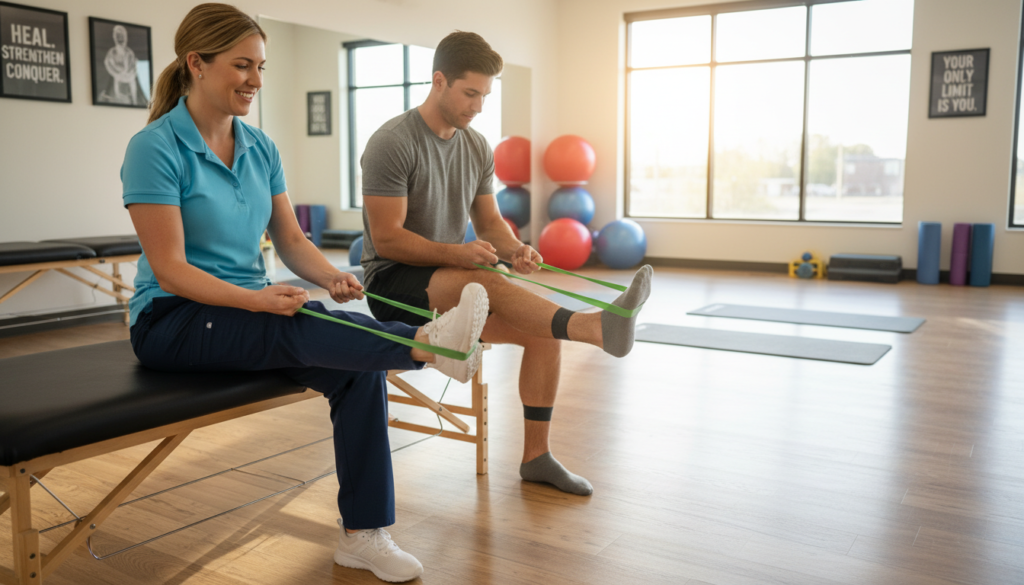
Suffering a sudden twist or roll of your ankle can be a painful and frustrating experience. This type of injury often involves damage to the ligaments that support the joint. We created a structured recovery plan to guide you through this difficult time.
Our method integrates principles from clinical traumatology and modern physical therapy. This approach addresses acute ligamentous damage effectively. It provides a clear, step-by-step roadmap for rehabilitation.

turbo sprain healing protocol
Early and correct intervention is crucial. We focus on the specific biomechanics of the ankle to promote proper healing. This helps you navigate the recovery process from the initial trauma to a full return to activity.
The goal is to restore optimal function and prevent long-term issues. We utilize evidence-based practices tailored to your needs. Our guide serves as a primary resource for understanding the physiological stages of healing.
Key Takeaways
- This structured plan is designed for effective recovery from a significant ankle injury.
- It combines clinical knowledge with practical physical therapy techniques.
- Early and proper care is emphasized to prevent future complications.
- The process focuses on the biomechanics of the lower extremity for optimal results.
- It provides a clear roadmap from initial trauma back to full mobility.
- Evidence-based practices ensure the highest standard of care for ligament damage.
- The guide helps you understand the natural stages of healing after a trauma.
Introduction to Our Turbo Sprain Healing Protocol
When your ankle gives way, knowing the right steps to take can make all the difference. This guide provides that clarity. We built it for anyone seeking a structured path back to full mobility after a joint injury.
What This Guide Offers
Our resource gives you a detailed look at managing an acute ankle sprain. It explains how a skilled physical therapist can help. You’ll learn techniques that prioritize safety and long-term joint health.
We integrate the latest research in traumatology. This ensures your plan is both effective and scientifically sound. The table below highlights key features of our approach.
| Our Guide’s Focus | Traditional Advice | Key Benefit |
| Customized strategy for your pain level | One-size-fits-all recommendations | Addresses unique ligament damage |
| Step-by-step mobility restoration | General rest instructions | Clear, progressive milestones |
| Evidence-based strengthening | Basic exercise lists | Prevents future instability |
Our Commitment to Effective Recovery
We are dedicated to your successful recovery. Physical therapists are movement experts. They guide you through the entire process to ensure a safe return to activity.
A personalized plan is the cornerstone of overcoming a significant ankle injury.
We believe every person deserves a strategy tailored to their specific challenges. By following our structured advice, you gain the knowledge to navigate healing with confidence.
Understanding Sprains: Types and Severity
Not all ankle injuries are the same. Understanding the specific type and severity is crucial for proper treatment.
This knowledge guides your recovery plan from the start.
Inversion, Eversion, and High Ankle Sprains
An inversion ankle sprain is the most common type. It typically damages the lateral ligaments.
An eversion injury is less frequent. It often involves the medial deltoid ligament.

ankle sprain types and severity
High ankle sprains affect the syndesmosis. These complex injuries usually require a longer recovery time.
Grading the Injury: Grade I to III
Doctors grade ligament damage on a scale from I to III. This indicates the extent of the trauma.
A Grade I issue involves mild stretching. A Grade II diagnosis means a partial tear exists.
Grade III represents a complete rupture. This leads to significant joint instability.
| Grade | Ligament Damage | Key Symptoms | Recovery Focus |
| Grade I | Stretching of anterior talofibular & calcaneofibular ligaments | Mild pain, minimal swelling | Reduce inflammation, early mobility |
| Grade II | Partial tear of the anterior talofibular ligament | Moderate pain, noticeable swelling, some instability | Protect tissue, restore strength |
| Grade III | Full rupture of anterior talofibular & calcaneofibular ligaments | Severe pain, substantial swelling, major instability | Stabilize joint, gradual intensive rehab |
The Role of Physical Therapy and Traumatology Expertise
Expert care from specialized professionals can dramatically alter your recovery trajectory. A skilled physical therapist works alongside traumatology principles to guide your rehabilitation. This collaboration ensures every decision is informed by clinical evidence and anatomical knowledge.
They conduct a thorough evaluation of your ankle. This assessment looks at mobility, strength, and swelling patterns. The data shapes a personalized strategy for your unique situation.
Benefits of Expert Guidance
Hands-on manual therapy techniques are crucial in the early stages. A qualified physical therapist applies these methods to mobilize stiff joints and soft tissues. This direct intervention helps manage pain and reduce inflammation effectively.
Continuous monitoring is another key advantage. Your specialist tracks progress to prevent the development of chronic instability. This proactive approach addresses minor setbacks before they become major problems.
Personalized care is not a luxury; it’s a necessity for restoring full function.
Customized Treatment Plans for Your Needs
We believe a generic plan is ineffective for ligament damage. Your treatment must account for your specific biomechanical needs and activity goals. This tailored method is the core of modern rehabilitation science.
For instance, an ankle injury from sports requires a different focus than one from a simple misstep. Our team identifies weaknesses in your movement patterns that may have contributed to the initial injury. We then build a program to correct them.
This ensures your ankle regains not just mobility, but also resilience. The ultimate goal is a safe return to your daily life and favorite activities without fear of re-injury.
The Science Behind Rapid Tissue Recovery
The body’s natural repair system follows a precise, three-stage sequence after joint trauma. We design our approach to work in harmony with these biological phases.
Inflammatory, Proliferative, and Maturation Phases
The inflammatory phase starts right after an ankle injury. Blood flow increases to deliver crucial repair cells to the area. This initial response is vital for cleaning up the damage.
Next, the proliferative phase builds new tissue. Collagen fibers form a scaffold to mend the damaged ankle ligaments. This stage lays the foundation for future strength.
Finally, the maturation phase remodels this new tissue. It gradually regains strength and flexibility over many months. The ankle becomes more stable during this long-term process.
Understanding this timeline lets us time your exercises perfectly. We avoid stressing the ankle too soon. This careful pacing supports optimal healing and regeneration without causing setbacks. Our monitoring ensures your recovery aligns with each biological stage.
turbo sprain healing protocol: Step-by-Step Recovery Guide
Effective rehabilitation after an ankle sprain is built on two pillars: initial assessment and progressive stages. Our guide provides a clear roadmap to navigate this process with confidence.
Initial Assessment and Immediate Care
We begin by using the Ottawa ankle rules. This clinical tool helps identify if pain and tenderness suggest a possible fracture. It determines if imaging is needed after your injury.
Immediate care focuses on protecting the ankle from further harm. We also introduce controlled movement right away. This early action prevents excessive stiffness from setting in.
Progressive Rehabilitation Stages
We guide you through sequential stages of recovery. Each stage builds upon the last to restore full function. A key rule is not returning to sports before your ankle regains sufficient strength.
Your recovery timeline is flexible and adjusts based on progress. The goal is a safe return to full activity as quickly as possible. We document your progress to set objective milestones. This keeps you motivated throughout your healing journey.
Managing Swelling and Pain Effectively
Immediate attention to swelling can significantly shorten your recovery timeline. This early focus helps manage pain and prevents stiffness from setting in.
We prioritize techniques that are both simple and scientifically supported.
Implementing the RICE Method
The RICE method is essential within the first 48 hours. It stands for Rest, Ice, Compression, and Elevation.
Rest protects the injured ankle from further strain. Applying ice reduces blood flow to the area, which helps control swelling.
We recommend using a compression wrap. This prevents fluid from pooling around the ankle joint.
Elevation is equally important. Raise your leg above heart level for periods of 20 minutes. This assists your body’s natural drainage system.

managing swelling and pain
For a deeper look at this foundational approach, see our guide on healing ligament injuries with the RICE.
Utilizing Contrast and Cryotherapy
For persistent issues, contrast therapy can be highly effective. This involves alternating between heat and ice applications.
Each modality is applied for about 20 minutes. The alternation helps manage chronic swelling and pain.
Cryotherapy, or cold therapy, reduces tissue metabolic demand. It keeps early-stage swelling at a manageable level.
This supports the foot and ankle as they begin the repair process. Consistent care in the initial days lays the groundwork for stronger tissues later.
Regaining Range of Motion Safely
The ability to move your foot and ankle freely is essential for daily function. Our first major goal is to restore this comfortable range of motion. We achieve this through careful, staged activities.
All exercises are performed within a strict pain-free zone. This prevents triggering new inflammation. It allows the tissues to adapt without setback.
Gentle Mobility Exercises
Simple movements are incredibly effective. A classic example is writing the alphabet with your big toe. This engages the entire ankle joint through its full arc.
Other foundational drills include pointing and flexing your foot. Gentle circles are also beneficial. Performing these daily prevents the stiffness that follows immobilization.
As your range of motion improves, we slowly increase the challenge. This prepares the ankle for more demanding tasks like walking and climbing stairs.
Hands-On Manual Therapy Techniques
Our therapists use skilled hands-on techniques to complement your exercises. This manual therapy mobilizes the ankle and surrounding soft tissues directly.
The goal is to prevent the formation of restrictive scar tissue, or adhesions. These gentle manipulations improve glide and flexibility. They are a powerful tool for maintaining mobility during recovery.
Strengthening Strategies to Prevent Re-Injury
Building lasting stability in your lower limb requires a dedicated focus on two key areas: strength and balance. Once initial pain subsides, the real work begins to ensure your ankle is resilient.
We design our training to address the root causes of joint weakness. This proactive approach is your best defense against future problems.

ankle strengthening exercises
Balance and Proprioception Training
Your body’s sense of joint position, called proprioception, is often damaged after a sprain. Restoring this is critical.
We use tools like wobble boards for this training. Research by Freeman et al. in 1965 showed such exercises significantly reduce instability.
These drills retrain your nervous system to react quickly. This improves your balance and protects the ankle during unexpected movements.
Progressive Strength Exercises
Strong muscles act as dynamic braces for your ankle joint. Our exercises start gently and increase in difficulty.
We target the calves, peroneals, and tibialis anterior. These muscles support the ankle from all sides.
Weakness in the hips and knees can also lead to instability. Our program includes exercises for these areas to build a solid kinetic chain.
This combined focus on balance and strength creates a robust foundation. It allows for a confident return to sports and daily life.
Integrating Ankle and Knee Rehabilitation Protocols
Compensatory movements after an ankle issue can silently stress the knee. The lower limb functions as a single kinetic chain. When one joint is unstable, others must adapt, often leading to new problems.
An ankle sprain can alter your walking pattern. This places unnatural loads on the ligaments of the knee. Our integrated approach prevents these secondary injuries.
Cross-Training for Joint Stability
We design exercises that target both areas simultaneously. This cross-training builds coordinated strength. It ensures the entire leg works as a unified system.
Strengthening the muscles around the knee is crucial. It protects structures like the ACL from extra strain. Our methods correct faulty movement patterns developed after trauma.
The goal is harmonious function between the ankle and knee. This synergy provides the stability needed for dynamic activities. Jumping, cutting, and pivoting become safer.
By rehabilitating both joints, we address the root cause of instability. This comprehensive protocol safeguards your long-term mobility. It’s a proactive strategy for a full, resilient recovery.
Proactive Use of Orthotics and Bracing
Proactive support for the ankle joint can dramatically reduce the risk of re-injury during recovery. We integrate these tools to provide both physical reinforcement and enhanced sensory feedback.

ankle bracing and orthotics
Prophylactic Ankle Braces Explained
These devices offer a dual benefit. They provide immediate mechanical stability to the ankle. They also deliver crucial proprioceptive feedback to your brain.
This feedback improves your sense of joint position. A landmark study by Sitler et al. in 1994 supports this. It showed a 3-fold decrease in ankle sprains among braced military cadets.
We often recommend braces during early functional rehab. They give the sensory input needed for safer movement retraining.
Benefits of Orthotic Intervention
Custom orthotics address the root of the problem from the ground up. They work inside your shoe to correct abnormal rearfoot motion.
This correction provides a neutral position for the foot. It reduces unnecessary strain on the ankle ligaments during each step.
The result is significantly improved postural stability. This makes orthotics a valuable tool for athletes returning to play after severe ankle sprains.
| Support Type | Primary Mechanism | Key Benefit |
| Prophylactic Brace | External stability & sensory feedback | Prevents recurrent injuries during activity |
| Custom Orthotic | Corrects foot alignment & motion | Reduces ligament strain, improves gait |
| Combined Approach | Addresses joint & foundational issues | Maximizes protection and long-term function |
Using these supports as part of a structured protocol helps build confidence. It allows for a safer and more resilient return to full activity.
Addressing the Unique Needs of Athletes
The journey back to peak performance after an ankle injury is unique for every athlete. Standard recovery plans often lack the intensity and specificity required for sports.
We design programs that meet these high demands. Our focus is on restoring full function for competition.
Customized Return-to-Sport Plans
Our approach for athletes is highly personalized. We start by gradually reintroducing agility, jumping, and cutting movements.
This ensures the ankle is truly ready for competition. We simulate game-like conditions in training to test readiness.
Restoring power and endurance is a major focus. These are often compromised after a significant ankle injury.
We work closely with coaches and medical staff. This coordination ensures the return is based on objective performance metrics.
A safe, gradual progression protects long-term joint health. It helps athletes regain their pre-injury level with confidence.
| Standard Rehab Focus | Athlete-Specific Focus | Key Outcome |
| Basic mobility and strength | Sport-specific power and agility | Ready for dynamic movements |
| General activity return | Simulated competition drills | Confidence in game scenarios |
| Pain-free daily function | Restored athletic endurance | Sustained high-level performance |
| Individual progress tracking | Integrated team and staff coordination | Data-driven return decision |
Tracking Progress and Recognizing Milestones
Measuring your improvement with clear data transforms the rehabilitation journey from guesswork to a guided path. We believe in celebrating each step forward.
This structured approach keeps you motivated. It also ensures your ankle is healing correctly.
Objective Metrics for Recovery
We rely on concrete numbers, not just feelings. Tools measure your postural sway and strength ratios.
This data creates a precise picture of your joint function. Regular checks let us adjust your program in real time.
The table below shows key metrics we track.
| Metric Tracked | What It Measures | Goal for Your Ankle |
| Postural Sway | Balance and proprioception | Improved single-leg stability |
| Strength Ratio (Calf/Shin) | Muscle balance around the joint | Equal strength on both sides |
| Range of Motion (Dorsiflexion) | Joint mobility | Full, pain-free movement |
Setting Short- and Long-Term Goals
Short-term goals maintain daily motivation. An example is walking without a limp for a week.
Long-term goals focus on the final objective. This is a full return to sports or daily activities.
Recognizing each milestone builds confidence. It proves your recovery is on the right track.
This goal-setting is a core part of our healing protocol. It turns a long process into manageable wins.
Learning from Evidence-Based Practices
Clinical research provides the blueprint for treating ankle injuries and preventing long-term issues. We build our entire approach on this solid scientific foundation.
This ensures every recommendation is both effective and safe. Our methods are not based on tradition alone.
Insights from Clinical Research
Studies consistently show a clear winner for ankle care. Functional rehabilitation leads to better outcomes than prolonged immobilization.
Early, controlled movement protects joint health. It also speeds up the return to normal activity.
We apply these insights directly to manage ankle instability. Our strategies are always at the forefront of modern traumatology.
This knowledge creates a more efficient path for our patients. Understanding the science behind your care fosters better adherence to the program.
Troubleshooting Common Setbacks in Recovery
Recovery from a ligament injury is rarely a straight line. Encountering hurdles is a normal part of the process.
We help you navigate these challenges with clear strategies. This keeps your rehabilitation moving forward.
Managing Persistent Pain and Swelling
If you experience ongoing pain or swelling, your physical therapist will re-evaluate your program. They identify the underlying cause of the setback.
Research by Nitz et al. in 1985 provides insight. It showed nerve conduction issues can occur weeks after an ankle sprain.
This may contribute to lingering pain and weakness. We provide specific strategies for managing these flare-ups.
This ensures you continue your work without losing hard-earned progress.
Preventing Chronic Instability
Avoiding long-term instability requires consistent focus. Neuromuscular control and strength are key, even after swelling subsides.
Your physical therapist designs exercises to retrain your ankle’s support system. This builds resilience against future issues.
Open communication is vital for troubleshooting. It keeps your ankle recovery on the right track toward full stability.
Building a Support Network for Optimal Healing
Optimal musculoskeletal healing relies on a coordinated network of specialized healthcare providers. We believe your recovery journey is a team effort.
This collaborative approach addresses every aspect of your condition. It leads to more consistent and effective results.
Collaborating with Medical Professionals
Your physical therapist is often the central coordinator of care. They manage your daily exercises and mobility work.
For complex ankle injuries, consulting other experts is wise. A primary care physician can oversee your overall health.
A knee injury surgeon may be needed if instability persists. They assess if surgical intervention is necessary.
| Team Member | Primary Role | Key Contribution to Your Ankle |
| Physical Therapist | Hands-on rehab & exercise guidance | Restores strength, balance, and functional mobility |
| Primary Care Physician | Overall health management & referral | Rules out other issues and coordinates specialist care |
| Knee Injury Surgeon | Surgical assessment & intervention | Addresses severe ligament damage or chronic instability |
Leveraging Traumatology and Physical Therapy Resources
We integrate advanced principles from the field of traumatology. This science informs how we manage acute tissue damage.
Combining this with skilled physical therapist techniques creates a powerful strategy. It ensures care is both comprehensive and precise.
Effective communication between all team members prevents conflicting advice. Your ankle recovery plan remains consistent and clear.
This unified support network helps you navigate challenges. The goal is the best possible long-term outcome for your joint health.
Conclusion
Regaining trust in your ankle’s stability is the ultimate goal of any effective rehabilitation strategy. Our structured plan offers a comprehensive, evidence-based approach for all types of ankle injuries.
We focus on your specific needs to safely restore range of motion, strength, and balance. Ignoring a sprain can lead to chronic instability, making professional treatment vital.
Our commitment to your recovery provides the tools to prevent future issues. A physical therapist can design personalized exercises for your foot and leg.
Take the first step today. Schedule an assessment to begin your journey back to confident movement and an active life.
FAQ
What is the most common type of ankle sprain?
The most frequent type is an inversion injury, where the foot rolls inward, damaging the ligaments on the outer side of the joint. This often occurs during sports or simply by stepping on an uneven surface.
How long does it typically take to recover from a moderate ankle sprain?
Recovery time varies, but for a Grade II sprain, a structured rehabilitation program often takes 3 to 6 weeks. Full return to athletic activities may require additional time for strength and balance training to prevent re-injury.
When should I see a physical therapist or doctor for my injury?
We recommend seeking expert guidance if you experience severe pain, cannot bear weight, hear a popping sound, or if significant swelling and instability persist beyond a few days. Early assessment by a professional like those at the American Physical Therapy Association can optimize your healing timeline.
What is the RICE method and when should I use it?
RICE stands for Rest, Ice, Compression, and Elevation. It’s a first-aid strategy for the initial 24-72 hours post-injury to manage acute swelling and discomfort. It is a crucial first step before progressing to mobility work.
Why is balance training so important after a ligament injury?
Ligament damage can impair proprioception—your body’s sense of joint position. Balance and proprioception training, like single-leg standing, retrains these neural pathways. This is critical for restoring functional stability and reducing the risk of future ankle injuries.
Can a brace make my ankle weak from relying on it?
When used correctly, a prophylactic ankle brace provides external support during high-risk activities without hindering strength development. We advocate for its proactive use in sports, alongside a dedicated strengthening program, to protect the joint while you rebuild its inherent stability.
How do I know if I’m ready to return to running or sports?
A safe return is guided by objective milestones, not just time. Key metrics include full, pain-free range of motion, strength matching the uninjured leg, and successful completion of sport-specific drills. A physical therapist can design a customized return-to-sport plan to test your readiness.
What is chronic ankle instability and how can I avoid it?
Chronic instability is a feeling of the joint “giving way” long after the initial sprain heals. It often results from incomplete rehabilitation. Preventing it requires addressing all recovery phases: reducing swelling, restoring mobility, and diligently following a progressive strength and balance program.