
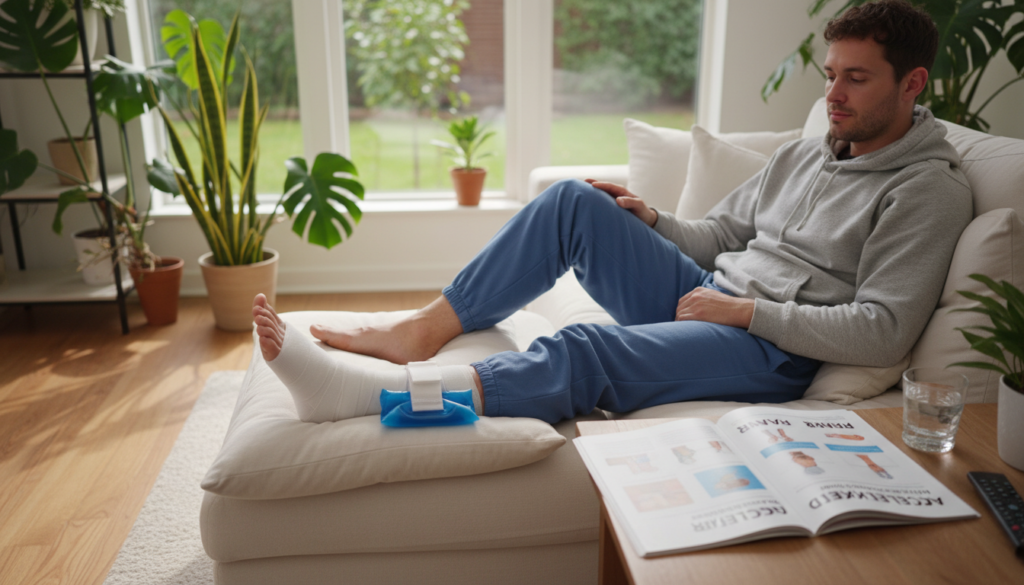
You feel a sudden twist, a sharp pain, and your world slows down. An ankle sprain is a jarring event that happens to roughly 25,000 people every single day. When it strikes, finding comfort becomes your top priority.

sprain relief overnight
We understand the urgency. The immediate hours after twisting your ankle are critical for managing swelling and discomfort. Your body needs the right support to start healing correctly from the very beginning.
This guide focuses on those first, essential steps. We provide clear strategies to address the initial pain and inflammation. Proper care now can set the stage for a smoother recovery time and help you achieve the relief you need.
While most ligament injuries are mild, knowing how to stabilize your ankle effectively is key. It prepares you for a more restful night, much like the strategies discussed for sleep with an MCL sprain. Let’s help you get back on your feet.
Key Takeaways
- Ankle sprains are extremely common, affecting thousands of people daily.
- Immediate care focuses on managing pain and reducing swelling effectively.
- Proper initial response significantly improves comfort and long-term recovery.
- Understanding the nature of your soft tissue injury is the first step toward management.
- Stabilizing the injured area helps prepare for a better night’s rest.
- Timely, professional strategies can guide you toward faster relief.
Understanding Sprains and Ligament Injuries
When a joint is forced beyond its normal range, the resulting damage targets the body‘s connective tissues. Knowing exactly what you’re dealing with guides every step of your care.
What Is a Sprain?
We define a sprain as an injury to the ligaments. These are the strong, fibrous bands that connect bones at a joint.
As Boston Children’s Hospital notes, an ankle sprain occurs when these ligaments are stretched beyond their limits or torn. It’s vital to distinguish this from a strain.

ankle ligament injury
Research from Penn Medicine clarifies that a strain affects muscles or tendons, not ligaments. Applying the correct treatment depends on this difference.
Common Symptoms and Causes
A sprained ankle often results from a sudden twist or roll. This action causes immediate pain and visible swelling in the area.
Common signs include tenderness, bruising, and a noticeable lack of flexibility. These symptoms can significantly impact your daily mobility.
Our analysis confirms muscle strains often come from overuse. In contrast, sprains involve the joint’s stability. For specialized care guidance, resources from the American Academy of Orthopaedic Surgeons on traumatology and physical therapy are invaluable.
Identifying Severity and When to Seek Medical Help
Not all sprains are the same. Understanding the severity guides your recovery path and informs your next steps.
Mild, Moderate, and Severe Injury Indicators
We use the Cleveland Clinic’s grading scale. It categorizes ligament damage into three distinct levels.
Grade I is a mild stretch with minimal fiber tearing. You might experience slight tenderness and mild swelling.
Grade II indicates a moderate partial tear. This level brings more noticeable instability and discomfort.
Grade III is a severe, complete ligament rupture seen in a serious sprain. A distinct popping sound at the moment of injury often signals this significant damage.
If you experience severe pain or significant swelling that does not improve, you must seek medical attention. This rules out a possible fracture.
Consult a specialist if your joint feels unstable or you cannot bear weight. Persistent pain lasting more than a week also warrants a formal evaluation.
Sprain Relief Overnight: Immediate Care Strategies
Your body’s healing response is most active during the first 24 to 48 hours after trauma. This window is critical for managing the initial inflammatory process. Taking the right steps now directly impacts your comfort and recovery timeline.
We emphasize stopping all activity immediately. This allows you to assess your pain level and protect the area from further structural injury. Putting weight on a sprained ankle too soon can worsen the damage.

immediate care for sprained ankle
Prioritize complete rest for your limb. Let the natural healing process begin without the interference of weight-bearing or sudden movements. Effective swelling control during these first hours is paramount, as detailed in our guide on swelling control in ligament injuries.
These early interventions significantly influence how effectively your body recovers. They set the foundation for the relief you seek and a smoother healing journey.
Applying the RICE Method for Acute Injury Management
A cornerstone of acute musculoskeletal care is the timely application of rest, ice, compression, and elevation. This protocol forms our immediate response to a sprained ankle.
We follow these steps to reduce pain and inflammation effectively from the start.
Rest and Ice: The First Critical Steps
Complete rest is non-negotiable. Avoiding putting weight on the limb prevents further damage.
This allows the injured tissues to begin healing without stress.
Applying cold is equally vital. We recommend using an ice pack for 15 to 20 minutes every few hours.
UK Healthcare recommends applying an ice pack for 20 minutes at a time, 4 to 8 times a day to reduce pain and swelling.
This consistent cooling helps manage the inflammation around the affected area.

applying rice method for sprained ankle
Compression and Elevation Techniques
Compression provides crucial support. We advise using an elastic bandage snugly, but not too tight.
Proper fit maintains healthy blood flow while helping to reduce swelling.
Elevation targets fluid drainage. Keep your ankle sprain raised above the level of your heart.
This simple action uses gravity to minimize tissue inflammation and pain.
Utilizing Support Tools and At-Home Remedies
Supportive devices and targeted home care play a crucial role in stabilizing the joint and managing discomfort. They provide the external aid your body needs during healing.
These tools help protect the injured area when you must be mobile. They are crucial for safely putting weight on a sprained ankle during daily tasks.
Benefits of Elastic Bandages and Braces
Modern braces offer advanced support. For example, the BetterGuard brace provides real-time stabilization, reacting four times faster than the body’s natural response during an ankle sprain event.

ankle support braces and bandages
An elastic bandage is a classic tool for compression. It can reduce swelling and provide comfort. Remember to remove it periodically to check your skin and circulation.
After the initial 48 to 72 hours, you can introduce heat. This therapy helps relax the tissues and improves blood flow to the area.
Many people also find topical cooling creams helpful. These products target nerve receptors to reduce pain effectively.
If your symptoms persist or you need surgical evaluation for joint stability, we encourage consulting a professional knee injury surgeon.
Integrating Physical Therapy and Targeted Exercises
After initial care, structured exercises become essential for regaining strength and stability. This phase focuses on restoring full function to the injured area.
We suggest starting gentle mobility work once the sharp pain subsides. This early movement can help restore strength and promote healing.
Gentle Mobility and Strength Training
Physical therapists often use balance training and weighted resistance. These methods restore your full range of motion safely.
Our guide recommends working with a professional from the American Physical Therapy Association. They ensure your recovery plan is performed correctly.
You should gradually increase intensity. Only start putting weight on the limb as your body tolerates it.
Targeted strength training supports long-term recovery. It helps prevent the recurrence of a painful sprain.
| Exercise Type | Primary Goal | Recommended Phase | Key Benefit |
| Ankle Circles | Improve Mobility | Early Recovery | Reduces Stiffness |
| Resistance Band Pulls | Build Strength | Moderate Recovery | Strengthens Supporting Muscles |
| Single-Leg Balance | Enhance Stability | Mid to Late Recovery | Improves Proprioception |
| Calf Raises | Increase Load Tolerance | Late Recovery | Prepares for Full Weight-Bearing |
Guidance on When to Consult a Specialist
You must seek professional attention if your joint feels unstable. Inability to perform basic motions after several days is a clear sign.
Persistent pain that doesn’t reduce with rest also warrants an evaluation. A specialist can assess for complications and adjust your plan.
Prevention and Long-Term Care: Traumatology and Physical Therapy Insights
Experts in traumatology emphasize that consistent rehabilitation is key to avoiding repeat injury. Proper care after the initial event focuses on building lasting joint stability. This approach reduces the risk of future problems.
Strategies to Avoid Future Injuries
Traumatology experts suggest that consistent balance training is one of the most effective steps to avoid future ligament damage. We recommend staying informed through the latest research from a leading traumatology research center. This knowledge helps you understand prevention.
If you’ve experienced a sprain, managing residual pain is part of the process. Our experts highlight maintaining strong stabilizing muscles through regular exercises. These activities support your ligaments and improve overall joint health.
Paying attention to your body‘s signals is crucial. Recurring discomfort often indicates a need for more support or professional rehab. Full healing takes time and patience.
We believe consistent physical therapy is essential for long-term health. It helps improve your circulation and overall stability over time. Do not rush your return to high-impact activities before your body is fully ready.
Conclusion
Managing a ligament injury requires a clear plan and consistent action. We hope this guide has given you the necessary steps to handle your situation effectively.
Remember, true healing takes time. Following the RICE protocol and seeking professional help ensures your body recovers correctly.
Continue with your physical therapy exercises. This maintains the strength of your ligaments and helps prevent future damage.
Always pay close attention to your symptoms. Consult a specialist if you notice signs of persistent instability or increased pain.
For a detailed look at professional steps for recovery, explore this resource on how to heal a sprained ankle.
By taking these proactive steps, you support your long-term health. Improved circulation and stability let you return to activities with confidence.
FAQ
Can I really get relief from an ankle injury overnight?
While significant healing takes time, you can take impactful steps to manage discomfort and promote recovery through the night. Focusing on immediate care like the RICE method (Rest, Ice, Compression, Elevation) before bed is crucial. Properly elevating the injured area above your heart and using an elastic bandage for gentle support can help reduce swelling and pain while you sleep, setting the stage for better morning comfort.
How long does swelling typically last after a ligament injury?
Inflammation is a natural part of your body’s healing response. Initial, noticeable puffiness often peaks within the first 48 hours. Consistent application of cold packs, compression, and keeping the area elevated are the best ways to reduce swelling. If significant puffiness persists beyond several days or increases, it’s a sign to seek medical attention to rule out complications.
When is it safe to start putting weight on my injured foot?
This depends entirely on the severity of the damage. For minor issues, you might tolerate light pressure within a few days. However, for more significant ligament injuries, you must avoid putting weight on it initially. Listen to your body and consult a healthcare professional for guidance. They can assess the stability and recommend a safe timeline for gradually returning to normal steps.
What’s the difference between a bad sprain and a fracture?
Both cause pain and swelling, but key differences exist. A fracture involves a break in the bone, often causing immediate, intense discomfort, possible deformity, and an inability to bear any weight. A severe ligament injury involves stretched or torn connective tissues, with instability being a hallmark sign. Since symptoms can overlap, getting an accurate diagnosis from a doctor is essential for correct treatment.
What are the benefits of using an elastic bandage or brace?
These support tools are vital for acute injury management. A properly applied elastic bandage provides gentle compression to help control inflammation and offers external stability to the joint, protecting the damaged ligaments. Braces can also limit harmful movement while allowing safe mobility, aiding the healing process and improving confidence during daily activities.
Are exercises helpful during the healing process?
Absolutely, but timing is key. After the initial inflammatory phase, guided physical therapy and targeted exercises are fundamental. Gentle range-of-motion movements prevent stiffness, while progressive strength training stabilizes the joint. This rehabilitation rebuilds function and is one of the best long-term strategies to avoid future injuries.
Should I use heat or ice on my injury?
Use ice for the first 48-72 hours to constrict blood vessels, reduce pain, and minimize inflammation. Apply a cold pack for 15-20 minutes at a time. After the initial swelling subsides, gentle heat can be beneficial to promote blood flow and relax tight muscles, aiding later-stage recovery. Never apply heat to a freshly injured, swollen area.
How can I prevent this from happening again?
A> Prevention focuses on strength, stability, and awareness. Engaging in regular strength and balance exercises for your ankles and legs is crucial. Wearing supportive footwear for your activity, warming up properly, and avoiding putting weight on unstable surfaces are key strategies. If you have a history of injury, using supportive braces during high-risk activities can provide additional protection.