
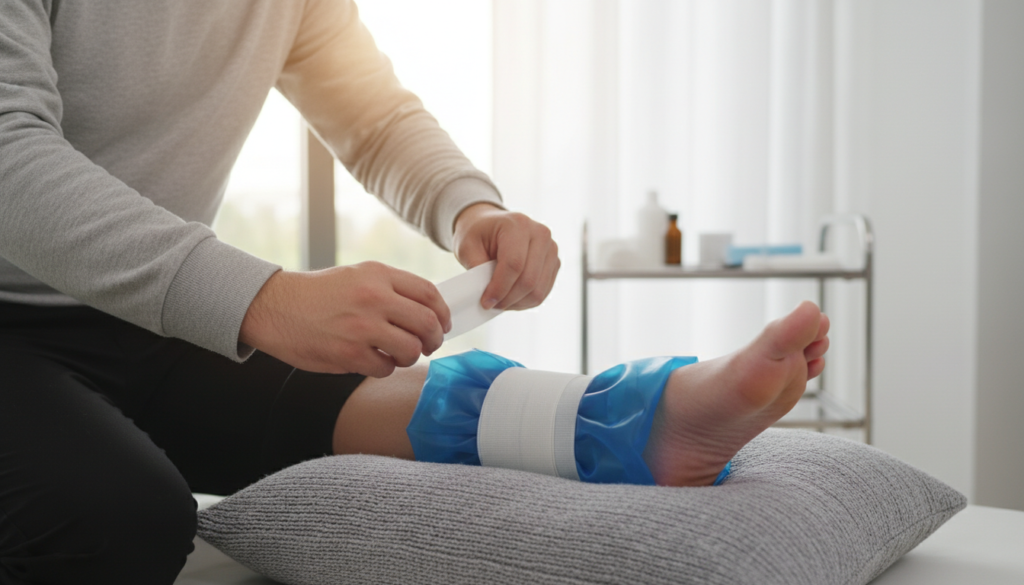
Twisting your ankle is a common and frustrating injury. It can happen to anyone, from athletes to people simply walking. The road to recovery needs a clear plan.
We provide this guide to help you navigate the healing process after a typical ankle sprain or similar trauma. Our goal is to support your journey back to full movement.

unbeatable sprain therapy
Caitlin Shaw, PT, DPT at Hinge Health, emphasizes that ankle rehabilitation is key. It heals the current issue and helps prevent future problems. She notes that simple self-care measures are the vital first step for a painful joint.
Our approach ensures you know how to protect your foot and manage discomfort early on. We focus on giving you clear, actionable steps. This information is the best way to help you regain mobility and return to daily life confidently.
This guide offers expert insights into how these injuries happen and the most effective healing strategies. We believe knowledge is powerful for your recovery.
Key Takeaways
- Proper rehabilitation is essential for both healing and preventing future ankle injuries.
- Initial self-care is a critical first response to manage pain and swelling.
- Protecting the injured foot during the early healing phase is crucial.
- Clear, actionable information is vital for regaining mobility and returning to activities.
- Understanding the mechanism of injury can lead to more effective recovery strategies.
- Expert guidance, like that from physical therapists, provides a reliable path forward.
- A comprehensive approach addresses both immediate care and long-term strength.
Understanding Knee Injuries and Trauma
Trauma to the knee joint is a frequent concern in both athletic and everyday settings. While similar to an ankle sprain in mechanism, knee trauma often involves different ligaments and a more complex recovery path.
Common Causes and Mechanisms
Knee injury often happens during sports like basketball or from a simple misstep. A sudden twist, direct collision, or awkward landing can strain the ligaments. This area of traumatology studies how such forces damage joint structures.

types of knee ligament injuries
Identifying Different Types of Knee Injuries
We categorize ligament damage by severity, much like an ankle sprain. A Grade 1 sprain involves slight stretching. A partial tear, or Grade 2, causes more swelling and pain.
The most severe is a Grade 3, a complete tear often from a major collision. It typically requires crutches to keep weight off the foot. Recovery times vary, with Grade 2 often needing six weeks of modified activities.
Understanding your specific injury is vital. For further reading on knee traumatology, resources from institutions like the Orthopedic & Sports Medicine Center of Oregon are excellent.
The Role of Physical Therapy in Recovery
After the initial swelling subsides, structured rehabilitation becomes the primary focus for healing. This phase is where guided physical therapy makes a definitive impact on your outcome.

physical therapy for ankle rehabilitation
How We Support Your Healing Process
Working with a therapist early is essential. Research confirms that properly loading and moving the injured leg actively promotes healing.
Our program provides a customized recovery plan you can access from home. This is a major benefit for anyone managing an ankle injury.
Data from Hinge Health shows powerful results. Members report an average 68% reduction in pain within the first 12 weeks of their program.
Benefits of Targeted Rehabilitation Exercises
A skilled therapist guides you through specific exercises. These movements rebuild strength and joint stability.
This guidance ensures you do not lose hard-won progress over time. Our focus is on evidence-based rehabilitation.
This approach makes your recovery efficient and sustainable. It protects your long-term health and mobility after an ankle sprain.
Unbeatable Sprain Therapy: Our Proven Approach
Our proven approach to healing ankle injuries centers on one core idea: movement is medicine. We base our methodology on the critical role of active recovery. Controlled motion promotes blood flow and prevents the stiffening of tissues.

principles of ankle therapy
Principles Behind Our Therapy
We believe controlled movement is far superior to complete immobilization for a healing ankle. Keeping the joint entirely still can lead to weakness and more stiffness. Our plan carefully introduces safe activity to support the ligaments.
Restoring the full range of motion is a primary goal. This focus helps prevent the long-term pain often linked with untreated damage. We guide you through gentle motions to improve flexibility.
Specific exercise engages the surrounding muscles. This builds a natural brace for your joint. It protects against future strain during daily movement.
We always prioritize a gradual increase in intensity. Your ankle remains supported as you regain strength. This careful progression builds confidence and ensures safety.
Our proven method addresses the root cause of your discomfort. It leads to a faster and more complete recovery from your sprain.
Effective Rehabilitation Exercises
Active rehabilitation exercises are the cornerstone of a full and resilient recovery. This phase focuses on two key areas: rebuilding strength with balance and restoring comfortable movement.

rehabilitation exercises for ankle
Strengthening and Balance Training
We start by building a strong foundation. Simple strengthening exercises like seated towel curls work the small muscles in your foot.
Balance is equally vital. Holding a one leg stance for 30 seconds retrains your joint control. Adding an elastic band for resistance builds endurance.
More advanced training prepares you for real-world challenges. Deficit calf raises and tandem stances condition your feet for uneven surfaces.
Try these drills with your eyes closed. This challenges your body’s awareness, a key part of our strengthening approach.
Range of Motion and Flexibility Drills
Maintaining easy joint movement supports all other exercises. The alphabet exercise, tracing letters in the air with your toes while seated on the floor, gently improves your range of motion.
Flexibility is crucial for long-term health. A standing calf stretch against a wall loosens the calf muscles and the Achilles tendon.
This step helps maintain flexibility and can prevent swelling. Each exercise is progressive, ensuring you never place too much weight on the joint before it’s ready.
Managing Pain and Inflammation
We focus on two timelines: immediate relief and long-term strategies for joint health. Controlling your body’s initial response is just as important as building resilience for the future.
Immediate Self-Care Techniques
During the first 48 to 72 hours, the R.I.C.E. plan is your best tool. This stands for Rest, Ice, Compression, and Elevation. It directly manages swelling and reduces the sharp pain of an acute ankle injury.
You should avoid putting full weight on the joint in this initial phase. This gives the damaged ligaments critical time to start healing. We advise elevating your ankle above your heart whenever possible.
Long-Term Pain Management Strategies
Once the initial pain subsides, a gentle exercise routine becomes key. This prevents stiffness and promotes long-term joint health. Our long-term rehabilitation strategy focuses on gradual progression.
We ensure you can eventually return to full weight bearing without discomfort. This careful approach protects your ankle from future strain. It turns short-term care into lasting mobility.
Integrating Traumatology Practices for Recovery
Our approach integrates advanced traumatology to address both the body and mind after injury. This medical field studies the mechanisms and long-term effects of physical trauma. It provides a crucial framework for understanding a complex ankle recovery.
Understanding the Impact of Trauma
Principles from traumatology show how a severe sprain affects surrounding muscles and joint stability over time. Trauma from high-impact sports can lead to chronic instability. This happens if the injury is not managed with proper movement protocols from the start.
We also address the fear of pain and re-injury that often follows a significant event. This psychological aspect is a real part of the trauma. Integrating this understanding into your care plan is essential for a confident return to activity.
Our team utilizes advanced diagnostic perspectives to assess the full impact of your injury. This ensures the rehabilitation process is precise. The goal is to help you regain full control of your ankle.
For professional insights, resources like the Orthopedic & Sports Medicine Center of Oregon offer expert sports medicine services. You can also explore professional resources on physical therapy for further reading.
Step-by-Step Guide to Unbeatable Sprain Therapy
A clear, sequential plan is your roadmap from injury back to full activity. We provide a structured progression to ensure your ankle heals correctly and gains lasting strength.
Our guide begins with early movement on the floor. This initial step helps reduce swelling and prevents the joint from becoming stiff. Gentle range of motion exercises, like tracing the alphabet with your toes, are a great way to start.
Initial Recovery and Early Movement
During this phase, we focus on basic exercises you can do at home. The goal is to restore comfortable range without placing full weight on the ankle.
Simple seated movements engage the small muscles in your foot. This early activity is crucial for setting a strong foundation for later training.
Progressing to Advanced Techniques
Once you can bear weight without significant pain, we transition to strengthening exercises. Using a resistance band targets the achilles tendon and improves joint control.
Balance training becomes key. Practicing a one leg stance with your eyes closed sharpens your body’s awareness. This skill, called proprioception, is vital for preventing a future sprain.
We then incorporate agility drills, like figure-8 running. This prepares your leg for the dynamic demands of sports and uneven surfaces.
Our plan always includes specific drills for the calf and feet. This ensures your entire lower limb is resilient. Every session of rehabilitation exercises is tailored to your specific needs.
For a detailed library of specific ankle injury rehabilitation exercises, explore our trusted resources. This supports a safe return to your favorite activities.
Expert Tips from Physical Therapists
Expert guidance from a physical therapist can transform your recovery journey after an ankle injury. Their insights help you navigate the later stages of healing with confidence.
We integrate these professional recommendations into every customized routine. This ensures your exercises are both effective and safe for your specific needs.
Customized Exercise Routines
Your therapist will design a plan tailored to your leg and ankle. As Caitlin Shaw, PT, DPT recommends, simple moves like ankle pumps maintain motion in the talus bone.
Perform these for about 30 seconds each, several times a day. Seated calf raises are another key exercise.
Focus on your heel and toes during these strengthening exercises. This engages the correct muscles in your lower leg.
Consistency is vital. Try to complete your prescribed exercises at the same time each day. This builds the necessary strength for your daily activities.
Ensuring Safety During Rehabilitation
Safety is our top priority. Always begin your balance training on a stable floor. Only progress to uneven surfaces once you have good control.
Your therapist will help adjust your routine if you feel pain. This keeps your plan effective and secure throughout recovery.
Dedicate 30 seconds to each movement. This improves your range of motion and builds endurance for sports.
By following these expert tips, you protect your ankle while gaining strength and balance.
Additional Resources and External Links
Expanding your knowledge with authoritative sources can deepen your understanding of injury management. We provide this curated list to support your continued learning and recovery.
Trusted Sources from Physical Therapy and Traumatology
For in-depth data, we recommend the study on the epidemiology of ankle sprains in The Journal of Athletic Training. It explores long-term instability risks.
The American Academy of Orthopedic Surgeons offers excellent guides. Their OrthoInfo portal details ankle care and broader traumatology principles.
Further Reading on Knee Injuries and Rehabilitation
While focusing on the ankle, understanding knee trauma is also valuable. The same OrthoInfo resource covers ligament injuries comprehensively.
We encourage exploring evidence-based physical therapy guidelines. They help manage recurrent ankle sprains in active individuals.
These links offer peer-reviewed research on prevention and the latest orthopedic advances. They are trusted tools for your health journey.
Conclusion
Healing is a process that rewards consistency and a clear plan. Your commitment to a structured approach is the most powerful tool for recovery.
By focusing on early, guided movement and expert advice, you can effectively manage discomfort and restore your strength. This path leads you to regain full mobility and confidence in your movement.
Remember, your work does not end when the pain stops. Continue building strength with your prescribed exercise routine. This ongoing care will support your joints for years.
We are confident this guide provides a reliable foundation. Your dedication today ensures a strong return to the activities you love.
FAQ
What are the most common causes of a knee or ankle injury?
We see these issues often from sudden twists, falls, or direct impacts during sports. Overuse from repetitive motion in training can also lead to pain and problems in the joint.
How does working with a physical therapist help my recovery?
Our specialists create a personalized plan. We guide you through targeted rehabilitation exercises to restore strength, improve balance, and increase your safe range of motion, which is crucial for healing.
What makes your approach to rehabilitation effective?
Our proven method focuses on early, controlled movement to reduce swelling. We build a foundation with strength and balance training before progressing to more advanced drills for full functional return.
What kind of exercises will I do for a leg injury?
Your plan will include specific drills. These often start with gentle motion exercises, then move to calf raises and standing on one leg to build control. We always tailor the routine to your stage of healing.
How can I manage pain and inflammation at home?
A> For immediate self-care, we recommend rest, ice, compression, and elevation. For long-term management, following your prescribed exercise plan is key to building resilience and reducing future discomfort.
How long does full recovery from a significant joint injury typically take?
The timeline varies based on the severity. Our step-by-step guide ensures you move from initial recovery to advanced techniques safely. Consistent work with your rehabilitation specialist is the best way to ensure a timely return to activities.
How do I know if my exercises are safe during rehabilitation?
Our experts emphasize proper form. We teach you to listen to your body—sharp pain is a signal to stop. Ensuring safety means progressing only when you have the proper strength and balance, often starting with support like a wall.