
What if the most common way to support a hurt knee is actually holding back your recovery? This question strikes at the heart of managing one of the most frequent ligament injuries athletes face.
Clinical research shows the medial collateral ligament, or MCL, is often damaged. This happens during high-impact sports like soccer and basketball. Proper stabilization after such an injury is crucial for a safe return to daily life.
Applying support correctly is essential. It helps manage pain and reduces the risk of further damage. Our guide shares professional insights into effective taping techniques.
Remember, using tape is just one tool. It should be part of a full recovery program overseen by a healthcare professional. This approach provides the necessary stability to the knee joint.
By following proven steps, you work toward a full and healthy recovery. Let’s explore how to give your knee the best chance to heal strong.
Key Takeaways
- The medial collateral ligament is a commonly injured part of the knee.
- Correct taping provides stability and can help manage pain.
- This technique is a supportive tool, not a standalone treatment.
- Professional guidance is vital for a safe and complete recovery.
- Athletes in sports like soccer are especially prone to these injuries.
- Proper application helps prevent further damage to the joint.
- A comprehensive rehab plan is key for returning to activity.
Introduction to MCL Sprain and Taping
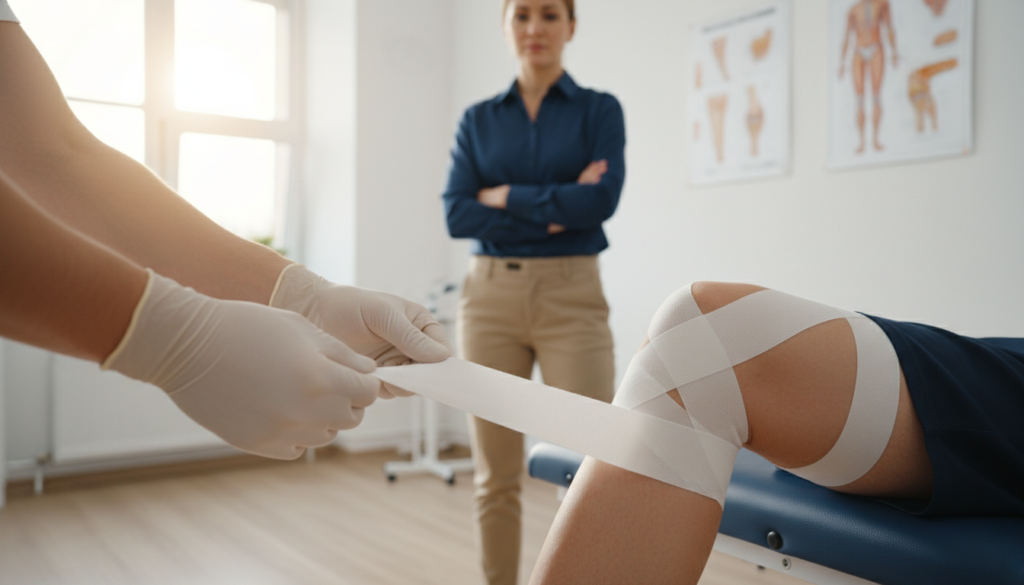
Clinical evidence shows that targeted stabilization can significantly shorten recovery timelines for common knee injuries. Consider a case involving a 13-year-old soccer player. With a grade II MCL sprain, they returned to competitive play in just four weeks using patellar taping as an adjunct.
This example highlights a key benefit. Proper support can help athletes return to sports weeks earlier than average.
Overview of the Injury and Its Impact
We recognize that MCL injuries are among the most frequent ligament issues in the knee. They often strike young athletes in competitive sports like soccer. The resulting pain and joint instability can sideline a player.
This type of sprain directly impacts physical activity and performance. The table below contrasts common recovery scenarios.
| Scenario | Without Taping Support | With Proper Taping |
|---|---|---|
| Pain Management | Often relies solely on rest and medication | Provides mechanical stability to reduce discomfort |
| Return to Activity Timeline | Can be prolonged, averaging 6+ weeks | May be accelerated, as seen in the 4-week case |
| Athlete Confidence | May be low due to fear of re-injury | Improved through perceived joint support |
Purpose and Benefits of Taping
The primary purpose of this technique is to provide external stability to the knee. This mechanical support helps manage pain. It also improves an athlete’s confidence during movement.
During an initial therapy session, clinicians often use taping as an adjunct. It works alongside traditional physical therapy to promote better movement patterns.
By utilizing this approach, we support the healing ligament. It allows for a more controlled and gradual return to athletic performance.
Understanding the Medial Collateral Ligament (MCL)
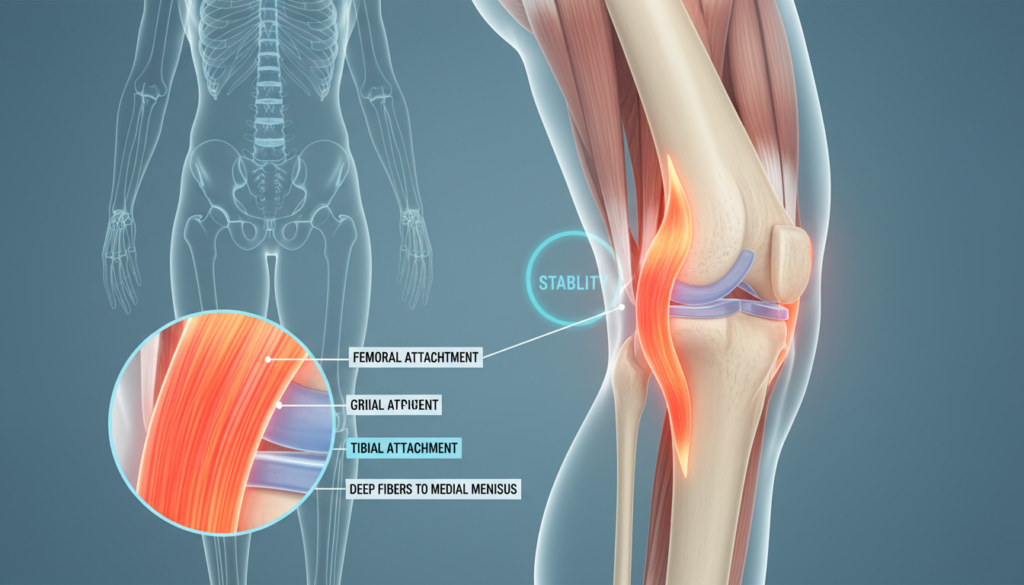
The anatomy of the medial collateral ligament is more complex than it might appear at first glance. A clear picture of its structure helps us grasp how injuries happen and how to assess them properly.
Anatomy and Function of the MCL
Research by Warren and Marshall identified three distinct layers along the inner knee. The superficial MCL sits in the second layer. It acts as the primary stabilizer against forces pushing the knee inward.
The deep part of this collateral ligament has attachments to the medial meniscus and joint capsule. This dual-layer design provides crucial support during activities requiring side-to-side motion.
Mechanism of Injury and Common Causes
Most MCL injuries occur from a valgus stress. This force pushes the knee inward while the foot is planted. Non-contact movements like cutting in soccer or pivoting in basketball are typical causes.
Clinicians use systems like Indelicato’s classification for assessment. A grade II MCL sprain, for example, shows joint line gapping under 5mm with a firm end-feel during a physical test.
This technique helps determine the integrity of the ligament ends. Understanding the injury grade guides treatment and predicts recovery timelines for these common ligament injuries.
How do you tape an MCL sprain? Step-by-Step Guide
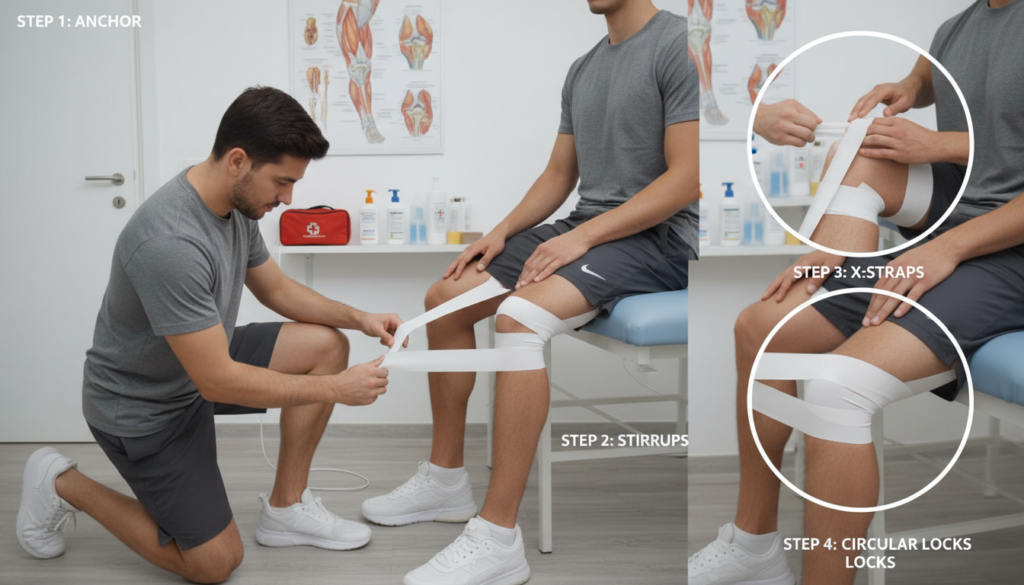
The key to effective stabilization lies in meticulous preparation and correct application of the tape. A structured approach provides the support needed for healing.
Preparing the Knee and Materials Needed
Start with the knee in a neutral position. Clean the skin thoroughly to prevent irritation during your therapy session.
A therapist often performs a valgus stress test at 30 degrees of flexion. This confirms the injury grade before any taping begins.
Detailed Taping Technique and Application Tips
We recommend the McConnell medial patellar glide method. This technique improves alignment and reduces pain.
Proper application creates a supportive structure. It limits excessive valgus movement while allowing necessary knee motion.
This step-by-step method, noted in clinical papers, ensures the limb is supported. It aids both rest and active rehabilitation exercises for MCL injuries.
Materials and Technique Considerations
Selecting appropriate taping supplies is a foundational step for effective ligament support. The right materials not only provide stability but also protect the skin during the recovery process.
Selecting the Right Tape and Tools
We prioritize skin health when choosing adhesive materials. Simon Hall, a physiotherapist for the Sydney Kings, advises using hypoallergenic options like Fixomul to prevent reactions.
This selection is crucial for maintaining joint stability during sports. Heavier athletes may require more robust techniques to ensure adequate support.
If the adhesive starts to feel itchy or causes irritation, remove it immediately. This prevents further discomfort or damage to the skin.
We suggest keeping the support on for the duration of your therapy session. Remove it only if you notice any adverse skin reactions.
Proper tool selection ensures the support remains effective throughout your daily activity and exercise program. High-quality adhesive provides consistent stability for the medial collateral ligament.
Taping Techniques for Different Athlete Profiles
From weekend joggers to professional basketball players, the required level of joint stability from tape varies significantly. We tailor the application to match the athlete’s profile and their sport’s demands.
Minimalist Approaches for Lighter Activity Levels
A minimalist taping approach provides sufficient stability without restricting the knee’s natural motion. This technique uses less tape and is ideal for lighter activity during daily life or early rehab.
The goal is to offer gentle support. It helps manage minor discomfort while allowing full range of movement for healing.
Enhanced Support for Heavier or Demanding Sports
Heavier and stronger athletes require more robust support. Sports like basketball generate high forces that stress the MCL.
Enhanced taping uses more tape and additional criss-cross pieces. This creates a stronger lattice to handle the demands of competition and protect the joint.
| Approach | Primary Goal | Typical Use & Tape Application |
|---|---|---|
| Minimalist | Provide baseline stability without limiting motion; aid pain-free movement. | Lighter daily activities or rehab. Uses 1-2 anchor strips with light supportive strips. |
| Enhanced | Handle high forces; prevent re-injury during demanding sports. | Heavier athletes in sports like basketball. Uses multiple anchors, vertical, and criss-cross pieces for maximum support. |
We advise consulting a therapist to determine the right level of support. Their assessment of your injury grade and activity level ensures the technique is tailored for you.
The final goal is to protect the medial collateral ligament. Properly adjusted support allows for a safe return to your sport after injuries.
Integrating Taping with Physical Therapy and Home Exercises
The true power of taping unfolds when it’s paired with a purposeful exercise regimen. This combination addresses both symptom relief and the root cause of knee instability.
We view this integration as a complete system. External support from the tape works in tandem with internal strengthening from your exercise program.
Complementary Therapeutic Exercises
A structured home routine is vital for restoring full knee function. Common initial exercises include quad sets and straight leg raises with external rotation.
These movements build strength around the injured medial collateral ligament. They promote stability without overloading the healing ligament.
During each physical therapy session, your therapist will monitor your progress. They adjust your exercises based on your pain levels and functional assessment.
This tailored approach ensures you are ready for a return to sports. Consistent performance of your prescribed routine is key.
Complementary exercises help address the underlying causes of knee pain. They ensure the joint is supported by strong musculature, reducing future injury risk.
By combining taping with therapeutic exercise, you create a comprehensive healing program. This method is supported by clinical research on ligament rehabilitation.
For athletes recovering from MCL injuries, this dual strategy accelerates safe return to activity. It builds confidence and lasting stability in the knee.
Monitoring Recovery and Adjusting the Taping Strategy
Your healing journey doesn’t end with applying tape; it begins with vigilant observation and adaptation. We adjust the support based on your body’s feedback over time.
This dynamic process ensures your rehabilitation program remains effective. Regular checks are vital for a safe return to activity.
Assessing Pain, Function, and Skin Reactions
We use the 11-point Numeric Pain Rating Scale (NPRS) to track discomfort. A change of two points is clinically significant for MCL injuries.
The Lower Extremity Functional Scale (LEFS) measures your capability. One patient’s score jumped from 31 to 77 out of 80 by their final visit.
Skin health under the tape is also crucial. Redness or itching means you should remove it immediately to prevent further injury.
Monitoring these factors during each therapy session guides our decisions. It tells us if the current taping technique is working.
When to Revisit a Physical Therapist
Schedule a follow-up visit if you have persistent knee pain or skin reactions. Your therapist needs to reassess the ligament.
They will perform functional tests, like the patellofemoral step-down test. This assessment checks your readiness for sports.
If progress stalls, a new grade or position of taping may be needed. This is common with a grade II MCL sprain.
Regular professional assessment ensures your return is based on function, not just time. It’s the best path to full recovery from knee injuries.
Conclusion
A successful return to the court or field hinges on more than just rest. It requires a strategic blend of support and strengthening.
We have outlined a method to provide stability for a safe return to your favorite sports. Following these professional guidelines helps manage knee pain and supports recovery.
Remember, taping is most effective within a full rehabilitation plan. This includes regular assessment by a qualified physical therapist.
Monitor your progress over time and adjust your strategy. This ensures a successful return to full activity and performance.
Thank you for following our guide. We wish you a speedy recovery as you work toward regaining full knee function.