
Is resting your injured knee the best way to heal, or could movement actually speed up your recovery?
This question challenges a common belief. A sudden twist or misstep can cause a medial collateral ligament issue in an instant. These incidents are not rare. In fact, ligament problems account for a large portion of all knee issues.
Navigating the path to healing is crucial for your long-term health and stability. The right approach can make a significant difference. It helps you manage discomfort effectively and regain your natural function.
We provide evidence-based strategies in this guide. Our goal is to help you return to the activities you love with confidence. Understanding your options is the first step toward a stronger, more resilient knee.
Key Takeaways
- Ligament sprains are a very common type of knee injury.
- An MCL issue often happens suddenly during a pivot or slip.
- Effective management is vital for long-term knee health and stability.
- Controlled movement is frequently a key part of the recovery process.
- Evidence-based strategies can guide you back to your favorite activities.
- Proper care focuses on restoring function and building confidence.
- Understanding your injury is the foundation for a successful healing journey.
Understanding MCL Sprains
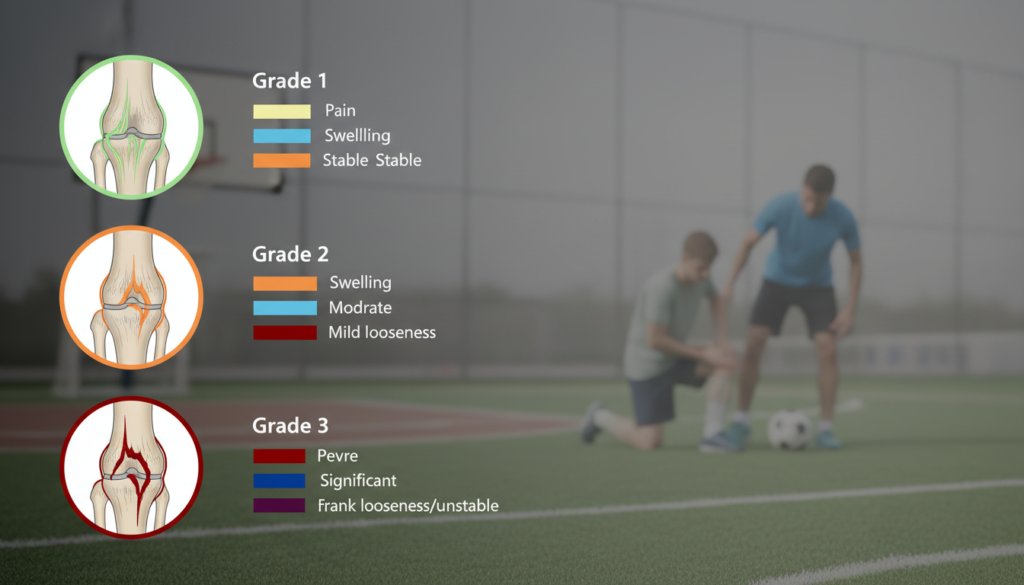
Understanding the structure and function of the MCL helps clarify how these injuries occur. The medial collateral ligament is a strong band of tissue. It connects your thigh bone to your shin bone on the inner side of the knee.
This collateral ligament is a primary stabilizer. It prevents the knee from buckling inward during activity.
What is an MCL Sprain?
An MCL sprain is damage to this vital ligament. These common knee injuries often happen from a direct impact to the outside of the leg.
Sports like football or soccer are frequent causes. The force strains or tears the inner medial collateral support.
| Grade | Description | Key Symptoms | Typical Recovery Timeline |
|---|---|---|---|
| Grade 1 | Ligament is overstretched but not torn. | Mild pain, tenderness on inner knee, minimal swelling. | 1-2 weeks |
| Grade 2 | Partial tear of the ligament fibers. | Moderate pain, noticeable swelling, feeling of looseness. | 3-6 weeks |
| Grade 3 | Complete rupture of the ligament. | Severe pain, significant instability, difficulty bearing weight. | 6 weeks to 3 months+ |
Recognizing Symptoms and Severity
Kim Anderson, PT, DPT, notes that MCL sprains are categorized into three grades based severity. This classification determines the right treatment plan.
Grade 1 involves an overstretched ligament. Grade 2 is a partial tear causing looseness. A Grade 3 injury is a complete rupture.
Recognizing your symptoms guides your next steps. Managing discomfort includes finding comfortable sleeping positions for better rest.
What pain relief works for MCL sprain? – Exploring Effective Strategies
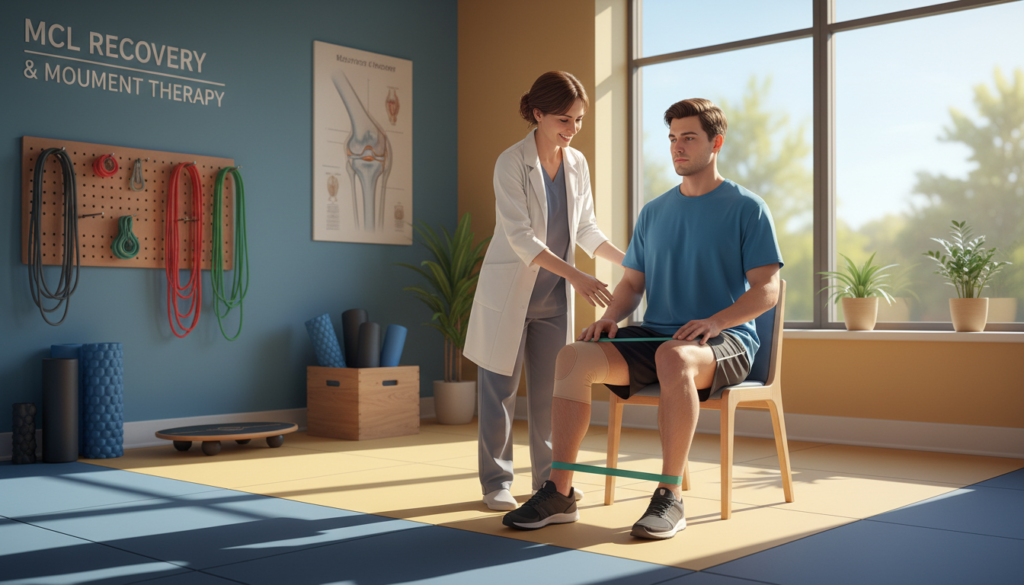
Effective strategies for managing an MCL issue blend immediate care with long-term rehabilitation. Most medial collateral injuries respond very well to simple at-home methods.
Targeted exercises also support the healing process. We focus on a combination of professional guidance and consistent self-care.
At-Home and Professional Pain Relief Options
Your initial treatment plan often starts at home. Simple methods reduce swelling and discomfort effectively.
For more persistent issues, consulting a physical therapist is wise. They assess your specific MCL injuries and create a tailored program.
Physical therapy provides structured exercises and manual techniques. This professional support is key for a full recovery.
Integrating Movement as Medicine
Kim Anderson, PT, DPT, emphasizes a vital principle.
Movement is medicine, and skipping activity altogether is not recommended for recovery.
This means avoiding total inactivity, even when your knee feels tender. Therapeutic movement helps reduce pain and improves stability.
Your body responds positively to controlled activity. It keeps supporting muscles strong and promotes healing.
Integrate gentle motion into your daily routine. This balanced approach supports your medial collateral ligament’s repair while maintaining overall health.
At-Home Pain Management Techniques

Topical treatments and cold therapy form the cornerstone of initial care for many ligament injuries. These simple methods give you control over your symptoms and create a stable environment for healing.
Using Topical Painkillers
Dr. Sarah Eby of Mass General Brigham Sports Medicine highlights a key advantage. Topical NSAIDs keep medicine localized, leading to blood levels 17 times lower than oral pills.
This means options like diclofenac gel or lidocaine patches offer targeted relief. They soothe your knee while minimizing risks to your stomach and the rest of your body.
Implementing RICE Therapy
The RICE method—Rest, Ice, Compression, Elevation—is a standard first step. It directly addresses the initial swelling and discomfort following an MCL issue.
Apply ice to your injured leg for 15 to 20 minutes every few hours. This consistent cold treatment helps control inflammation and soothe the area effectively.
Proper care at home manages your symptoms safely. It supports your MCL as it begins its natural repair, before moving into a more structured rehabilitation protocol.
Rehabilitative Exercises and Physical Therapy
A tailored exercise program rebuilds strength and confidence after a setback. Guided physical activity is essential for healing ligament issues.
Our approach combines professional guidance with consistent routines. This method supports your body’s natural repair process effectively.
Strengthening and Stretching Routines
Kim Anderson, PT, DPT, recommends specific movements to start your recovery. These gentle exercises activate your muscles and restore range of motion.
Key routines include:
- Quad sets: Gently tighten your thigh muscle to improve extension in your injured leg.
- Heel slides: Slowly slide your heel back and forth to reduce stiffness.
- Lateral step downs: Build control and support around your knee joint.
Performing these consistently addresses lingering swelling. It also prepares your leg for daily activities.
Restorative Movements for Knee Stability
Building strength in the surrounding muscles is crucial for long-term knee stability. Our physical therapy program targets your quads, glutes, and hamstrings.
This creates a strong support system for your medial collateral ligament. Hinge Health data shows promising results.
Members experience an average 68% reduction in discomfort within 12 weeks of a digital program. Structured exercises lead to a full recovery and a stable, resilient knee.
Medical Guidance and When to Seek Professional Help
Accurate diagnosis is the foundation for any effective treatment plan after a knee injury. Knowing when to seek expert advice can prevent long-term issues.
Our content stresses that early evaluation by a specialist ensures your recovery strategy is correct.
Diagnostic Procedures and Imaging
A qualified doctor will start with a hands-on assessment. They perform a physical examination and stress testing.
This checks the stability of your joint and determines ligament laxity. Clinics like Motion Orthopaedics use these methods to gauge the injury.
Imaging tests provide a clearer picture. An MRI offers detailed views of soft tissues.
It confirms the severity of your MCL issue. It also rules out damage to other structures like the ACL or meniscus.
If you feel persistent discomfort or your knee gives way, seek professional therapy immediately. This step is crucial for complex knee injuries.
Consulting a doctor helps you understand if you need specialized care. A detailed physical therapy guide can be part of your plan.
Early diagnosis leads to a precise recovery path. It addresses your specific MCL condition effectively.
Supportive Measures: Knee Braces and Lifestyle Adjustments
Knowing when to use a brace and when to rely on natural strength is key for healing. External devices offer stability, but your body’s own muscles provide the best long-term support.
Our content stresses a balanced approach. Combine smart gear with mindful habits for optimal recovery.
Choosing the Right Knee Brace
Dr. Kim Anderson notes that wearing a brace during high-intensity sports provides extra support. It can lower the risk of reinjury to your MCL.
However, braces are not needed for simple daily activities like walking the dog. Your MCL needs to strengthen naturally during these tasks.
Selecting the correct device depends on your knee instability and the sports you play. Consider this comparison:
| Brace Type | Best For | Support Level | Key Feature |
|---|---|---|---|
| Hinged Brace | High-intensity sports, post-injury | High | Limits side-to-side motion |
| Sleeve/Compression | Daily comfort, mild instability | Low to Moderate | Reduces swelling, provides warmth |
| Wraparound Brace | Adjustable support, various activities | Adjustable | Customizable fit for different needs |
Lifestyle adjustments are equally vital for your leg. Avoid sudden pivots or twists that stress the inner knee.
Always consult your healthcare provider. They can determine if a brace suits your specific MCL injury stage.
This strategy protects your joint while building its inherent resilience.
Preventing Future MCL Injuries: Tips and Strategies
Building a resilient lower body is your best defense against recurring knee problems. After a ligament setback, proactive habits become your most valuable tool. We focus on strategies that enhance your natural stability and protect your joints during daily tasks and sports.
Strengthening the hips, knees, and ankles helps absorb impact. This decreases the stress placed on your ligaments significantly. A consistent routine prepares your body for the demands of your favorite activities.
Proper Warm-Up and Strength Training
Warming up for a few minutes before activity is non-negotiable. It increases blood flow and promotes crucial flexibility in your joints. This simple step prepares your muscles for the work ahead.
A strong lower body acts as a natural brace for your knee. Focused exercises build this essential support system. Target your hips, quads, and ankles to create a stable foundation for your leg.
| Exercise Type | Primary Muscles Targeted | Sample Movement | Key Benefit |
|---|---|---|---|
| Dynamic Warm-Up | Glutes, Quads, Hamstrings | Leg Swings, Walking Lunges | Increases joint flexibility and blood flow |
| Strength Training | Hip Abductors, Quadriceps | Clamshells, Step-Ups | Builds stability to absorb impact |
| Balance & Proprioception | Ankle Stabilizers, Core | Single-Leg Stands, Bosu Ball Drills | Improves coordination to prevent missteps |
We recommend easing into high-intensity activities gradually. This gives your leg time to adapt and build necessary resilience. A gradual approach is far safer than jumping back in at full intensity.
By prioritizing both flexibility and strength, you actively reduce the risk of recurring MCL injuries. This commitment keeps your knee joint healthy for years. Your future MCL health depends on the protective habits you build today.
Safe Return to Activity: Guidelines and Precautions
A safe return to your favorite sports hinges on respecting your body’s healing timeline. Rushing this process often leads to setbacks. We provide clear guidelines to help you transition back confidently.
Your recovery plan must be tailored to your specific injury. The timeline varies significantly based on severity.
Gradual Reintroduction of Movement
Healing your medial collateral ligament follows a predictable path. Your recovery time is directly tied to the grade of your sprain.
Grade 1 injuries typically heal within 1 to 3 weeks with proper exercise. Grade 2 sprains generally need 4 to 6 weeks of rehab. A severe Grade 3 issue may require 8 weeks or more.
| Sprain Grade | Typical Recovery Time | Key Return Precautions |
|---|---|---|
| Grade 1 | 1 – 3 weeks | Focus on controlled movement; avoid sudden pivots. |
| Grade 2 | 4 – 6 weeks | Complete rehabilitation before resuming sports activities. |
| Grade 3 | 8+ weeks | Requires medical clearance; consider brace for support. |
Surgery is rarely needed for these ligament sprains. It is only considered if the tear is complete and other structures in the knee are damaged.
We advise a slow, step-by-step increase in your activity level. This ensures the supporting muscles in your leg are strong enough. Always follow your therapist’s guidelines to protect your knee joint.
Conclusion
The final phase of rehabilitation focuses on integrating strength and stability into daily life. Most MCL sprains heal well with conservative care and time.
A structured plan of targeted exercises and professional therapy manages discomfort effectively. It restores stability to your knee joint and builds resilient supporting muscles.
Consulting your doctor is the best way to ensure your recovery stays on track. Surgical procedures are rarely needed for these ligament injuries.
Consistent effort in strengthening your leg supports the injured area. This dedicated work helps you return to favorite activities safely.
Our content provides a clear guide for your healing journey. It offers the tools you need for a successful and confident recovery.