
Is your knee pain trying to tell you something about your running form? Many athletes experience persistent discomfort that makes them question their entire regimen.
Recent physiotherapy data reveals a startling fact. About eight out of ten runners suffer an injury each year. The knee is the most frequent area of concern.
A common belief is that running is inherently bad for your joints. However, research indicates high-volume training often just exposes pre-existing movement faults.
We view consistent running as a truth serum. It highlights bodily instabilities much sooner than the slow decline seen in sedentary lifestyles.
By identifying these faulty patterns early, we can correct them quickly. This proactive approach helps avoid long-term chronic damage to the knee and surrounding tissues.
Our goal here is to help you understand if a medial collateral ligament issue is possible. We also want to show you how to maintain your activity schedule safely.
Key Takeaways
- Up to 80% of runners experience an injury annually, with the knee being a primary site.
- Running itself isn’t the enemy; it often reveals underlying movement inefficiencies.
- Think of consistent training as a diagnostic tool for stability issues.
- Early detection of faulty patterns is key to preventing chronic joint damage.
- Understanding specific ligament risks, like to the MCL, is crucial for safe athletic activity.
- Proactive correction allows athletes to continue their regimens without major setbacks.
- A focus on proper mechanics is more important than simply reducing mileage.
Understanding Knee Anatomy and Biomechanics
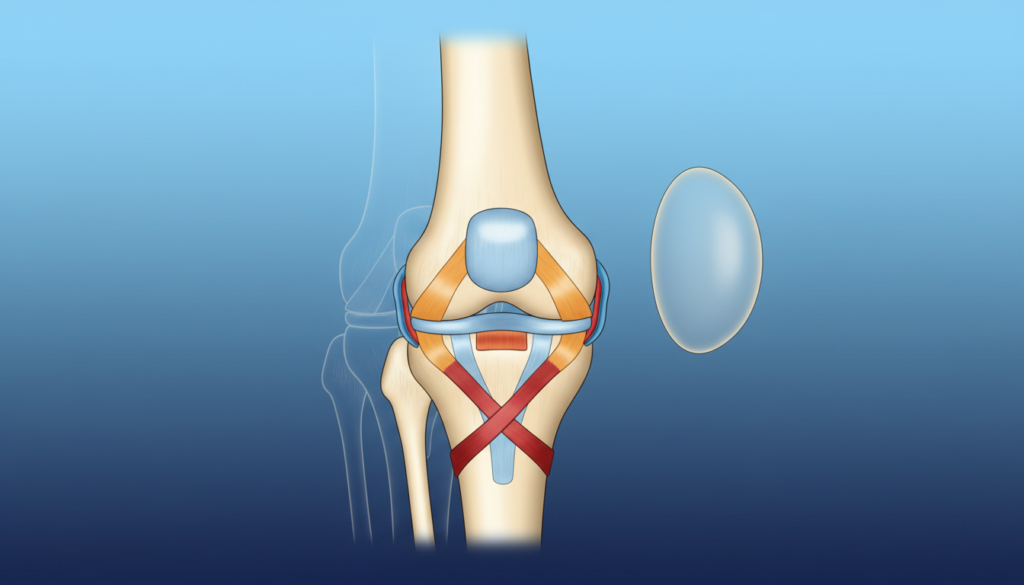
A solid foundation in knee anatomy clarifies why certain movement patterns lead to trouble. This joint is a sophisticated system where bone, ligaments, and muscles work in concert.
Bones, Ligaments, and the Knee Joint
The knee joint functions as a simple hinge. It primarily moves forwards and backwards. This motion requires precise support from the surrounding ligaments and muscles.
Key bone structures include the femur and tibia. Ligaments on the inner and outer side provide crucial stability. The medial collateral ligament is on the inside.
This design allows the body to handle repetitive impact on the knee. However, it assumes forces are distributed evenly across the knee joint.
The Role of Muscles and Balance in Running
Muscle strength is not always equal on either side of the knee. Imbalance increases pressure on one aspect of the joint. This can lead to a collapsed posture during a stride.
Maintaining a stable, neutral knee position is an advanced skill. It demands strength from the pelvis down to the foot. These muscles must work together.
We must ensure a straight line from hip to knee to ankle. This alignment prevents the collapse of movement quality. It allows the knee to withstand running pressure safely.
Common Knee Injuries in Runners
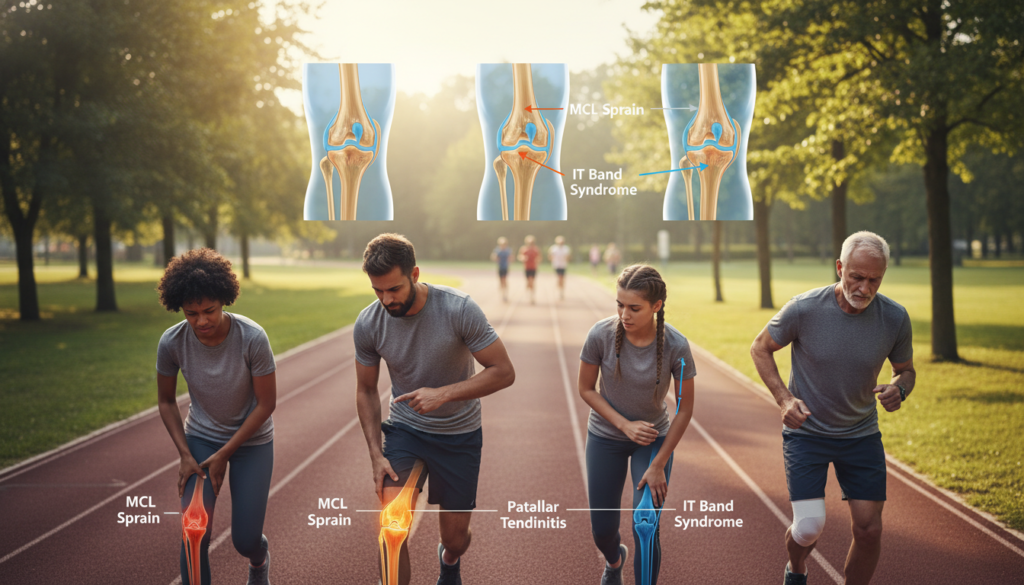
Several well-defined conditions account for the majority of running-related knee injuries. Understanding these helps identify the type of issue you may face.
Runner’s Knee and Patellofemoral Pain Syndrome
Patellofemoral pain syndrome, often called runner’s knee, is a tracking problem. Outer thigh muscles can pull the kneecap away from its natural groove.
This misalignment places uneven pressure on the joint. The patellar tendons absorb significant load but can become irritated.
IT Band Syndrome and Overuse Injuries
IT band syndrome causes pain on the outside of the knee. It often starts as a dull stiffness and progresses to a sharp sensation.
This is a classic overuse injury. Training beyond your current ability is a primary risk factor. It leads to muscle weakness and instability.
We recommend at least ten minutes of daily mobility work. Stretching or foam rolling keeps muscles healthy and resilient.
| Condition | Primary Symptom Location | Key Contributing Factor |
|---|---|---|
| Patellofemoral Pain Syndrome (Runner’s Knee) | Front of the knee, around or behind the kneecap | Muscle imbalance pulling the kneecap off track |
| IT Band Syndrome | Outside of the knee | Overuse combined with tightness in the iliotibial band |
| General Overuse Strain | Varies (muscles, tendons) | Rapid increase in training volume or intensity |
Can runners get MCL sprain?
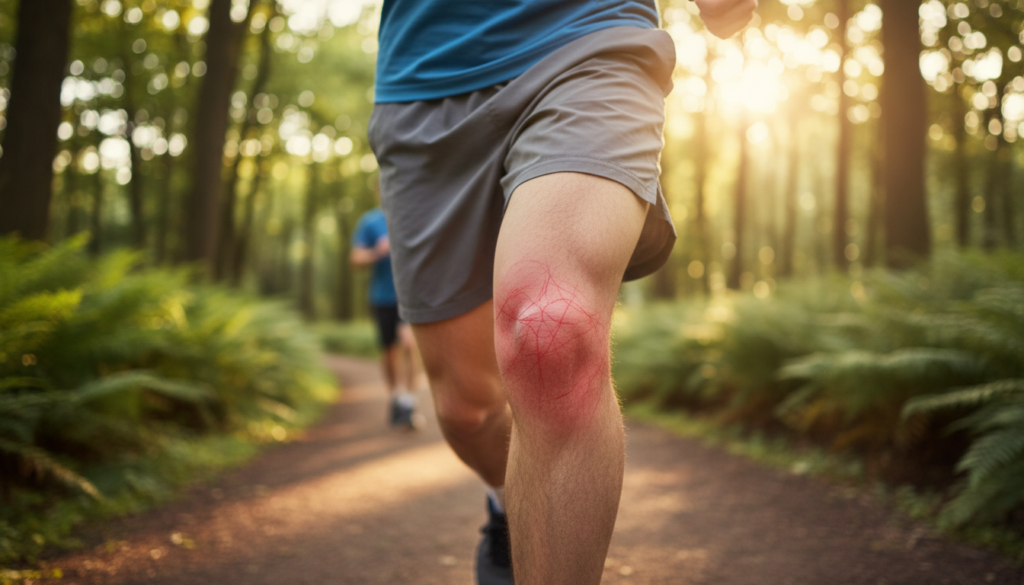
One ligament bears the brunt of valgus stress during athletic activity. The medial collateral ligament is the band of tissue most often injured. It connects the thigh bone to the shin bone on the inside knee.
Why the Medial Collateral Ligament is Vulnerable
This collateral ligament is a primary stabilizer. It resists forces that push the knee inward. An acute mcl tear happens during a sudden twist.
Imagine your foot stuck in a pothole while your body twists. The ligament stretches beyond its limit. This causes a sharp pain and instability.
Chronic issues develop from repetitive stress. Always running on a slanted surface or having knock-knees strains the medial collateral over time. This leads to a gradual injury.
Understanding the Impact of Movement Faults
Poor movement patterns place constant pressure on the inner side of the joint. The knee collapsing inward on each stride overloads the ligament.
This faulty mechanics cause inflammation. It results in significant pain for the athlete. Addressing these patterns is key to preventing an mcl tear.
For more on the causes of inner knee pain from running, explore our detailed resource. Understanding your thigh and knee mechanics helps you stay safe.
Identifying Symptoms and Diagnosis of MCL Injuries
When the inner knee hurts and feels unstable, it’s time to consider a specific diagnosis. Accurate identification of symptoms leads to proper treatment and prevents further damage.
Recognizing Pain, Instability, and Swelling
The most noticeable sign of an mcl tear is sharp pain on the inside knee. This discomfort often intensifies when you put weight on the leg.
A feeling of instability or “giving way” is common. The joint may feel loose, especially during side-to-side movements. Significant swelling can develop quickly around the inner side.
You should seek medical evaluation immediately if you hear a popping sound. Difficulty bearing weight is another red flag for a serious ligament injury.
Diagnostic Tests: Physical Exams and Imaging
A specialist will perform a thorough physical exam. They assess joint stability, often using a valgus stress test. This applies pressure to the outer knee to check the medial collateral ligament.
Imaging tests provide a detailed view of the damage. X-rays rule out bone fractures or other issues. An MRI scan generates clear images of the soft tissues, like the collateral ligament and cartilage.
It is vital to exclude other injuries. Meniscal tears or damage to other knee ligaments often occur alongside an mcl tear. A complete diagnosis ensures the correct recovery path.
Effective Non-Surgical Treatments and Recovery Strategies
Thankfully, most medial collateral ligament issues do not require invasive procedures. The collateral ligament has a robust blood supply. This promotes natural healing of the tissue.
Our initial treatment goal is to manage swelling and protect the area. We then focus on restoring full function.
RICE, Bracing, and Physical Therapy Approaches
The RICE protocol is a critical first step. Rest, ice, compression, and elevation reduce initial pain and inflammation. A supportive brace may be used to stabilize the knee.
Structured physical therapy forms the core of rehabilitation. A physical therapist designs a program to rebuild strength safely. Early exercises often include quadriceps contractions.
Recovery Timelines: From Grade 1 to More Severe Tears
Healing time depends entirely on the severity of the injury. We classify mcl tear grades to predict the recovery journey.
| Grade of Tear | Description | Typical Recovery Time |
|---|---|---|
| Grade 1 | Mild sprain with minor fiber damage | 3 to 4 weeks |
| Grade 2 | Partial tear with noticeable instability | 6 to 8 weeks |
| Grade 3 | Complete rupture of the ligament | Up to 12 weeks or longer |
For a Grade 2 mcl tear, dedicated physical therapy is essential. Progressive cycling is introduced to restore thigh muscle bulk. Adhering to the treatment plan ensures a strong return to activity.
Preventive Measures and Strength-Building Exercises
The secret to lasting performance isn’t just more miles; it’s smarter, stronger movement. We focus on building a body that can withstand the repetitive stress of the sport.
Strength training at least twice weekly is a proven shield against injury. This makes your ligaments and joints more resilient to overuse.
Strength Training and Stability Exercises
Incorporate foundational moves like squats and lunges. These exercises build the thigh and hip strength needed for stable strides.
Single-leg balances on unstable surfaces prepare you for uneven terrain. They teach your foot and knee to work as a coordinated unit, reducing pain risk.
Balancing Your Routine: Mobility and Resistance Work
A holistic plan blends mobility with resistance. Maintaining a strong arch in your foot keeps the entire leg aligned.
This balanced approach reduces inner knee pressure. It directly protects the medial collateral ligament from strain.
Proper rest is also a critical part of the equation. Discover optimal sleeping positions to support your recovery on rest days. This type of proactive care ensures long-term joint health.
Conclusion
Mastering knee health is less about avoiding activity and more about embracing intelligent preparation. We have seen how consistent training reveals movement faults before they cause chronic damage.
Understanding your joint’s anatomy empowers you to build foundational strength from the pelvis to the foot. This focus corrects imbalances that place undue stress on the inner knee.
Implementing evidence-based strength and recovery strategies is your blueprint for longevity. As research on athletic knee injuries supports, a proactive approach leads to durable performance. You can enjoy a long, healthy running career free from persistent pain.