
Have you ever felt a sudden pop or twist in your knee, leaving you unsure if you can trust it again? This instability is a common sign of a medial collateral ligament issue.
Ligament sprains account for roughly 40% of all knee injuries. While alarming, most of these cases are highly treatable.
The right approach to movement is crucial for healing. You don’t have to remain sidelined.
Our guide explores the essential steps to regain full function. We focus on a structured program that rebuilds strength safely.
This process helps you return to your favorite activities with confidence. Targeted activity promotes faster restoration of joint health.
Key Takeaways
- Ligament sprains are a leading cause of knee problems.
- Proper movement is fundamental for healing.
- A structured approach can restore stability.
- Most cases are treatable without invasive measures.
- Regaining confidence in your joint is a primary goal.
- Targeted activity promotes faster restoration of function.
- Understanding your condition is the first step toward improvement.
Understanding MCL Sprains and Knee Anatomy
Knowing the basic structures of your joint is the first step to grasping any damage. This knowledge clarifies why certain movements cause pain.
Defining the Medial Collateral Ligament
The medial collateral ligament is a band of soft tissue. It connects your thigh bone to your shin bone on the inner side.
This structure provides essential stability to the inner knee. It prevents the joint from buckling inward during activity.
Dr. Kim Anderson, a physical therapist, notes this ligament is often hurt in sports. Football or skiing tackles are common causes.
MCL Injury Grades and How They Affect Recovery
These issues are categorized into three distinct grades. The system ranges from a mild overstretch to a full rupture.
A Grade 3 MCL injury means the collateral ligament is completely torn. Research shows 80% of these severe cases involve other knee structures.
Understanding your specific grade is crucial. It determines if you need conservative care or a surgical approach for a medial collateral ligament sprain.
Recognizing the Signs of an MCL Injury
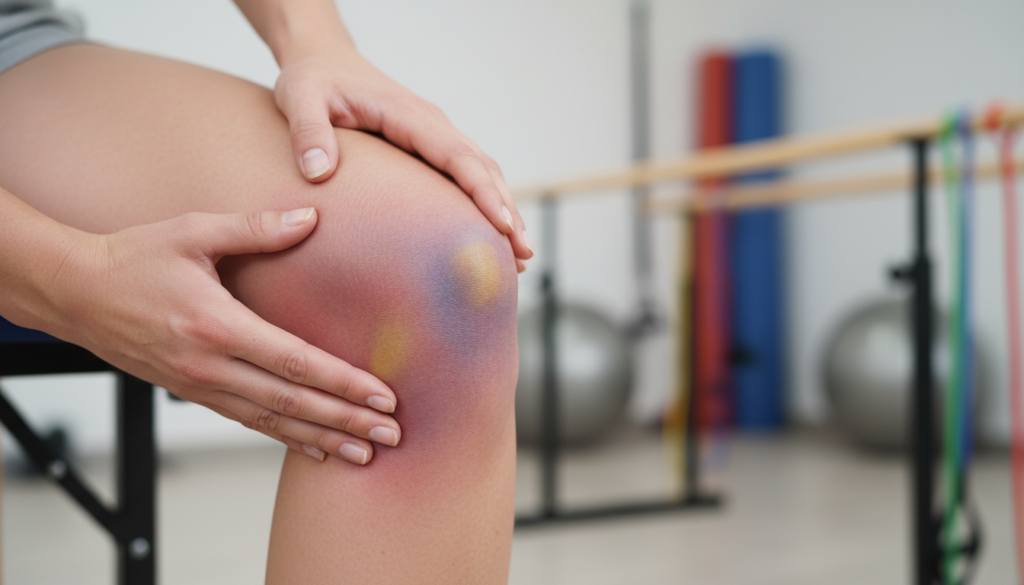
Identifying a ligament problem early hinges on noticing specific bodily signals. Your body communicates distress through clear, immediate sensations.
A sharp, localized pain on the inner side of the knee is a primary clue. This discomfort often arrives with a sudden sense of joint instability, especially after a pivot or twist.
Common signs include noticeable swelling and tenderness in that area. These symptoms can make routine tasks, like walking or climbing stairs, feel difficult and unsteady.
The feeling that your knee might “give out” is a strong indicator of ligament damage. This instability suggests the medial collateral ligament has been stretched or torn.
We advise close monitoring because these signals typically appear instantly. They do not develop slowly over a long period.
Recognizing these signs promptly allows for appropriate action. Early intervention helps avoid further stress on the injured joint.
- Sharp inner knee pain following a pivot or impact.
- Immediate swelling and tenderness around the medial joint line.
- A distinct feeling of instability or the knee buckling.
- Difficulty with weight-bearing activities like walking.
- Onset is sudden, not gradual.
What exercises help MCL sprain recovery?
The journey back to full mobility relies on two core principles: building power and maintaining suppleness. A balanced routine addresses both needs.
Physical therapists at Hinge Health emphasize a vital concept.
Movement is medicine for healing the quadriceps, glutes, and hamstrings.
Role of Strengthening and Stretching in Healing
Targeted activity fortifies the joint. It creates a protective shield for the injured ligament.
Strengthening the surrounding tissues is essential. The quadriceps and glutes provide crucial support.
Stretching maintains necessary flexibility. This prevents stiffness and promotes better blood flow.
Together, they form a complete strategy. Avoiding movement can slow down your progress.
| Aspect | Strengthening | Stretching |
|---|---|---|
| Primary Goal | Build supportive muscle power | Maintain joint and tissue flexibility |
| Key Muscles Engaged | Quadriceps, Glutes, Hamstrings | Hamstrings, Calves, Hip Flexors |
| Impact on Healing | Stabilizes the knee; reduces ligament strain | Prevents stiffness; improves circulation |
Engaging these muscle groups allows the medial collateral ligament to mend in a stable setting. Our recommended movements are designed to restore your foundational strength.
They ensure your knee can handle daily demands with confidence. This active approach is the cornerstone of an effective rehabilitation plan.
Step-by-Step Guide to Safe Rehabilitation Exercises
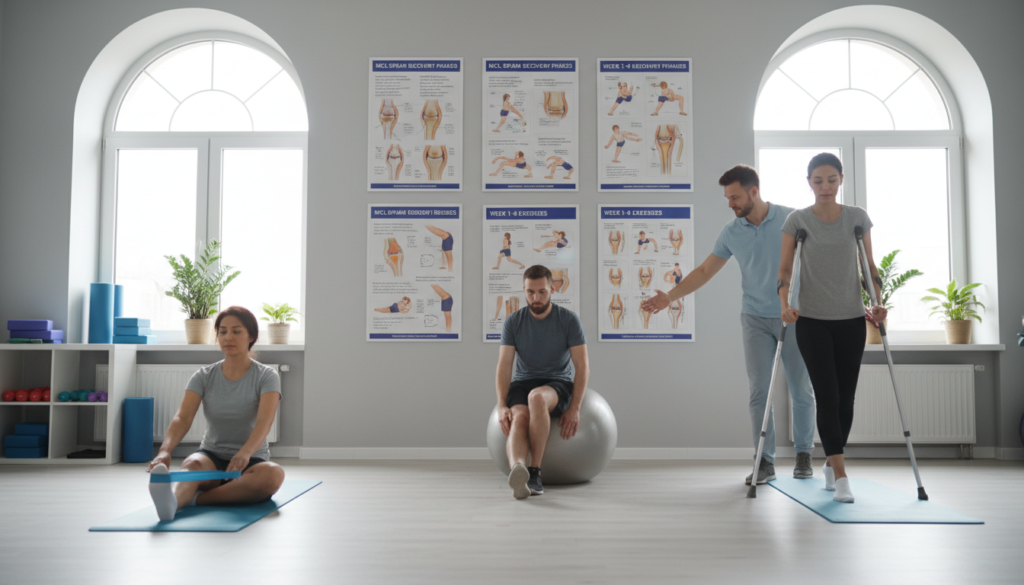
The foundation of any successful rehabilitation is built upon controlled, deliberate actions. Our guide provides a clear path forward.
This structured approach minimizes risk. It allows your knee to adapt gradually to new demands.
Preparing the Knee with Controlled Movements
Initial exercises focus on gentle activation. The goal is to re-engage supporting muscles without strain.
Dr. Kim Anderson suggests a simple technique. Placing a rolled towel behind the knee during a quad set helps target the correct muscles.
This controlled movement prepares the joint for more demanding work later in your program.
Guided Movement Techniques from Physical Therapists
A physical therapist offers expert guidance. They ensure your form is correct to protect the healing MCL.
The quad set, pressing your knee into that towel, is a prime example. It’s a foundational step for rebuilding stability.
Following these professional movements at home ensures consistency. Each step is designed for safety, building the confidence needed for daily life.
Essential Stretching and Warm-Up Techniques
Gentle stretching routines form the bedrock of a safe and effective rehabilitation process. They prepare your joint for the strengthening work ahead and are vital for a smooth recovery.
These techniques improve blood flow and tissue elasticity. Starting your session this way minimizes stiffness and supports healing.
Patellar Mobility and Gentle Knee Bends
Moving the patella from side to side is a foundational exercise. This simple action helps reduce inflammation and prevents painful adhesions around the knee.
It maintains your joint’s essential range of motion. Gentle, pain-free bends can follow, further encouraging fluid movement.
Hamstring and Calf Stretching Strategies
The hamstrings and calves often tighten to protect an injured mcl. Stretching these muscles is vital for restoring balance.
We suggest using a strap or towel for hamstring stretches. You should feel a comfortable pull in the back of your leg, not pain.
Place the strap around the ball of your foot and gently straighten your leg. Consistent practice improves your overall motion, making daily tasks easier.
Targeted Strengthening for Knee Stability
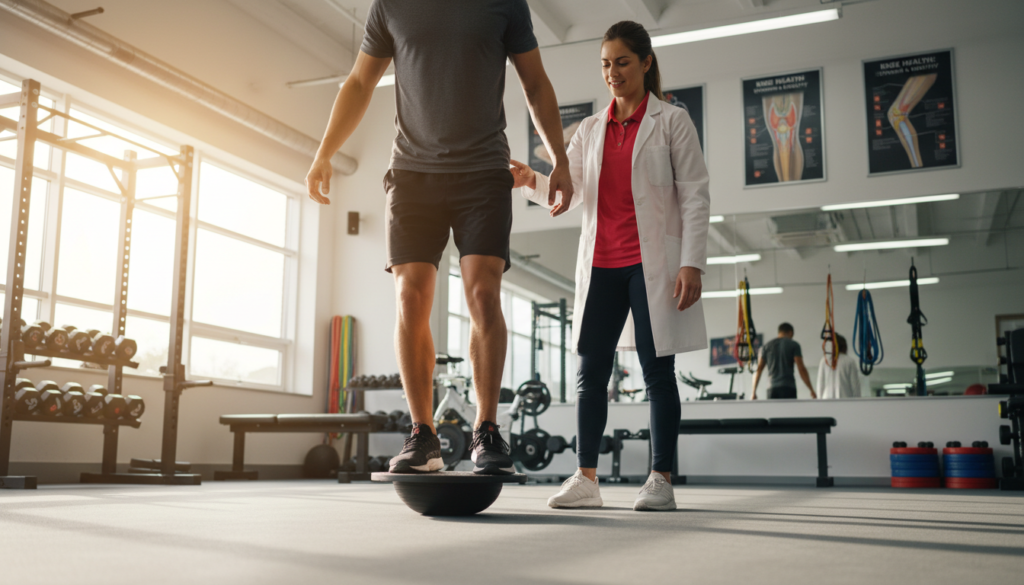
A stable knee is not a passive structure. It’s an active system powered by surrounding tissues.
Targeted work builds a protective muscular framework. This is the logical next phase after foundational movements.
Quadriceps Activation and Isometric Exercises
The quadriceps are primary stabilizers for your joint. Restoring their strength is non-negotiable for weight-bearing.
We begin with isometric techniques, like quad sets. These exercises contract the muscles without moving the joint.
This approach safely rebuilds foundational power. It prepares your leg for more dynamic challenges.
Glute and Hamstring Strengthening Moves
Your glutes and hamstrings provide essential posterior support. Weakness here can lead to excessive strain on the inner knee.
Movements like glute bridges and lateral leg raises are crucial. Lateral raises specifically target the glute muscles.
This action provides pivotal stability to the medial area where the MCL resides. A strong posterior chain is your best defense.
These activities are designed for progression. You can increase intensity as your strength and joint confidence improve.
Improving Knee Range of Motion Through Gentle Movements
Our program prioritizes the gradual restoration of your natural joint movement. Regaining full, comfortable bending is a central aim.
This focus on knee range is achieved through patient, consistent activity. Gentle techniques reduce stiffness and promote healing.
Dr. Kim Anderson recommends heel slides as a foundational activity. They allow you to bend your knee as far as you comfortably can.
This motion restores flexibility without forcing the joint. There is no need to push your limits aggressively.
Consistency with these movements is the true key to progress. Daily practice helps reduce the stiffness common after an MCL issue.
You will notice a gradual improvement in how your leg bends during daily tasks. Patience with this process yields the best long-term results.
| Gentle Technique | Primary Goal | Key Benefit |
|---|---|---|
| Heel Slides | Increase bending (flexion) range motion | Restores flexibility without joint strain |
| Seated Knee Bends | Improve controlled bending and straightening | Builds confidence in weight-bearing motion |
| Patellar Glides | Maintain kneecap mobility | Prevents painful adhesions around the joint |
These foundational exercises create a safe pathway for better mobility. Dedicated time here supports all future strengthening work.
Dynamic Balance and Coordination Exercises
Dynamic balance work bridges the gap between basic strength and the complex demands of daily life and sport. This phase trains your body to maintain control during unpredictable motion.
Standing on One Leg to Enhance Stability
Mastering a single-leg stance is a foundational goal. We suggest starting near a wall or chair for safety.
Aim to hold this position for 30 to 60 seconds. This directly builds the stability required for walking and running.
This single-leg balance is a critical test of your joint’s readiness. It signals a return to your normal, active lifestyle.
Rotational and Lateral Balance Routines
These exercises safely expose your knee to twisting and side-to-side forces. They mimic the stressors encountered during sports or simple daily tasks.
Practicing controlled rotation and lateral shifts prepares your joint for unexpected movements. This coordinated training significantly lowers the risk of a future setback.
Together, these routines forge essential knee stability. They provide the final layer of protection for your healing MCL.
Progressing to Advanced Rehabilitation Movements
Your recovery reaches a pivotal point when you’re ready to train for power and agility. This final program level prepares your joint for the dynamic demands of sport.
We introduce these advanced drills only after you meet strict criteria. Your foundational strength and stability must be solid.
Mastering complex movements is the last step before a full return to activity. It bridges the gap between basic healing and high-performance.
Lateral Step Downs and Controlled Plyometrics
Lateral step downs build crucial single-leg control. They teach your knee to handle descending forces with proper alignment.
Controlled plyometrics, like low hops, come next. Research states you need at least 120 degrees of knee flexion before starting this training.
These activities develop the explosive power needed for jumping and cutting. Each movement is progressed carefully to avoid strain.
| Advanced Drill | Primary Focus | Progression Criteria | Sport-Specific Benefit |
|---|---|---|---|
| Lateral Step Downs | Single-leg strength & control | Minimal pain during descent | Prepares for lateral cutting motions |
| Box Jumps (Low Height) | Explosive power development | Full 120° knee bend achieved | Builds base for jumping activities |
| Agility Ladder Drills | Foot speed & coordination | Confident single-leg balance | Enhances multi-directional quickness |
Move to the next level only when current exercises feel easy. This disciplined approach ensures your knee is truly ready.
These final stages forge the stability required for your specific sport. They allow a confident return to running, pivoting, and play.
Role of Physical Therapy in Our Recovery Journey
Professional support can transform the rehabilitation process, offering clarity and personalized direction. Physical therapy is one of the most effective treatments for joint issues. It helps you build strength and improve overall mobility after an mcl injury.
Our digital therapy program allows access to customized plans from home. Members can chat with a care team for ongoing guidance. Research shows a 68% reduction in pain within 12 weeks of following this structured program.
A physical therapist tailors activities to your specific knee needs. This ensures you stay on track toward full restoration. Professional guidance is invaluable for navigating the healing journey with confidence.
| Therapy Approach | Key Benefits | Ideal For |
|---|---|---|
| In-Person Sessions | Hands-on assessment & real-time form correction | Complex cases requiring direct manipulation |
| Digital Program | Convenience, consistent home access, progress tracking | Maintaining momentum between clinical visits |
| Hybrid Model | Combines expert oversight with daily flexibility | Most knee and mcl recovery scenarios |
We believe this expert support builds essential knee stability. It integrates seamlessly with other modalities like targeted massage techniques. Together, they create a comprehensive path forward for your joint health.
Prevention Strategies for Long-Term Knee Health
Protecting your joint from future issues requires a proactive mindset and consistent habits. The goal is to build resilience that lasts well beyond the initial healing phase.
We focus on smart daily choices that fortify your entire leg. This approach minimizes strain on vulnerable structures during your favorite activities.
Integrating Regular Strength Training
Consistent strength work is your best defense. It builds a muscular shield that supports your knee and absorbs impact.
Focus on the quadriceps, glutes, and hamstrings. A strong posterior chain provides crucial support for the inner joint area.
This isn’t about intense gym sessions. A simple, regular routine integrated into your week makes the real difference over time.
Proper Warm-Up and Brace Considerations
Never skip your warm-up. A proper routine increases blood flow and prepares muscles for the demands of movement.
For high-intensity or contact sports, consider a knee brace if you have past instability. This gear can offer extra support and lower reinjury risk.
Ease into new activities gradually. Your body needs to adapt safely to build lasting resilience.
Maintaining a consistent plan protects your ligaments. It ensures you can continue the activities you love with confidence. For a guided approach, explore our structured MCL exercise program.
Conclusion
This guide has equipped you with the tools to move forward with confidence and resilience. We’ve provided a clear path to navigate your healing journey effectively.
Consistent effort with your strength and stability plan is the best way to restore full function. Always let your pain level guide your progress.
Seeking advice from a physical therapist offers personalized support. This professional guidance tailors your program for a successful return to favorite activities.
You are now taking a proactive step toward long-term joint health. Trust the process, and your knee will regain the trust you place in it.