
Can a high-level athlete truly return to elite performance after a severe inner knee injury? This question drives our specialized approach to rehabilitation.
The medial collateral ligament (MCL) is a major stabilizing structure. It supports the inner side of the knee joint.
During high-impact sports like football or soccer, this ligament prevents excessive inward motion. A significant tear can sideline even the strongest competitors.
Recovery for dedicated professionals requires a precise protocol. We start by accurately grading the ligament damage. This determines the best treatment options.
Not all tears require surgery. Many heal effectively with consistent, expert-guided care. Our clinic provides one-on-one physical therapy sessions lasting over 50 minutes.
This personalized attention directly addresses initial swelling and pain. We integrate a custom knee brace and targeted exercises. This strategy reduces the risk of future injuries during demanding activities.
Our goal is a full, functional return. We analyze all contributing factors to craft a plan that meets the unique needs of every athlete.
Key Takeaways
- The medial collateral ligament is the primary stabilizer for the knee’s inner side.
- Accurate injury grading is essential for determining the correct treatment path.
- Personalized rehabilitation plans are critical for athletes and active professionals.
- Many MCL injuries heal successfully without surgical intervention.
- Professional guidance from a physical therapist accelerates the recovery timeline.
- Managing initial swelling and pain is a crucial first step in the process.
- A structured program with targeted exercises helps mitigate the risk of re-injury.
Introduction to MCL Sprain Recovery
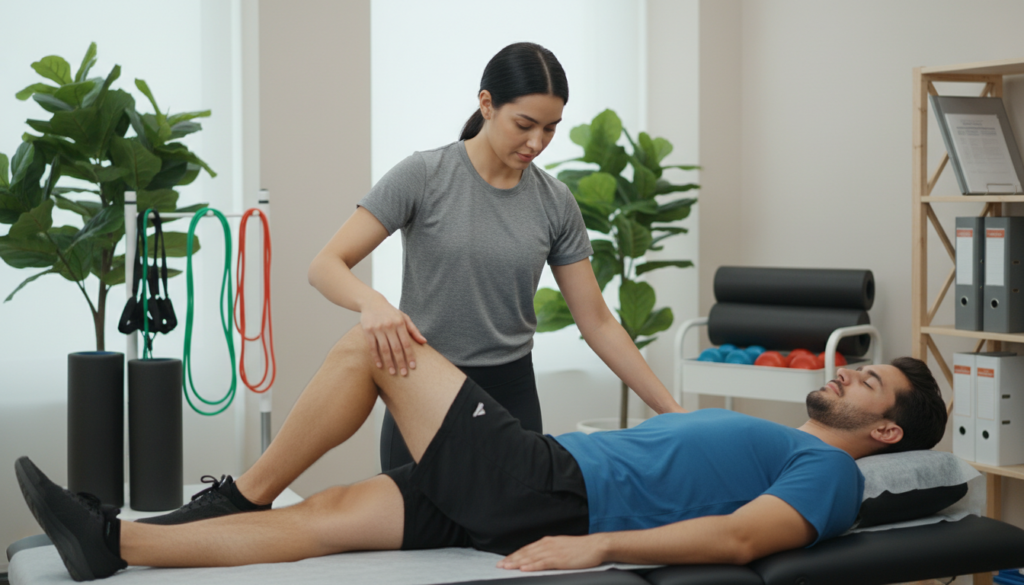
Recent sports medicine research provides clear data on return-to-play timelines, informing our modern recovery protocols. A 2021 study in the Orthopaedic Journal of Sports Medicine detailed outcomes for elite European soccer players. This evidence directly shapes our approach to healing.
Our commitment to safe and effective healing
We maintain a firm commitment to safe healing. Our practices are rooted in the latest clinical evidence. This helps competitors return to soccer, football, and other sports securely.
Monitoring swelling and pain is a continuous process. It ensures every patient receives the highest level of care. We provide detailed guidance on using a knee brace during early-stage rehabilitation exercises.
Our team analyzes the mechanics of a tear. This helps prevent future mcl injuries and ensures long-term joint stability.
| Pillar of Our Protocol | Impact on the Professional Athlete |
|---|---|
| Evidence-Based Practice | Informed Decision-Making & Realistic Timelines |
| Personalized Brace & Exercise Guidance | Protected Early Activity & Confidence in Movement |
| Continuous Swelling & Pain Monitoring | Consistent High-Level Care Throughout the Process |
| Mechanistic Analysis of the Ligament Tear | Long-Term Knee Stability & Reduced Re-Injury Risk |
Why understanding recovery is crucial for professionals
Knowing the expected recovery time for an mcl injury is vital. Professionals must balance career activities with long-term knee joint health. A qualified doctor will assess the grade of damage.
This assessment determines if you require surgery or if conservative care is best. We identify specific risk factors that lead to mcl tears. Understanding all treatment options is key for managing a complex ligament tear.
This knowledge empowers athletes during a challenging period. It turns uncertainty into a structured plan for return.
Understanding MCL and Related Knee Injuries
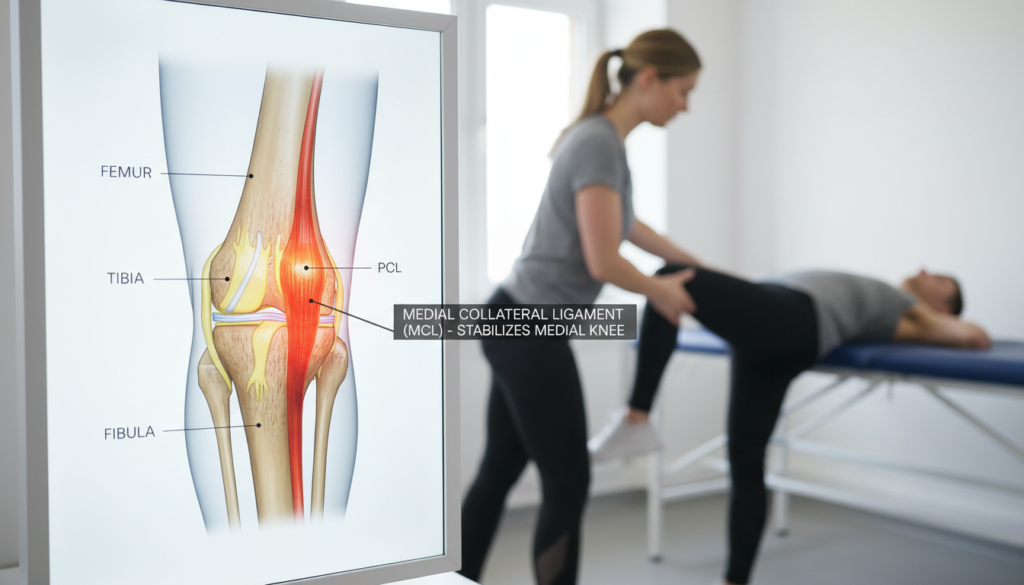
Knee stability relies heavily on a key ligament that guards against inward force during athletic maneuvers. Grasping its function and common damage causes is essential.
The role of the medial collateral ligament
This collateral ligament is the main stabilizer on your side knee. It protects the knee joint from excessive inward motions, known as valgus stress.
A sports medicine specialist often uses a valgus stress test. This exam evaluates the integrity of this vital structure after an injury.
Common knee injury mechanisms and risk factors
Direct contact, like a football tackle to the outer leg, is a frequent cause. Non-contact mcl tears happen during rapid direction changes in soccer.
A physical therapist assesses the damage to assign a grade. This grading directly influences your recovery time and treatment plan.
We identify specific risk factors that lead to these injuries. Poor landing mechanics or muscle imbalances place undue stress on the ligament.
| Injury Mechanism | Common in These Sports | Primary Risk Factors |
|---|---|---|
| Direct Valgus Force (contact) | Football, Rugby, Martial Arts | Weak hip stabilizers, improper tackling form |
| Dynamic Valgus (non-contact) | Soccer, Basketball, Skiing | Poor landing mechanics, muscle fatigue |
| Twisting or Pivoting | Tennis, Volleyball, Baseball | Muscle imbalances, previous knee injury |
Proper treatment manages initial pain and swelling. We combine rest, icing, and guided physical therapy for natural healing.
What is MCL sprain recovery for professionals?
In professional sports, healing from a ligament tear is measured against strict performance benchmarks. We utilize extensive data, like the 11-year UEFA study on 346 cases, to set realistic expectations for recovery time.
Defining recovery goals in professional settings
A dedicated physical therapist designs a program based on the specific grade of damage. This ensures the collateral ligament heals correctly.
Our primary focus is reducing pain and swelling through targeted therapy. This allows athletes to return to football or soccer with full confidence.
Treatment plans include advanced exercises to strengthen medial collateral structures. This minimizes the risk of future mcl tears during competition.
We collaborate closely with each doctor. This ensures the process is safe and tailored to the athlete’s unique needs.
Continuous monitoring of the knee joint lets us adjust activities intensity. This prevents setbacks and supports a full return to professional sports.
Our comprehensive care addresses both physical and psychological factors. This holistic approach is essential for professionals facing a significant injury.
Non-Surgical vs Surgical Treatment Options
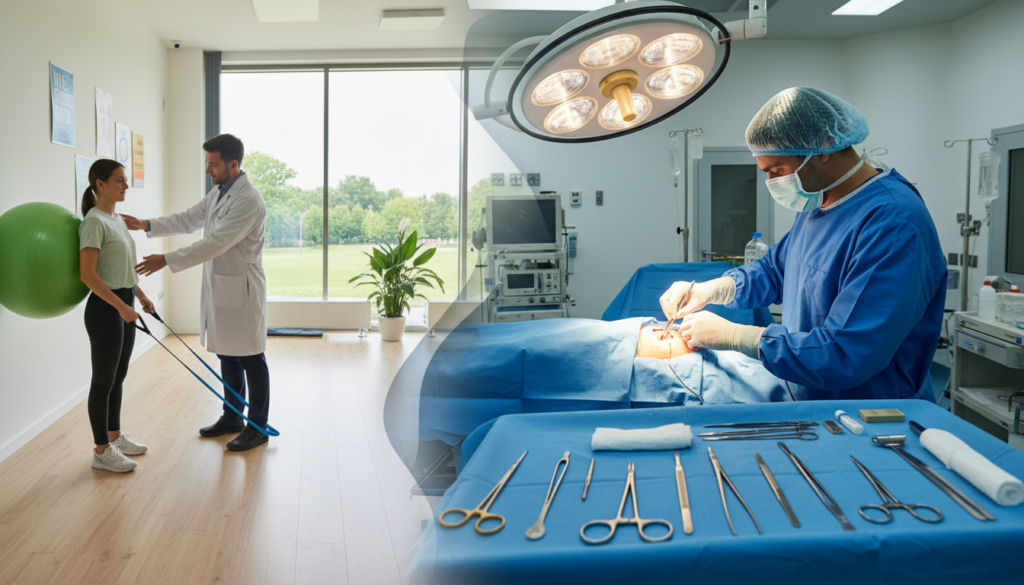
The decision between surgery and conservative care hinges on the severity of the damage and the patient’s activity goals. We evaluate the grade of the mcl injury and knee joint stability to determine the best path.
When physical therapy is the best approach
For many patients, physical therapy is the gold standard. The medial collateral ligament has a strong blood supply that aids natural healing.
Our therapist designs a program to reduce pain and swelling. Targeted exercises restore strength without the risk of surgery.
This conservative treatment is often ideal for athletes in sports like soccer. It allows a safe return to activities.
| Treatment Approach | Ideal For Injury Grade | Core Components | Typical Recovery Time |
|---|---|---|---|
| Non-Surgical (Physical Therapy) | Grade I & II Tears | Bracing, swelling management, progressive exercises | 3-8 weeks |
| Surgical Intervention | Grade III Tears / Unstable Knee | Ligament reconstruction, crutches use, structured rehab | 3-6 months+ |
Surgical interventions and recovery considerations
A complete rupture, or grade 3 tear, may require surgical reconstruction. This is needed when the knee remains unstable.
Post-surgery, patients use crutches for about six weeks. This protects the repaired collateral ligament.
Our team manages post-operative care closely. We ensure the recovery time is respected to prevent re-injury.
We help patients navigate these complex severe knee injuries. The focus is on long-term stability for a return to football and other high-impact sports.
Step-by-Step Rehabilitation and Recovery Timeline
We map out the healing journey for knee injuries into acute, intermediate, and advanced phases. This ensures optimal outcomes.
Acute phase: managing pain and swelling
The first two weeks focus on protection. We control inflammation and initiate early quadriceps activation.
Managing discomfort protects the medial collateral ligament from further stress. This foundational step is critical for all tear grades.
Intermediate and advanced rehabilitation phases
Next, we restore full range of motion. This prevents long-term stiffness in the knee joint.
Strengthening exercises follow, targeting the collateral ligament and supporting ligaments. The recovery time varies.
Grade 1 injuries may allow a return in 2-4 weeks. A severe tear often needs 8-12 weeks.
Advanced physical therapy involves sport-specific drills. This prepares the knee for high-impact demands.
Our structured therapy tracks progress closely. We adjust the plan to prevent common injuries during a premature return.
This phased approach delivers comprehensive recovery for every injury.
Essential Exercises and Therapy Strategies
A cornerstone of successful ligament healing is a progressive exercise regimen designed to protect and strengthen. Our clinic designs specific protocols to rebuild stability and function.
Targeted exercises for strength and stability
We begin with foundational movements like quad sets and straight leg raises. These maintain muscle strength without stressing the healing ligament.
As tolerance improves, we introduce closed-chain exercises. Leg presses and controlled squats build functional strength critical for movement.
Each program is custom based on the grade of the tear. This ensures intensity matches the current stage of healing.
Therapy techniques tailored for MCL injuries
Our therapists use advanced techniques like patellar mobilizations. Neuromuscular stimulation is also essential for restoring normal knee function.
Balance and proprioceptive training improve joint stability. This helps athletes regain confidence for high-level performance.
Consistency in performing prescribed exercises is a key factor. For comprehensive knee injury aftercare guidance, we integrate these strategies into a daily routine.
Return to Sport and Activity Progression
We bridge the gap between rehabilitation exercises and the unpredictable demands of live sport. This final phase uses a systematic, evidence-based approach.
Our goal is a confident and capable return to competition. Every step is carefully planned to rebuild an athlete’s trust in their body.
Guidelines for Reintroducing Athletic Activities
We follow strict criteria before advancing an athlete. The knee must be completely pain-free and demonstrate solid stability during basic drills.
Our progression plan starts with light, sport-specific movements. Intensity and complexity increase only when the athlete shows full control.
We coordinate closely with coaches and trainers. This ensures the activity progression aligns with team practices and game schedules.
Monitoring Progress and Ensuring Joint Stability
Continuous assessment is non-negotiable. We employ functional testing, like single-leg hop drills, to measure strength and power.
These objective benchmarks confirm the injured leg is ready for high-impact return to sport. Ensuring joint stability remains our top priority throughout.
We often recommend a protective brace during the initial return to full-contact play. Athletes also learn to recognize early signs of fatigue or discomfort.
This self-awareness helps them manage workload effectively. Our focus on proper mechanics and strength directly minimizes the re-injury risk.
This comprehensive support allows professionals to maintain peak performance long-term.
Conclusion
Overcoming a complex knee injury requires a holistic strategy focused on long-term joint health and performance.
We advocate for a dedicated, evidence-based approach to ligament injury rehabilitation. Partnering with a professional team ensures you navigate treatment complexities effectively.
Every athlete’s situation is unique. Your recovery timeline depends on the tear’s severity and your personal progress.
Staying committed to your physical therapy program is the most reliable path to success. Consistent effort rebuilds strength and stability.
Our goal is to provide the knowledge and support needed for a confident return to sport. Trust the process, and focus on your long-term knee joint health.