
How can a single ligament tear sideline a star quarterback and impact an entire team’s season? This question became a stark reality when Green Bay Packers quarterback Jordan Love missed two crucial games due to a medial collateral ligament sprain.
This common yet complex injury highlights the vulnerability of the knee’s inner stabilizer. The medial collateral ligament is a band of tissue that connects your thigh bone to your shin bone.
It is one of the most frequently injured structures in the joint for professional competitors. High-impact sports like professional football place enormous physical demands on this area.
We explore the anatomy of the knee and the specific forces that lead to these common issues. A sudden twist, a direct blow to the outer leg, or an awkward landing can overstretch or tear this vital band.
Our guide provides clarity for coaches, trainers, and players. We examine how these problems occur, how they are diagnosed, and the best paths toward a full recovery.
Key Takeaways
- The medial collateral ligament is a key stabilizer on the inner side of the knee joint.
- High-impact sports and sudden directional changes put this ligament at significant risk.
- Even a minor tear can force a professional player, like an NFL quarterback, to miss playing time.
- Understanding the knee’s anatomy is crucial for preventing and managing these injuries.
- Proper diagnosis and a structured rehab plan are essential for a safe return to sport.
- These issues are not exclusive to football; they affect athletes in many contact and pivoting sports.
- Knowledge empowers teams and individuals to build better prevention strategies.
Understanding MCL Anatomy and Function
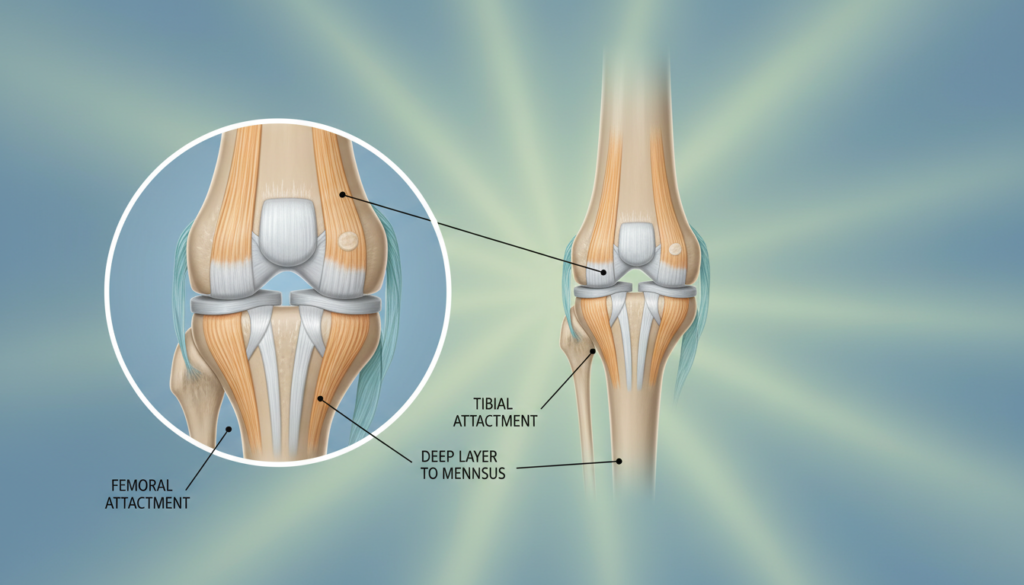
Understanding the knee’s medial collateral ligament begins with its precise location and dimensions within the joint. This band of tissue is a cornerstone of inner knee stability.
Overview of the Medial Collateral Ligament
The medial collateral ligament is a critical stabilizer. It connects the femur to the tibia on the inner side of the knee.
Its superficial portion is roughly 11 cm long and 1.5 cm wide. This size gives it the strength to handle significant stress.
Foundational research by James, Warren, and Marshall in the 1970s described a three-layer concept for the medial side. The medial collateral ligament resides in the second layer of this complex anatomy.
The Role of the MCL in Knee Stability
This vital collateral ligament acts as a primary static stabilizer. It prevents the knee from bending inward excessively during athletic movements.
Its function is crucial for pivoting, cutting, and absorbing impact. A failure here often leads to a significant knee injury.
The table below outlines the three-layer model of the medial knee, based on the work of Warren and Marshall.
| Layer | Key Structures | Primary Function |
|---|---|---|
| Layer 1 | Deep crural fascia | Superficial covering and envelope |
| Layer 2 | Superficial medial collateral ligament | Primary valgus (inward) stabilizer |
| Layer 3 | Joint capsule, deep MCL fibers | Secondary stabilization and joint integrity |
By grasping this layered anatomy, we better appreciate how the ligament protects the joint. It is a key defender against forces that cause common sports injuries.
Key Mechanisms: What causes MCL sprain in athletes?
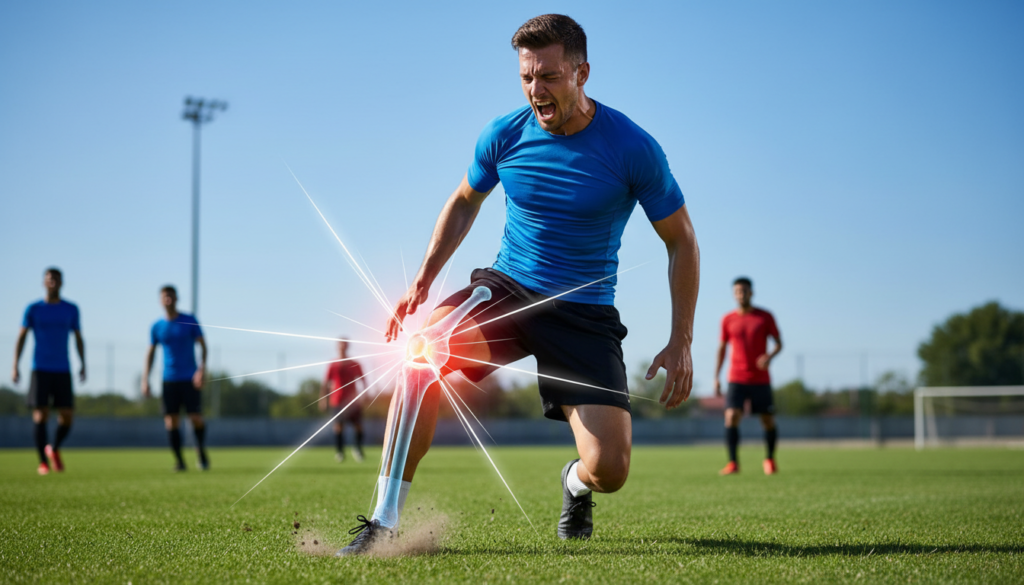
Valgus stress represents the primary culprit behind most medial collateral ligament problems in sports. This inward bending force overloads the inner side knee stabilizer.
Forces and Movements Leading to Injury
A typical scenario involves a planted foot. A sudden sideways force then pushes the knee, stretching the collateral ligament past its limit.
Direct contact to the outer thigh or leg creates extreme valgus stress. This instantly strains the inner collateral ligament.
Sudden cuts or bad landings also pose a high risk. These activities can misalign the femur and tibia, jeopardizing the medial collateral.
Insights from Sports Medicine Research
Studies show our muscles try to protect the knee. The quadriceps can boost medial collateral ligament complex stiffness by 164%.
Muscle reaction times are often too slow to prevent an mcl injury. The mechanical failure happens in milliseconds.
This leads to immediate pain and requires significant recovery time. We analyze these failure points below.
| Injury Mechanism | Common Athletic Scenario | Primary Force on Knee |
|---|---|---|
| Valgus Blow | Direct impact to outer leg during contact | Extreme inward bending (valgus) stress |
| Cutting Maneuver | Rapid change of direction with foot fixed | Rotational and valgus torque |
| Awkward Landing | Jump landing with knee in unstable position | Compressive and shear forces |
Common Sports and Activities Linked to MCL Injuries
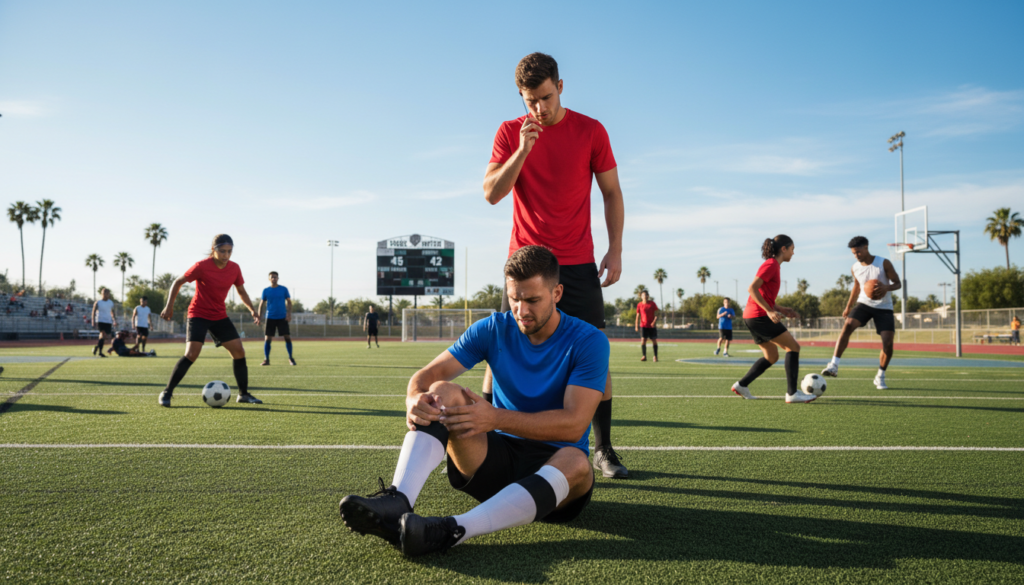
From the gridiron to the ice rink, certain athletic pursuits place the knee’s inner stabilizer under constant threat. These activities often involve valgus knee loading, which stresses the medial collateral ligament complex.
High-Risk Sports Like Football and Hockey
Professional football players face a heightened risk for an mcl injury. Lateral impacts and physical collisions are routine. Chicago Bears wide receiver Rome Odunze and San Diego Chargers lineman Joe Alt both suffered medial collateral ligament sprains early in the NFL season.
Ice hockey and skiing also contribute to frequent knee injuries. The quick stops and directional changes in these sports strain the collateral ligament. Valgus forces are a common denominator.
Everyday Athletic Movements and Their Impact
Even standard game-day activities can lead to trouble. Sudden cuts, pivots, and awkward landings misalign the femur and tibia.
High school and college athletes in soccer and hockey frequently risk a medial collateral ligament tear. The positioning required in these sports puts the side knee at greater risk.
By examining specific movements, we identify the activities that lead to collateral ligament strain. Prevention starts with recognizing these risks. A focused training program can help stabilize the joint.
Grading and Diagnosis of MCL Injuries
A clear diagnosis separates a minor knee sprain from a season-ending ligament tear. It guides all subsequent care for the athlete.
We rely on a standardized system to classify the severity of damage. This process determines the best path for recovery.
Classification of MCL Sprains
Clinicians use a specific grade system for these injuries. It ranges from a mild stretch to a complete ligament tear.
Orthopedic surgeon J.C. Hughston standardized this three-grade classification. It is based on the severity of damage and joint laxity found during examination.
A grade 1 sprain involves stretching without tearing. A grade 3 injury is a complete disruption of the medial collateral ligament fibers.
Grade 2 damage falls in the middle, with a partial tear of the collateral ligament. Each level corresponds to a different amount of knee instability.
Clinical Evaluation and Imaging Techniques
The physical exam is essential for determining the grade of injury. Doctors perform a valgus stress test to check joint stability.
They apply pressure to the outer knee while the leg is slightly bent. This test assesses the integrity of the inner collateral ligament.
Research by Fetto and Marshall highlights a critical link. ACL tears occur in 78 percent of cases where there is valgus laxity in full extension.
This means severe medial-sided injuries often involve the anterior cruciate ligament. Accurate diagnosis checks for these associated tears.
Whether the patient is a high school athlete or a professional football player, this step is crucial. It forms the foundation for managing the knee injury effectively.
Immediate Treatment and Rehabilitation Strategies
The clock starts ticking the moment an athlete feels that sharp pain on the inner knee. A prompt and proper response is the foundation for a successful return to sport.
Our approach is built on proven sports medicine principles. The goal is to control symptoms and protect the joint from further harm.
Initial Management: RICE and Bracing
The RICE protocol is the universal first step for managing these ligament injuries. Rest, ice, compression, and elevation work together to reduce swelling and pain.
This conservative treatment is effective for most minor sprains. A grade 1 issue typically allows a return in one to four weeks.
For a partial tear, a hinged knee brace provides crucial stability. It protects the healing collateral ligament during daily activities.
More severe, grade 3 tears demand greater patience. Recovery often extends to five to seven weeks or longer.
Rehabilitation Protocols and Return-to-Play Guidelines
Rehab focuses on restoring full range of motion and strength. Therapists guide athletes through gradual weight-bearing exercises.
Surgery is rarely needed for an isolated medial collateral ligament tear. It may be considered only with severe instability or multiple ligament damage.
Rushing the timeline increases the risk of re-injury. A disciplined, phased program ensures a safe return to high-impact activities like hockey.
Long-Term Impacts and Preventative Measures
The journey doesn’t end when the brace comes off. Long-term vigilance is key to preserving knee function after a ligament issue.
We explore potential future problems and how to avoid them. Proper care today protects an athlete’s mobility for years.
Risk of Re-Injury and Chronic Instability
Chronic instability is a major long-term risk. It often follows incomplete rehab after a grade 2 or 3 injury.
Repeated collateral ligament injuries pose another threat. They can lead to early-onset osteoarthritis in the joint.
This condition causes persistent pain and stiffness. It significantly reduces an athlete’s future mobility and comfort.
Effective Preventative Techniques in Sports
Focusing on prevention is the best strategy. Strong, flexible leg muscles are the knee’s best defense.
A consistent exercise routine is vital for long-term health. It supports the medial collateral ligament and entire joint.
Targeted training improves stability and reduces future risk. We outline key exercises in the table below.
| Preventative Exercise | Primary Muscle Group | Benefit for Knee Stability |
|---|---|---|
| Nordic Hamstring Curls | Hamstrings | Controls tibia, reduces anterior cruciate ligament strain |
| Split Squats | Quadriceps & Glutes | Builds single-leg strength, improves alignment |
| Clamshells with Band | Hip Abductors | Combats valgus collapse, protects medial collateral |
| Calf Raises | Gastrocnemius & Soleus | Enhances shock absorption during landings |
Professional guidance ensures these techniques are done correctly. A gradual return under supervision prevents chronic instability.
This proactive approach safeguards an athlete’s career and long-term knee health.
The Role of Specialist Care in Optimal Recovery
In the complex landscape of sports medicine, accessing specialized orthopedic expertise is the cornerstone of effective injury management. A precise diagnosis and tailored plan are vital for a strong comeback.
Importance of Early Evaluation by Orthopedic Specialists
Seeking prompt evaluation is critical. Orthopedic specialists perform detailed physical exams and use advanced imaging. This process accurately diagnoses the collateral ligament injury and checks for associated damage, like an ACL tear.
Facilities like Advanced Orthopedic and Sports Medicine Specialists lead in providing comprehensive care for complex knee injuries. Their early assessment determines if a case requires surgery or if a conservative program will work.
Customized Recovery Programs for Athletes
These experts create personalized treatment plans. The strategy addresses the specific grade of the medial collateral ligament issue and the athlete’s unique sport demands.
Working with a specialist helps manage pain and the severity of symptoms. It significantly reduces the long-term risk of instability in the side knee. We recommend all athletes get prompt, expert care to ensure their recovery is on the right track.
Conclusion
The path from injury back to peak performance hinges on knowledge and proactive care. Understanding the medial collateral ligament is fundamental for long-term joint health and athletic longevity.
We have detailed how this collateral ligament stabilizes the knee and why specific sports movements strain it. Accurate diagnosis and a structured rehab plan are crucial for effective management of any medial collateral issue.
Early evaluation by an orthopedic specialist remains the best practice. This step ensures the correct treatment path is followed from the start.
Prioritizing lower-body strength, flexibility, and professional guidance allows for a confident return to activity. This proactive approach protects your mobility and performance for years to come.