
Have you ever wondered why some athletes bounce back from a knee injury faster than others? The secret often lies not just in rest, but in the immediate and correct support they choose.
A sharp pop on the inner side of your joint during activity signals a problem. This medial collateral ligament, or MCL, tear demands quick action. It prevents long-term instability.
At our clinic, we see patients overwhelmed by sudden pain and swelling. Choosing the right support device is a critical step in your healing journey. It provides the necessary stability to protect your knee while tissues mend.
Our guide helps you navigate the complex world of medical braces. We ensure you select the best option for your specific level of damage and activity goals.
Early intervention with a proper support system can significantly cut your time away from the sports you love. By following expert-backed advice, you manage discomfort and regain stability for daily life and future performance.
Key Takeaways
- Immediate attention after an MCL injury is vital to prevent long-term knee instability.
- The sudden pain and swelling from a ligament tear can be overwhelming.
- Selecting the correct knee brace is a crucial step for effective recovery and support.
- Different levels of injury require specific types of braces for optimal protection.
- Early use of a proper brace can reduce recovery time and get you back to activity faster.
- Expert guidance helps you navigate the many brace options available.
- Understanding your injury is the first step to making an informed decision about support.
Overview of MCL Injuries and Treatment Options
Understanding the basics of an MCL injury is the first step toward effective recovery and management. This common issue affects the inner side of your knee and requires specific care.
What is an MCL Injury?
The medial collateral ligament is a crucial band of tissue. It connects your thigh bone to your shin bone, providing vital stability for the knee joint.
When this ligament gets overstretched or torn, it results in an MCL injury. These injuries often happen during sports or activities involving sudden twists or direct impacts to the outer knee.
Common Symptoms and Diagnosis
You will likely feel sharp pain on the inside knee immediately after the incident. This discomfort is a classic sign of ligament damage.
Swelling typically develops within 24 to 48 hours. You might also experience a feeling of instability, as if your knee is giving way during simple movements.
Doctors diagnose these injuries through a physical exam. They check for joint looseness and may order an MRI or X-ray to confirm the extent of the damage.
Early professional evaluation is key. It ensures a correct diagnosis and sets the foundation for a successful treatment plan, preventing long-term complications.
Understanding the Role of Knee Braces in MCL Recovery
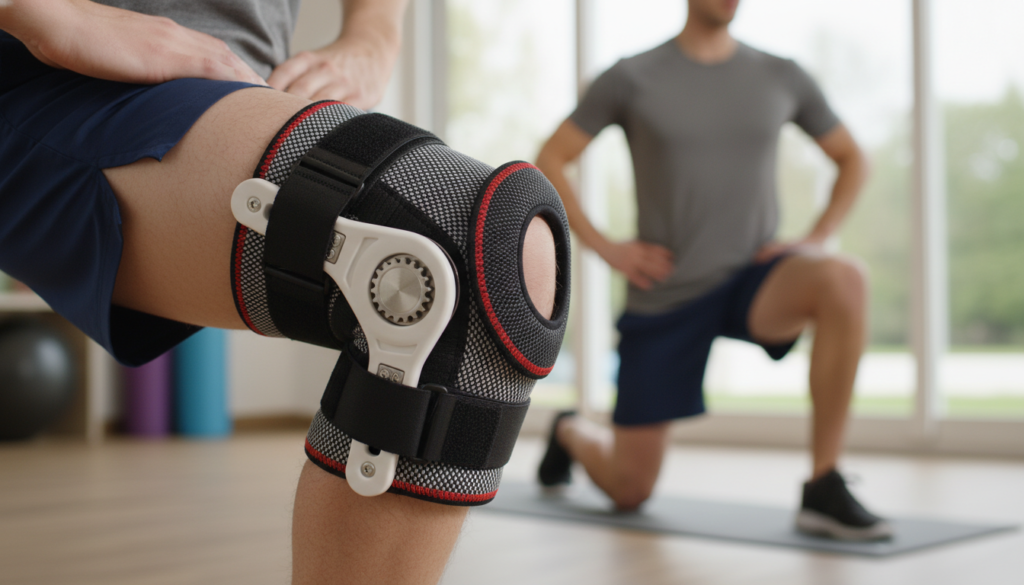
Modern recovery protocols for ligament damage emphasize active protection over passive rest. Knee braces are a cornerstone of this approach, offering a dynamic solution.
They bridge the gap between full immobilization and unprotected motion. This balance is critical for effective healing.
How Bracing Supports Healing
Research confirms early mobilization with proper support leads to stronger, more flexible tissue repair. A quality device limits harmful side-to-side movement.
It still allows beneficial knee flexion and extension. This controlled environment is vital for ligament recovery.
You gain necessary stability. This lets you stay active while the damaged area mends.
The psychological confidence from wearing a support device is powerful. It helps you move naturally, preventing secondary pain from poor mechanics.
Comparing Bracing with Other Treatments
Conservative care with a brace often prevents the need for surgery. This is true if you follow a consistent plan.
Integrating this tool into your overall strategy is one of the most effective ways to manage the issue. It works alongside other methods.
The table below highlights key comparisons:
| Treatment Option | Key Advantage | Main Consideration |
|---|---|---|
| Functional Bracing | Allows controlled movement | Requires proper fit and adjustment |
| Surgical Repair | Addresses severe tears directly | Invasive with longer recovery time |
| Complete Immobilization | Prevents re-injury initially | Can lead to joint stiffness and weakness |
| Physical Therapy Alone | Builds strength and coordination | May lack initial stability for the knee |
Our approach focuses on using the right tools. This ensures your recovery is safe, efficient, and minimizes future injuries.
Exploring Different Knee Brace Types
Selecting the correct support device hinges on understanding the distinct categories. Each type offers a unique balance of stability and flexibility for your recovery journey.
Hinged Knee Braces for Stability
These braces are engineered for maximum protection. Dual-axis joints mimic your joint’s natural motion while providing rigid medial support.
We often recommend a hinged knee brace for significant ligament tears. It allows a controlled range of motion, safeguarding the area during healing.
Compression Sleeves and Light Support Options
For milder issues, compression sleeves are an excellent choice. They deliver gentle, consistent pressure to improve circulation.
This design manages minor swelling effectively. It also provides valuable proprioceptive feedback, making your knee feel more secure during daily movement.
Different types serve different needs. Consulting a professional ensures you get the targeted support required for your specific situation.
What brace should I use for MCL sprain?
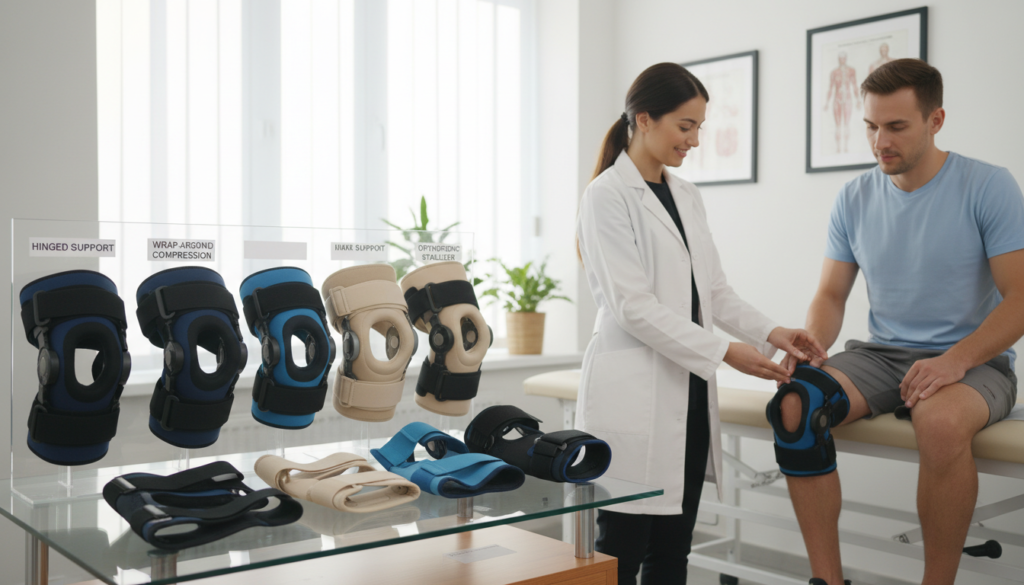
Effective bracing for an MCL issue is not one-size-fits-all; it requires a tailored approach. The correct device depends on your specific ligament damage and daily needs.
Factors to Consider When Choosing a Brace
The grade of your injury dictates the level of support required. Higher-grade tears need more robust stability.
Your activity level is another key factor. Active individuals often benefit from a hinged knee design for moderate to severe tears.
Look for models with adjustable compression. This feature lets you customize the fit as swelling reduces during healing.
Always prioritize a design that allows proper motion while protecting the injured area.
Pros and Cons of Popular Models
A high-quality hinged knee offers superior protection. The potential downside is bulkiness compared to lighter sleeves.
Compression sleeves provide gentle support and comfort. They may not offer enough support for significant ligament injuries.
The best support solutions for MCL balance comfort with necessary mechanical stability. Evaluating different types helps you find the right fit for your recovery.
Selecting the Right Brace for Your Injury Grade
Choosing between a simple sleeve and a robust hinged model comes down to one critical factor: the grade of your sprain.
Medical professionals use this system to classify the severity of ligament damage. It directly informs the optimal bracing strategy for your recovery.
Grade 1 Versus Grade 2/3 Considerations
A Grade 1 injury involves mild stretching. Healing typically takes 1 to 3 weeks.
For this level, a compression sleeve is often sufficient. It manages minor swelling and provides enough support for daily motion. Our guide to the best brace for grade 1 MCL details these lighter options.
Grade 2 and 3 MCL tears are more serious. They involve partial or complete tearing of the ligament.
Recovery time extends from 3 to 8 weeks. These higher-grade injuries demand a hinged knee brace.
This type of support provides crucial medial stability. It protects the knee during the longer healing process.
Structured rehabilitation is essential for these tears. Physical therapy ensures the ligament mends in proper alignment.
Selecting the correct device is a key part of your rehab. It allows safe exercise without risking further damage.
Understanding these differences prevents over- or under-bracing. It sets you on the fastest path back to full activity.
Integrating Bracing with Rehabilitation and Activity

A successful recovery from ligament damage hinges on seamlessly merging protective support with targeted movement. The device and your exercise plan must work together as one system.
This integrated approach ensures the injured area is safe. It also promotes the strength needed for a full return to daily work and sport.
Rehab Exercises to Complement Bracing
We encourage patients to perform their physical therapy exercises while wearing their support device. Simple moves like quad sets build crucial muscle strength.
This stability allows you to safely increase your range of motion. It protects the healing ligament from strain.
Always work with a professional. They ensure your exercises match your specific grade of injury.
Gradual Return to Physical Activity
Your support tool acts as a safety net during this phase. It provides confidence as you transition from basic rehab to more intense movement.
Managing pain becomes easier. The device reduces stress on the joint during daily tasks.
Using compression during workouts helps manage swelling. It also improves proprioception, which is vital for long-term knee health.
Our goal is a structured path from protected motion to full, pain-free activity. For a deeper look at effective support tools, explore our resource on knee braces for MCL injuries.
| Rehabilitation Phase | Primary Focus | Brace Role | Sample Exercises |
|---|---|---|---|
| Early (Weeks 1-2) | Reduce swelling, protect ligament | Maximum stability & immobilization | Quad sets, ankle pumps |
| Mid (Weeks 3-6) | Restore range of motion & strength | Controlled motion support | Straight leg raises, heel slides |
| Late (Weeks 7+) | Build power & return to activity | Light support for confidence | Step-ups, balance drills |
Expert Advice on MCL Injury Management
Clinical experience from orthopedic and therapy professionals offers a roadmap for effective knee care. Their guidance transforms a complex healing process into a structured journey.
We believe this expert counsel is invaluable. It helps people understand their specific situation and the necessary recovery time.
Recommendations from Orthopedic Specialists
Dr. William Sayde, an expert in Orthopedic Surgery, emphasizes early evaluation for any suspected ligament issue. Prompt assessment is the cornerstone of effective treatment.
Specialists often recommend combining a brace with physical therapy. This dual approach manages pain and instability from MCL injuries.
Insights from Physical Therapy Practices
Therapists provide key insights on integrating your support device into daily work and exercise. This ensures the brace works with your rehabilitation, not against it.
Expert guidance tailors the plan to your injury grade. It helps you avoid common pitfalls that can delay your return.
Following this advice builds confidence. Your recovery is based on the latest practices for the medial collateral ligament.
Proper Wear, Care, and Maintenance of Your Knee Brace
A knee brace is only as effective as its fit and condition, making maintenance a key part of recovery. Proper wear and care ensure your device provides consistent support throughout the healing process.
This attention to detail protects your investment and promotes better outcomes for your knee.
Guidelines for a Secure Fit
Ensuring a secure fit is vital. Center the device correctly over your joint to manage swelling and provide stability.
The fit should be snug but not restrict blood flow. Check for slippage during daily movement.
For professional assistance, visit one of our six shop locations across Ontario. Our experts can help you achieve the optimal fit for your injury grade.
If you have questions, the Sleeve Stars customer support team is available for guidance.
Tips for Cleaning and Long-Term Use
Regular cleaning extends the life of your equipment. Use mild soap and water, then air dry away from direct heat.
Inspect hinges and straps regularly for wear. A compromised device won’t protect your leg effectively.
Proper storage prevents damage. Keep it in a cool, dry place when not in use.
A well-maintained brace is more comfortable. This makes it easier to stay consistent with your MCL recovery plan.
Following these tips ensures your knee braces remain reliable partners against pain and further injuries.
Real-Life Experiences and Success Stories
Nothing inspires confidence in a recovery plan like hearing from others who have walked the same path. Their journeys offer practical insights and hope.
User Testimonials
Many individuals share how the correct support helped them manage pain and return to favorite activities. These stories highlight the human side of healing.
“Using a quality device gave me the stability to start moving again without fear. It was a game-changer for my knee health.”
Testimonials often stress professional advice. This guidance ensures you select the right brace for your specific grade of ligament tears.
Users frequently note that compression alongside their device reduced swelling. This provided the confidence needed to begin physical therapy.
We are proud to feature these experiences. They prove that with proper tools, a full recovery from an MCL injury is possible.
Hearing from others who succeeded is incredibly motivating. This is especially true in the early stages of managing your knee issue.
These real-life accounts underscore the value of consistent support. The positive impact on overall quality of life is clear. For a detailed personal account, read about one athlete’s rehab journey.
Our community thrives on shared stories. We encourage you to reach out if you need guidance on your own healing path.
Conclusion
A confident return to your favorite activities is the ultimate goal of any effective recovery strategy. This journey combines the right brace for your injury grade with consistent rehabilitation. Protecting your knee joint and the medial collateral tissue ensures a safe return to daily life.
We have highlighted the role of professional advice in managing pain and instability. Your commitment to a personalized treatment plan and specific exercises builds long-term stability. This approach works for minor tears or more significant ligament damage.
The correct tools and a positive mindset help you reclaim comfortable movement. Our team provides resources and guidance for a successful recovery from an MCL sprain. Take that first step today. With the proper support, you will heal confidently and return stronger.