
Is that nagging knee pain just a minor twist, or a sign of a serious ligament injury that needs immediate attention?
The medial collateral ligament, or MCL, is a crucial band of tissue. It runs along the inner side of your knee. Its job is to stop the joint from buckling inward during movement.
A strain to this MCL often happens from a direct blow to the outside of the leg. Sudden twisting motions or overextending the knee can also cause it.
Pain, swelling, and a feeling of instability are common signals. Recognizing these signs early is vital for your joint’s long-term health. It helps you make smart decisions about your care.
We guide you through the symptoms that truly demand a professional evaluation. Understanding your knee injury leads to better recovery. You can return to your active life with confidence and strength.
Key Takeaways
- The MCL is a key stabilizer on the inner side of the knee.
- Sprains often result from impact, twisting, or overextension.
- Early symptom recognition is crucial for preventing complications.
- Specific signs indicate the need for a professional medical assessment.
- Proper understanding guides effective recovery and a return to activity.
- Timely intervention ensures you receive the most effective care available.
Understanding Medial Collateral Ligament (MCL) Sprains
We define an MCL sprain as an injury to the band of tissue connecting your thigh and shin bones. This medial collateral ligament is a critical stabilizer on the inner side of your knee. It prevents the joint from buckling inward during activity.
What is an MCL Sprain?
A sprain means this collateral ligament has been stretched or torn. This damage often happens from a direct impact or a sudden twist. The resulting injury compromises your knee’s stability.
Grades and Severity of MCL Injuries
We classify these sprains by severity into three distinct grades. A grade 1 injury is a mild stretch with no tear. Grade 2 involves a partial tear of the ligament fibers.
A complete rupture is a grade 3 injury. This severe medial collateral tear means the ligament is fully separated. Identifying your specific grade is the first step in planning an effective recovery for your knee.
Common Symptoms of MCL Injuries
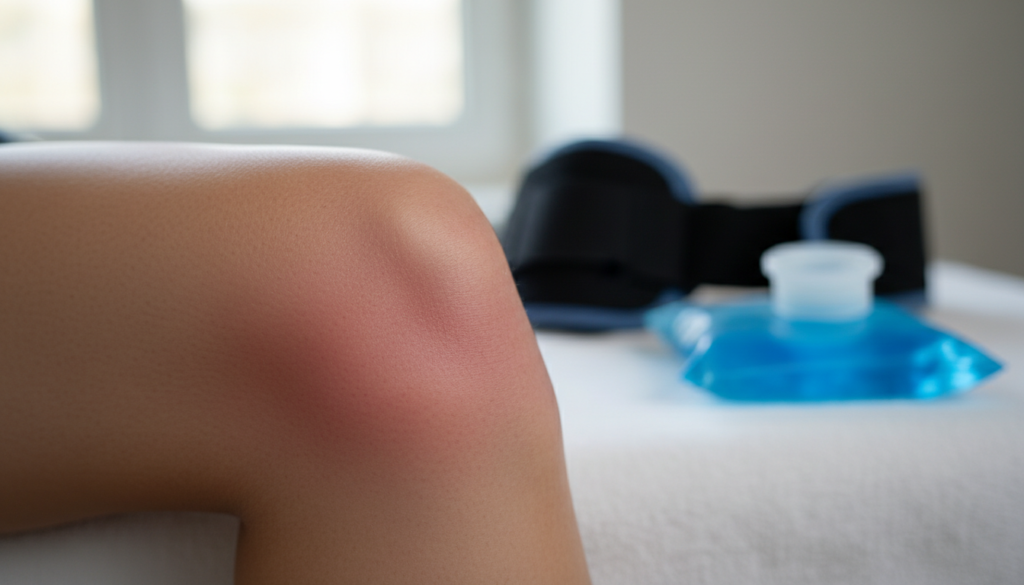
The body sends clear signals when the medial collateral ligament is compromised. Learning to identify them is crucial for proper care.
We outline the primary symptoms below. Recognizing these signs helps you understand your condition.
Pain, Swelling, and Instability
Sharp pain on the inner side of the knee is a hallmark of an acute MCL injury. This discomfort is often immediate and localized.
Swelling typically develops within a few hours. Inflammation makes it difficult to bend the knee joint.
Many people report a feeling of instability. The joint might feel like it could give way during simple movement.
Limited Range of Motion and Bruising
Stiffness and swelling frequently limit motion. Fully bending or straightening the leg becomes a challenge.
Bruising may appear on the inner side knee area. This indicates minor blood vessel damage from the initial impact.
Managing these symptoms early is vital. Persistent pain and swelling can hinder daily activities.
“Early recognition of ligament injury symptoms can significantly influence the recovery trajectory,” notes a sports medicine specialist.
| Symptom | Description | Typical Onset |
|---|---|---|
| Pain | Sharp, localized discomfort on the inner knee | Immediate |
| Swelling | Inflammation that restricts joint movement | Within a few hours |
| Instability | Feeling that the knee might buckle or give out | Soon after injury |
| Bruising | Discoloration from damaged blood vessels | 24-48 hours |
When should I see a doctor for MCL sprain?
Certain signs after a knee injury clearly indicate the need for expert evaluation. While some discomfort is expected, specific patterns signal a deeper problem.
We guide you through the critical symptoms that demand a professional assessment. Timely action protects your joint’s long-term function.
Recognizing Persistent or Worsening Symptoms
Pain and swelling that do not improve after several days are red flags. This persistent discomfort on the inner side of the knee often points to a significant MCL injury.
A popping sensation at the moment of impact is another serious sign. It suggests ligament damage. Instability, where the leg feels like it might buckle, also requires an appointment.
Difficulty bearing weight on the affected leg is a major concern. If walking is a struggle, seek care immediately. Ignoring these symptoms can lead to chronic weakness along the inner structures.
“Patients often wait too long, hoping the pain will fade. Early evaluation for persistent instability is crucial to prevent secondary joint damage,” advises a specialist from Mass General Brigham Sports Medicine.
| Sign | What It Means | Recommended Action |
|---|---|---|
| Unimproved Pain/Swelling | Inflammation and damage are not healing naturally. | Schedule an appointment with Lattimore Physical Therapy. |
| Popping Sensation | Possible ligament tear at the time of injury. | Book a professional evaluation promptly. |
| Inability to Bear Weight | Significant structural compromise in the knee. | Visit an urgent care center like Princeton Orthopaedic Associates. |
For residents near Monroe Township, Princeton Orthopaedic Associates at 11 Centre Drive offers urgent care appointments. They assess severe damage quickly.
Do not hesitate to book an appointment if these MCL symptoms appear. Professional guidance ensures the correct path to recovery.
Diagnosis and Evaluation of MCL Injuries
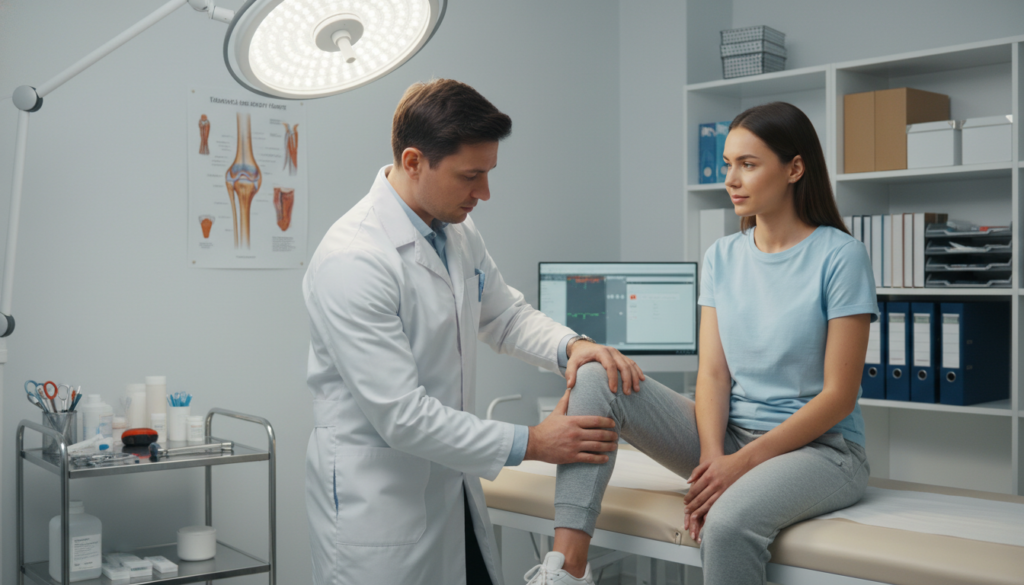
A precise diagnosis is the cornerstone of any effective recovery plan for a knee ligament issue. We begin with a thorough clinical assessment to understand the full extent of the problem.
This process combines hands-on examination with advanced technology. Our goal is to create a clear picture of your unique situation.
Physical Exams and Special Tests
Our specialists start with a detailed physical exam. A key component is the valgus stress test.
This manual test applies gentle pressure to the outside of your knee. It evaluates the joint’s stability and checks the medial collateral ligament.
The test helps determine the severity of your injury. It identifies if you have a mild stretch, partial tear, or complete rupture. Assessing joint looseness is a critical part of the initial evaluation.
Imaging Techniques and Their Role
Imaging provides a detailed look inside the joint. It confirms the physical exam findings and rules out other issues.
| Technique | Primary Purpose | Role in Diagnosis |
|---|---|---|
| X-ray | Rules out bone fractures | Ensures no underlying bone damage complicates the MCL recovery plan. |
| MRI | Visualizes soft tissue detail | Shows the specific part of the knee with a tear and checks cartilage health. |
By combining these methods, we accurately grade the injury severity. This integrated approach allows us to build a personalized treatment strategy for your MCL.
Effective Non-Surgical Treatment Options
Non-surgical care forms the foundation for healing most medial collateral ligament issues. Many MCL injuries respond well to conservative treatment methods.
These approaches focus on reducing initial symptoms and creating a stable environment for recovery. We outline the core strategies below.
Rest, Ice, and Compression
Immediate rest is the most critical step after a ligament tear. It allows the damaged fibers to begin healing without stress.
Apply ice to the inner side of the knee for 20 minutes several times daily. This simple treatment effectively manages pain and controls swelling.
Use a compression bandage along inner tissues. It helps limit inflammation in the early phase. Combine this with elevation for the best results.
Bracing, Taping, and Home Care Strategies
External support is often necessary for stability. A knee brace provides this support, allowing safer movement during daily tasks.
This brace protects the knee from sideways forces that could worsen the tear. Consistent home care, including continued rest, prevents further stress.
Most patients with a grade 1 or 2 injury heal successfully by following this plan. Adherence to these non-operative methods leads to a strong recovery.
The Role of Physical Therapy in MCL Recovery
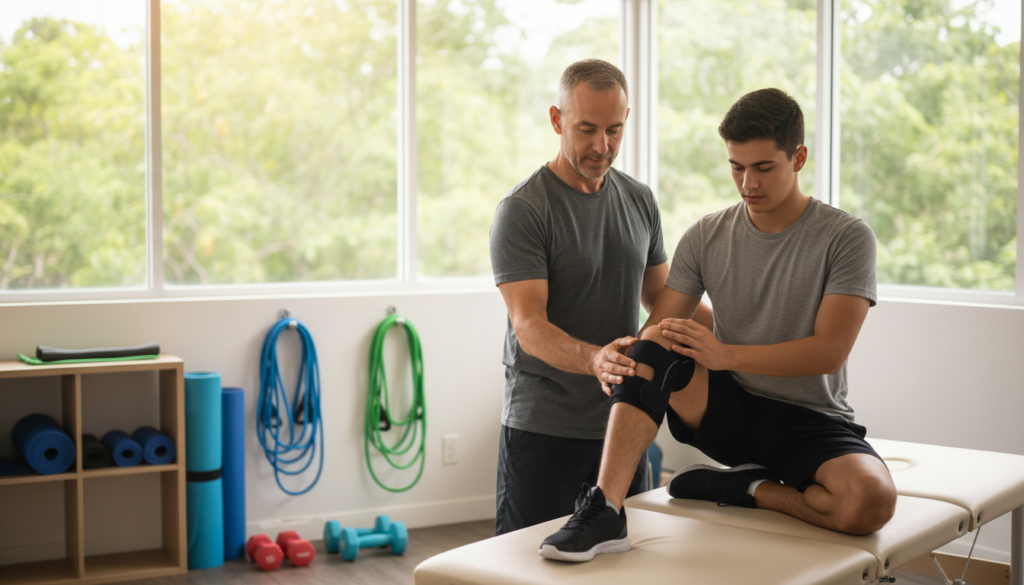
Professional therapy services play a pivotal role in healing knee ligament issues. They guide patients through structured rehabilitation programs designed to restore full function.
Our physical therapy approach focuses on rebuilding strength and mobility after an injury. It addresses the specific needs of your joint to ensure a safe return to activity.
Strengthening and Stabilization Exercises
We design specific exercises to improve knee stability. This helps prevent the joint from buckling during daily movements.
Range-of-motion work reduces stiffness and restores flexibility. Strengthening the muscles around the knee provides crucial support for the healing ligament.
Balance and proprioception drills are vital, especially for athletes. They retrain your body for safe movement patterns after a tear.
- Controlled movements to regain full joint mobility
- Targeted strength training for quadriceps and hamstrings
- Balance challenges on stable and unstable surfaces
- Gait training to correct walking mechanics
Consistent participation in this therapy is key. It ensures your knee regains the strength necessary for sports and daily life. A dedicated program leads to a confident and complete recovery.
Surgical Interventions and When They Are Needed
While many ligament issues heal with conservative care, some severe cases demand a surgical approach. This path is not the first choice but becomes essential for specific injury patterns.
Indications for Surgical Repair
Surgery is typically reserved for complete ligament tears or when other structures like the ACL are also damaged. These complex injuries often cause significant joint instability.
Athletes involved in high-impact sports may opt for this surgery. It ensures the knee can handle intense pressure during competition.
During the procedure, a specialist uses sutures to repair the torn tissue. For major damage, a graft reconstructs the ligament. This restores the medial collateral ligament’s normal anatomy.
Recovery from MCL surgery generally takes 6 to 8 weeks. The operation is often performed on an outpatient basis.
Patients use a knee brace and crutches for initial protection. Our team monitors progress closely after surgery. This ensures the tear heals correctly and full function returns.
Most MCL injuries do not require an operation. However, for these severe tears, surgical surgery provides the best chance for a strong, stable knee.
Preventing Future MCL Injuries and Ensuring Knee Health
Protecting your knee from future ligament issues requires a proactive approach to joint health. Building strength and adopting smart habits significantly reduce the risk of recurring injuries.
We focus on two key areas: preparing your body for activity and using the right gear. This dual strategy supports long-term knee stability.
Proper Warm-Up and Strengthening Regimens
A dynamic warm-up prepares muscles and joints for sudden movement. It increases blood flow and flexibility before sports or exercise.
Cooling down afterward promotes recovery and reduces stiffness. Consistent exercises for the quadriceps, hamstrings, and glutes are crucial.
These muscles act as natural stabilizers for the knee joint. Strong legs better absorb impact and protect the MCL.
Research supports these preventive strategies for ligament health. A dedicated routine builds resilience against common injuries.
Using Supportive Equipment and Braces
Athletes in high-impact sports benefit from external support. A quality knee brace provides extra stability during lateral cuts and jumps.
This brace helps prevent the joint from buckling inward. It is a valuable tool for those with a history of MCL strain.
Proper footwear is another essential factor. Shoes with good cushioning and arch support maintain alignment.
They reduce stress placed on the knee during daily activities. Focusing on flexibility and muscle strength lowers your risk for future injuries.
Guiding Your Recovery: Timelines and Return to Activity
Your path back to sports and daily routines depends heavily on the initial severity of your ligament damage. We provide clear expectations to help you plan your comeback.
Healing is a process, not an event. Respecting the body’s timeline prevents setbacks.
Recovery Timelines for Various Injury Grades
The grade of your tear dictates the healing schedule. Each level has a typical range of weeks for full recovery.
This table outlines standard expectations for different MCL tears. These are general guidelines; individual progress varies.
| Injury Grade | Description | Estimated Recovery Timeline |
|---|---|---|
| Grade 1 | Mild stretch, no significant tear | 3 to 4 weeks |
| Grade 2 | Partial ligament tear | 6 to 8 weeks |
| Grade 3 | Complete tear or rupture | Up to 12 weeks or longer |
Gradual Return to Sports and Daily Activities
A phased approach is non-negotiable. Jumping back in too fast risks re-injury.
We start with light daily activities before introducing sport-specific drills. Athletes must pass strength and stability checks.
“The final phase of recovery is often the most challenging. Patience here ensures the knee is truly ready for game speed,” notes a rehabilitation specialist.
This gradual protocol ensures your leg can handle cutting and jumping. Rushing this process leads to prolonged knee pain.
For detailed recovery protocols, our resources outline each step. Following a structured plan is the key to a strong and safe return.
Conclusion
Your journey from a knee ligament injury back to full activity hinges on informed decisions. We have covered the essential aspects, from recognizing a tear to understanding effective treatment paths.
Proper care is vital for managing pain and ensuring a successful recovery. This often combines rest with dedicated physical therapy. Whether you have a mild grade 1 sprain or a more severe tear, early action protects your joint.
Stay active in sports by following smart prevention strategies for your knee. If you experience persistent instability, seek professional guidance promptly.
By prioritizing your health, you can overcome these injuries. You will return to your favorite activities with confidence and strength.