
Is that nagging ache on the inner side of your leg just a passing twinge, or a sign of something more serious? You’re not alone in wondering. Medical data shows approximately one-third of all U.S. citizens report experiencing this type of discomfort at some point.
The human knee is one of the most complex joints we have. This complexity, while allowing for amazing mobility, also makes it susceptible to a wide range of injuries. Pinpointing the exact source of trouble is often the first challenge.
If you’re searching for answers, you’ve come to the right place. We provide a comprehensive guide to help you identify potential triggers. Our goal is to help you navigate the various conditions that lead to discomfort.
By examining the intersection of bones and ligaments, we aim to clarify why this specific area is so prone to issues. Understanding the anatomy behind your symptoms is the first step toward finding relief and seeking appropriate care.
Key Takeaways
- Knee discomfort is remarkably common, affecting about one-third of Americans during their lifetime.
- The knee’s intricate design makes it vulnerable to many different injuries and conditions.
- Identifying the root cause of inner knee issues is essential for effective treatment.
- Numerous problems can manifest with very similar symptoms, making diagnosis a key step.
- A basic understanding of knee anatomy helps explain why and where discomfort occurs.
- Seeking proper care begins with recognizing potential triggers and warning signs.
- This guide is designed to demystify the causes and point you toward actionable solutions.
Understanding Knee Anatomy and the Medial Region
To grasp why inner leg discomfort occurs, we must first map the complex landscape of the joint itself. This area is a精密 engineered intersection where bones, soft tissues, and cartilage meet.
Four bones come together here. Multiple ligaments and tendons provide stability and enable movement. This design allows for amazing mobility but also creates vulnerability.
The Role of Ligaments, Menisci, and Cartilage
Ligaments are strong bands of tissue connecting bone to bone. They are the primary stabilizers of the joint. The medial collateral ligament (MCL) is crucial for the inner side.
It runs along the outside of your inner knee. Its job is to prevent the joint from buckling inward. The lateral collateral ligament performs a similar role on the opposite side.
Two C-shaped pieces of cartilage are called menisci. They sit between the thigh and shin bones. Acting as shock absorbers, they protect the joint surfaces during impact.
The smooth cartilage covering the bone ends allows for frictionless movement. Damage to any of these components can lead to significant issues.
| Ligament | Primary Function | Location |
|---|---|---|
| Medial Collateral (MCL) | Prevents inward buckling | Inner side of the joint |
| Lateral Collateral (LCL) | Prevents outward buckling | Outer side of the joint |
| Anterior Cruciate (ACL) | Controls forward tibia slide | Center of the joint |
| Posterior Cruciate (PCL) | Controls backward tibia slide | Center of the joint |
“The integrity of a joint is defined not by a single structure, but by the synchronized strength of its ligaments.”
Why the Medial Side is Prone to Injury
This inner side faces unique stresses. Its anatomy and our common movement patterns are key factors. The medial collateral ligament has less inherent support than other areas.
Many daily and sports activities place valgus stress on the joint. This is a force that pushes the knee inward. Such force directly challenges the medial collateral ligament and meniscus.
Because the knee is one of the most complex joints in the body, it is easily injured. The surrounding tissue can be overwhelmed by excessive or sudden force. Understanding this setup explains the frequency of issues here.
What causes medial knee pain?
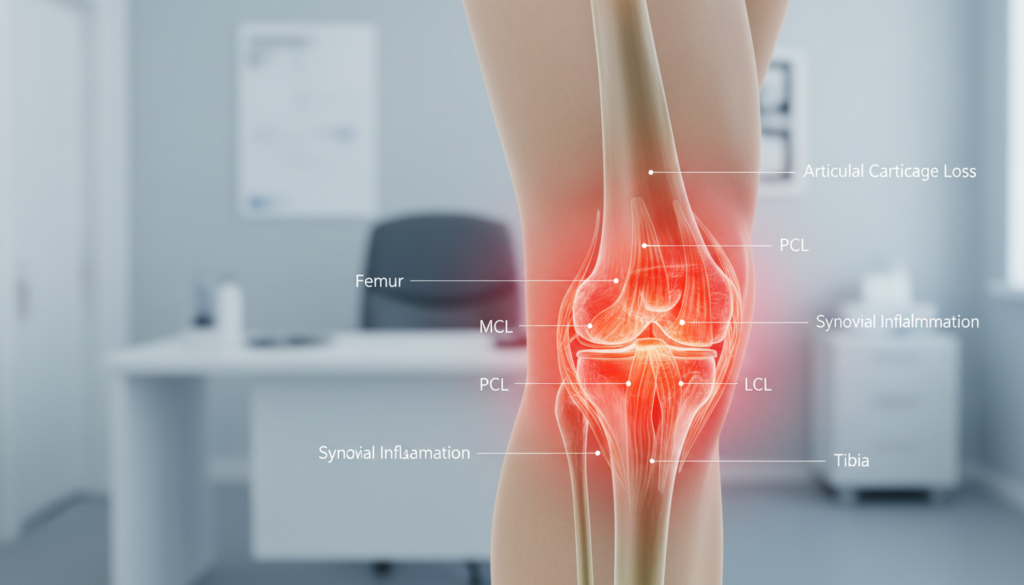
Discomfort on the inner side often stems from two broad categories: acute injuries and chronic conditions. Sudden twists or impacts can damage structures like the MCL or meniscus. However, many issues develop slowly over time.
Injury-Related Triggers
Traumatic events, such as a direct blow to the outer side of the joint or an awkward landing, can strain the medial collateral ligament or tear the meniscus. These are common in sports and accidents.
Degenerative and Inflammatory Conditions
Progressive wear or systemic inflammation are major contributors. Osteoarthritis is a degenerative disease that breaks down cartilage. This common condition wears down joint surfaces, causing bones to grind together.
Rheumatoid arthritis triggers joint inflammation. People with this condition often report severe morning stiffness that eases later.
Bursae are small fluid-filled sacs that cushion tendons. They sit between the MCL and the pes anserinus tendons. Overuse can irritate these sacs, leading to pes anserine bursitis, an inflammatory issue.
This inner knee tenderness can also stem from plica syndrome. This involves inflammation of a thick band of tissue inside the joint.
Identifying Common Symptoms and Warning Signs
Recognizing the specific signs your body sends is crucial for addressing inner leg issues effectively. Different problems often share similar warning signals. Learning to distinguish them guides your next steps.
We will outline the key indicators to watch for. This knowledge helps you communicate clearly with a healthcare provider.
Pain Characteristics and Swelling
Localized tenderness on the inner side is a primary clue. The nature of the discomfort often points to its source. A sharp, sudden pain may signal an acute injury.
Dull, aching soreness that builds over time suggests wear and tear. Significant swelling frequently accompanies trauma. A direct impact can bruise the bone, causing rapid inflammation.
A tear in the medial meniscus typically causes inner knee pain and stiffness. An MCL sprain leads to tenderness along the joint’s inner edge. Comparing common conditions clarifies their distinct profiles.
| Condition | Primary Symptom | Typical Swelling |
|---|---|---|
| MCL Injury | Inner knee tenderness, instability | Moderate, along ligament |
| Meniscus Tear | Pain with twisting, locking sensation | Variable, often mild |
| Bone Bruise | Deep, localized ache from impact | Significant and rapid |
Instability and Locking Sensations
Feeling like your knee might give way is a serious warning sign. This instability often occurs while standing or walking. It strongly suggests ligament damage or a meniscus issue.
The joint may also catch or lock in place. You might hear a pop or crack during movement. These auditory cues are common symptoms.
Notice if your symptoms improve after morning stiffness. This pattern can indicate inflammation rather than a degenerative tear. Tracking these details is vital for an accurate diagnosis.
At-Home Diagnostic Steps for Inner Knee Pain
Simple at-home assessments help determine the urgency of seeking medical attention for inner leg issues. These preliminary checks provide valuable information before your appointment.
Self-Evaluation Techniques
Start by noting when your discomfort began. Pay attention to its exact location on the inner side of your leg. Check for visible swelling, redness, or warmth in the area.
Doctors typically ask similar questions about health history and symptom onset. Gently press around the joint to identify specific tender spots. This process mirrors a professional evaluation.
Recognizing When to Seek Professional Help
Consult a specialist if mild discomfort persists beyond three days. Significant swelling or sharp sensations warrant prompt attention. Noticeable redness and warmth are additional red flags.
Orthopedic experts perform physical assessments and may order imaging tests. Ultrasounds, X-rays, or MRI scans examine the inner knee structure thoroughly. For suspected autoimmune issues, blood tests check for specific antibodies.
For ongoing management, consider medial knee pain exercises as part of a comprehensive approach. We recommend speaking with our specialists when symptoms persist.
How to Manage Medial Knee Pain at Home
Before considering advanced interventions, several foundational home-care techniques can significantly ease symptoms and support healing. A structured initial response is crucial for reducing recovery time.
Rest, Ice, Compression, and Elevation Methods
The RICE protocol remains a cornerstone of acute treatment. If an activity like running triggered the issue, avoid it until the joint heals. This rest period prevents further strain.
Apply ice to the tender area three to four times daily. Keep each session to twenty minutes. This routine reduces inflammation and swelling effectively.
We suggest wrapping the inner knee with an elastic bandage. This provides gentle compression and support. It also helps manage fluid buildup.
Elevate the leg when resting. Use pillows to raise it to heart level or higher. This position discourages swelling and can ease pain.
For additional relief, a doctor may recommend an over-the-counter anti-inflammatory. Medications like ibuprofen can help. Always follow professional guidance for any medication.
Exploring Professional Treatment Options
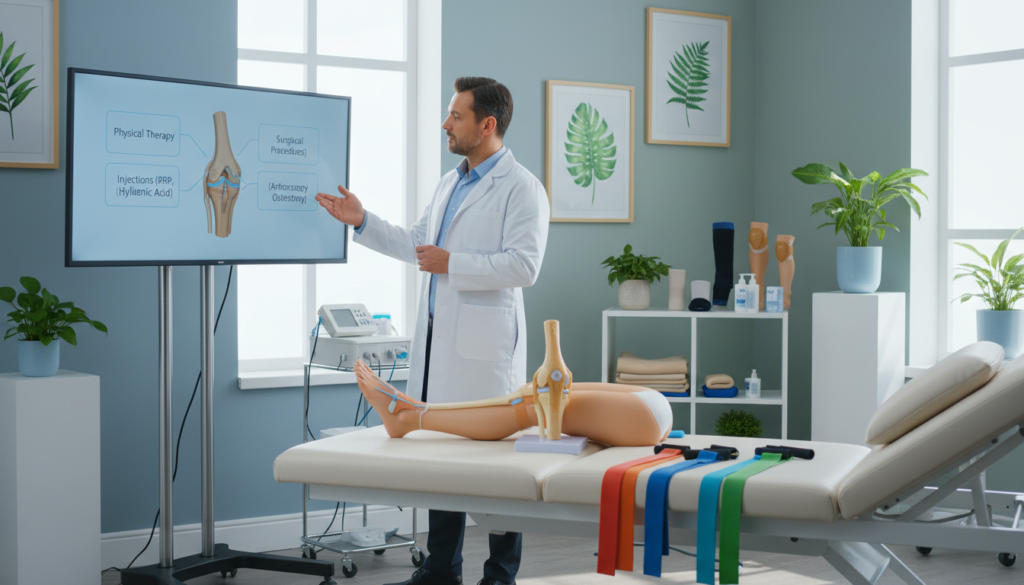
Our team at SPORT Orthopedics + Physical Therapy specializes in creating personalized recovery strategies. When home care isn’t enough, structured professional interventions can provide lasting relief.
We evaluate your injury and symptoms to build a custom plan. This often combines several approaches for the best outcome.
Physical Therapy and Rehabilitation Approaches
Targeted physical therapy is a cornerstone of non-surgical care. A therapist designs exercises to strengthen muscles around the joint.
This improves stability and reduces strain on vulnerable structures. It’s a vital first-line treatment for many conditions.
Surgical and Injection-Based Treatments
For persistent inner knee discomfort, other options exist. Gel injections can lubricate the joint, easing movement for months.
This offers an alternative to more invasive procedures. Surgical treatments like arthroscopy address specific tears or damage.
For severe arthritis, partial or total joint replacement may be considered. These are typically recommended after other treatments have been tried.
| Treatment Type | Primary Use | Key Feature |
|---|---|---|
| Physical Therapy | Strengthening, mobility recovery | Non-invasive, foundational |
| Gel Injections | Osteoarthritis discomfort | Minimally invasive, temporary relief |
| Arthroscopic Surgery | Meniscus repair, debris removal | Minimal scarring, quick recovery |
| Joint Replacement | Severe joint degeneration | Long-term solution for advanced cases |
We often combine therapies for complex issues like a medial collateral ligament injury. To discuss your inside knee pain with our Dallas specialists, call 469-200-2832 today.
Exercises and Stretches for Knee Pain Relief
Targeted movement routines offer a powerful way to regain comfort and function in your legs. Consistent, gentle activity supports joint health and can alleviate discomfort.
We focus on two key areas: building strength and improving flexibility. A balanced approach addresses the root of many issues.
Strengthening Routines for the Quadriceps and Hamstrings
Strong leg muscles stabilize the joint and absorb shock. This reduces direct strain on vulnerable structures.
Half squats are excellent for strengthening the front of the legs. They build quadriceps power without excess strain. This is beneficial even for a sensitive meniscus.
Using a stationary bike also helps. It strengthens the knee and improves range of motion. Remember to keep a slight bend in the knee during pedaling.
Flexibility and Corrective Stretching Techniques
Stretching the quadriceps reduces pressure on the joint. For a quad stretch, stand near a sturdy chair for balance.
Hold the stretch for 10 seconds per leg. Always begin and end any exercise session with gentle stretching. This is crucial when recovering from sports injuries.
These practices help manage inner knee and inside knee pain. They promote healing and prevent future tear risks.
| Exercise | Primary Benefit | Key Consideration |
|---|---|---|
| Quad Stretch | Improves flexibility, reduces joint pressure | Hold for 10 seconds, use support for balance |
| Half Squats | Strengthens quadriceps safely | Keep back straight, avoid deep bends |
| Stationary Bike | Builds strength and range of motion | Maintain a slight knee bend, low resistance |
| General Strength Training | Stabilizes the entire leg | Focus on quadriceps and hamstrings equally |
Preventive Measures to Avoid Future Knee Injuries
Smart preparation before activity is your best defense against common athletic injuries. Once you have experienced a joint issue, the risk of it happening again increases. We focus on building habits that stop problems before they start.
Proper Warm-Up and Cool-Down Practices
A consistent routine prepares your muscles and joints for stress. Dynamic stretches before exercise increase blood flow. This reduces the chance of an acute ligament injury.
Cooling down afterward is just as crucial. Gentle movement helps remove metabolic waste. It also lowers the risk of an overuse injury from repetitive strain.
Sports like soccer or basketball place great demand on the inner side of the leg. Proper preparation is non-negotiable. Without it, the inside knee and surrounding tissue bear excessive force.
We emphasize that muscle strength and flexibility are your armor. Inadequate support makes the joint vulnerable. A dedicated warm-up and cool-down shield you from many injuries.
Lifestyle Adjustments to Support Knee Health
Managing your weight and choosing the right activities are pivotal for protecting your legs. Sustainable comfort relies on daily habits that reduce strain on your joints.
Weight Management and Low-Impact Activities
Excess body weight places significant stress on the joints. Everyday tasks like walking or climbing stairs become challenging for the knees.
Carrying too much weight makes it harder for people to maintain long-term joint health. We recommend low-impact exercises to strengthen the leg muscles safely.
Swimming and using an elliptical machine are excellent choices. These activities build strength without putting excess pressure on the knee.
Weight management is a critical adjustment. It reduces the load on the joint, which can decrease chronic inner knee pain.
Walking is another good exercise for strengthening muscles. An elliptical or stationary bike also works well, provided you avoid heavy lifting.
By making these changes, you support overall health. This reduces the risk of developing pain on the side of the knee.
These strategies help manage inside knee discomfort. They promote lasting stability and comfort for your entire leg.
Conclusion
Your path to lasting joint health hinges on informed action and consistent care. We have reviewed the diverse triggers for inner knee discomfort, from wear-and-tear conditions to sudden sports injuries.
Knowing how structures like cartilage and ligaments work is crucial. This knowledge helps pinpoint the root of trouble effectively.
Timely professional treatments and dedicated home care are both vital. They support healing from specific problems like a meniscus tear or bursitis.
Always pay attention to what your body tells you. Seek expert guidance if swelling or soreness lingers after a traumatic injury.
Adopting the right exercises and daily habits shields your joint. This proactive approach reduces future risk and promotes lasting comfort for your entire leg.