
What if that sharp, sudden pain in your knee is a warning sign you shouldn’t ignore? This question strikes many people the moment their joint gives way or swells after a twist or impact.
Ligament sprains, like those affecting the medial collateral ligament (MCL), are incredibly common. Clinical data shows they account for a staggering 40% of all knee injuries.
This type of injury often brings sharp pain and a feeling of instability. It makes simple tasks, like moving around, a major concern. Understanding the mechanics of your MCL is vital for a safe recovery journey.
While a ligament tear can be debilitating, proper guidance helps determine safe movement limits. Our exploration sheds light on how this common issue affects daily life and why professional advice is often the best path forward.
Whether you’re an athlete or navigating daily routines, knowing your knee’s boundaries is the first step toward healing.
Key Takeaways
- The medial collateral ligament (MCL) is a common site for knee injuries.
- Ligament sprains make up 40% of all knee injuries.
- Sharp pain and joint instability are primary symptoms of an MCL tear.
- Professional medical guidance is crucial for an accurate diagnosis and recovery plan.
- Understanding the injury’s mechanics is the first step toward safe healing.
- Movement should be approached with caution following this type of ligament injury.
- Recovery timelines and protocols vary based on the severity of the sprain.
Understanding the Medial Collateral Ligament (MCL)
Knee stability relies heavily on a strong, fibrous band connecting the thigh bone to the shin bone. This structure is the medial collateral ligament (MCL). It runs along the inside knee, serving as a primary guard against unwanted motion.
Knowing its role and common failure points helps us grasp why certain activities lead to trouble.
Role of the MCL in Knee Stability
The collateral ligament is a key stabilizer. Its main job is to prevent the knee from bending inward excessively. This function is called resisting valgus stress.
Every time we pivot, cut, or take a lateral hit, the MCL engages. It keeps the joint aligned under pressure. Without it, our knee stability during sports or daily tasks would be compromised.
Common Causes of MCL Sprains
Most MCL injuries happen from a direct blow to the outer knee. This force pushes the joint inward, overstretching or tearing the ligament on the opposite side.
Contact sports like football and soccer see high rates of these knee injuries. Non-contact mechanisms include awkward landings or sudden twists. These actions place immense strain on this vital part of the knee’s support system.
| Aspect | Description | Implication |
|---|---|---|
| Anatomical Location | Inside of the knee, connecting femur to tibia | Directly stabilizes the inner joint line |
| Primary Function | Resists inward bending (valgus) forces | Critical for cutting, pivoting, and lateral movements |
| Common Injury Mechanism | Direct impact to the outer knee or forceful twist | Frequent in contact sports like football and soccer |
| Resulting Symptom | Pain, swelling, and a feeling of joint instability | Can disrupt normal walking and athletic performance |
Grading MCL Injuries: What Does Severity Mean?
Not all MCL injuries are the same; they are categorized by severity. Medical professionals use a three-tier system for these common knee injuries. This classification directly informs the treatment path and recovery expectations.
Grade 1: Mild Sprain and Walking Possibility
A Grade 1 tear is the mildest form. It involves less than 10% of the ligament fibers. Patients often experience only mild pain and tenderness on the inner knee.
This type of injury typically allows for walking with minimal discomfort. The knee joint remains stable, supporting normal daily movement.
Grade 2 versus Grade 3: Partial and Complete Tears
A Grade 2 mcl tear is a partial rupture of the ligament. It causes more significant pain and swelling. The knee may feel unstable during certain activities.
In contrast, a Grade 3 injury is a complete rupture of the MCL. This complete rupture results in substantial knee instability. Weight-bearing becomes difficult and often requires support.
Identifying the level is essential for understanding severity. A partial tear needs different care than a complete rupture. These three grades help explain why some injuries limit movement more than others.
Can I walk with an MCL sprain?
Determining your ability to bear weight after a ligament injury hinges on the specific grade of damage sustained. The three grades of MCL injuries directly dictate your mobility.
For a mild Grade 1 tear, walking is usually possible. You might feel tenderness on the inner knee, but joint stability remains intact.
A Grade 2 mcl tear presents more challenge. This partial rupture often causes instability. As Kim Anderson, PT, DPT, at Hinge Health, explains:
“Walking with a Grade 2 tear is often difficult due to instability.”
A complete rupture, or Grade 3 injury, severely limits movement. The ligament is fully torn, making the knee feel very loose. Walking without assistance is typically impossible.
We stress that even if movement seems possible, consulting a professional is vital. Proper assessment prevents worsening the injury. A structured guided rehabilitation program is key for healing any grade mcl tear, often avoiding the need for surgery.
Immediate Care After an MCL Injury
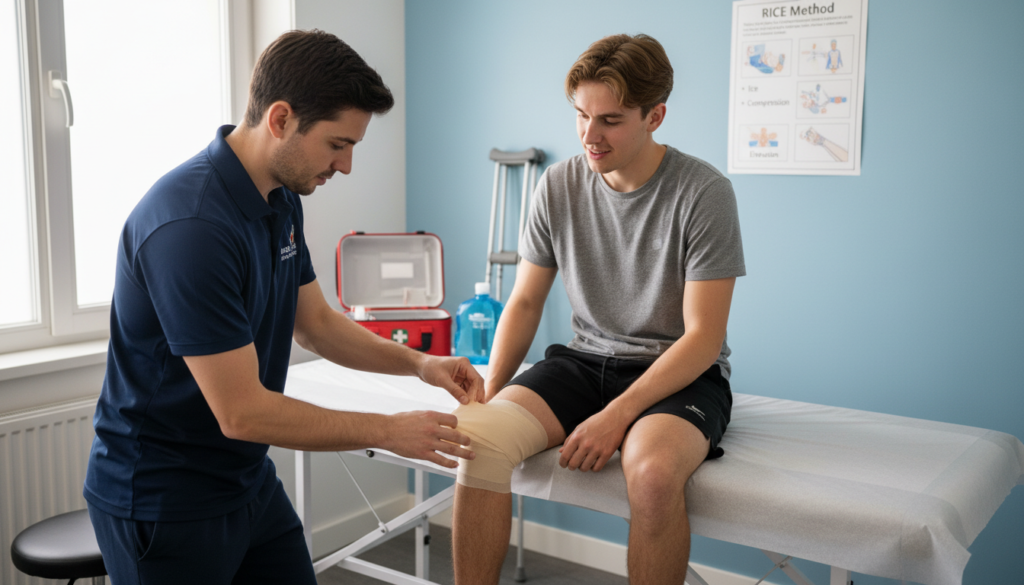
Proper initial response can significantly influence your recovery timeline after a knee injury. Swift action focuses on controlling swelling and managing discomfort.
This early phase sets the foundation for all subsequent healing. We outline the essential first steps for any ligament issue.
RICE: Rest, Ice, Compression, Elevation Explained
The RICE method is a cornerstone of acute care for soft tissue injuries. It provides a clear, actionable plan during the critical first 48 hours.
Rest is non-negotiable. It prevents further stress on the damaged knee and allows the torn ligament fibers to begin healing. Avoid weight-bearing activities during this initial recovery time.
Applying ice is vital for pain control. Use a cold pack for 15-20 minutes every few hours. This simple step constricts blood vessels and reduces local swelling effectively.
Compression with an elastic bandage offers gentle support. It helps stabilize the joint and minimizes fluid accumulation. Ensure it’s snug but not tight enough to cut off circulation.
Elevation assists drainage. Prop the injured leg above heart level whenever possible. This position uses gravity to pull fluid away from the knee.
While RICE is an excellent start, it’s only the beginning. This protocol prepares the joint for the next phase of treatment, which often includes guided physical therapy.
The Importance of Physical Therapy in MCL Recovery
Guided physical therapy transforms recovery from a painful setback into a proactive journey. It is the most effective method for restoring strength and mobility after ligament damage.
A dedicated physical therapist designs a custom program. This approach protects the healing MCL while safely regaining range of motion.
Benefits of a Guided Rehabilitation Program
Our team observes significant results with structured care. Hinge Health members report an average 68% reduction in pain within 12 weeks of treatment.
A guided recovery plan prevents rushing back too soon. This careful pacing avoids chronic joint instability.
Following a structured therapy schedule leads to a stronger, more resilient knee. It ensures a safe return to daily routines.
| Factor | Guided Rehabilitation | Self-Managed Recovery |
|---|---|---|
| Pain Management | Targeted techniques reduce discomfort systematically. | Often relies on rest alone, leading to prolonged pain. |
| Progression Timeline | Phased approach based on healing milestones. | Risk of overloading the ligament too early. |
| Long-Term Stability | Focus on strengthening supporting muscles. | Higher chance of re-injury and chronic weakness. |
| Professional Oversight | Continuous adjustment by a physical therapist. | Lacks expert feedback and corrective guidance. |
For a severe tear, this professional guidance is non-negotiable. It forms the core of any successful comprehensive recovery plan.
Investing time in proper physical therapy after an MCL injury pays lasting dividends. It rebuilds confidence in your joint’s capabilities.
Effective Home Exercises to Support Knee Recovery

A consistent home exercise routine bridges the gap between professional therapy sessions and full functional recovery. This daily practice is a vital part of your overall physical therapy plan.
It strengthens the muscles surrounding the joint, providing essential support for the healing ligament.
Examples of Rehabilitation Exercises
Two foundational movements are often recommended. Quad sets help activate the thigh muscles, which frequently weaken after a ligament tear.
Simply tighten the muscles on the front of your thigh while your leg is straight. Hold for a few seconds, then relax.
Heel slides are another gentle exercise. They improve your range of motion, allowing you to bend the knee more comfortably over time.
Slide your heel back toward your body while lying down, then slowly return it. Your physical therapist may also add balance drills to boost stability.
Tips for Safe and Consistent Workouts
Always prioritize safety by listening to your body. Discomfort is normal, but sharp pain is a signal to stop.
Ensure your recovery schedule includes adequate rest between sessions. This prevents overloading the healing MCL.
Consistency matters more than intensity. Short, regular workouts build strength steadily and help prevent future knee injuries.
Follow the guidance from your healthcare team closely. They tailor the plan to your specific injury and progress.
Using Knee Braces and Supports for Stability
A well-fitted brace can be the difference between prolonged discomfort and confident movement during recovery. External support addresses the immediate instability caused by a ligament tear.
Bracing is often recommended for Grade 2 and Grade 3 injuries to provide essential external support. This approach protects the healing MCL from harmful stress.
Wearing a brace provides necessary stability for an MCL tear, especially early on. A hinged brace is frequently suggested for more severe damage.
This specific design prevents the knee from bending inward improperly. It allows the injury to heal in a protected alignment.
While braces are helpful, they are part of a broader treatment plan. They are not a permanent solution for knee stability.
We advise discussing the specific type of support with a healthcare provider. A proper fit is crucial for your unique MCL profile and comfort.
Over time, as strength improves, your physical therapist will guide a transition away from the brace. The goal is to rely on your own muscles for lasting recovery and support.
When to Consult a Healthcare Provider
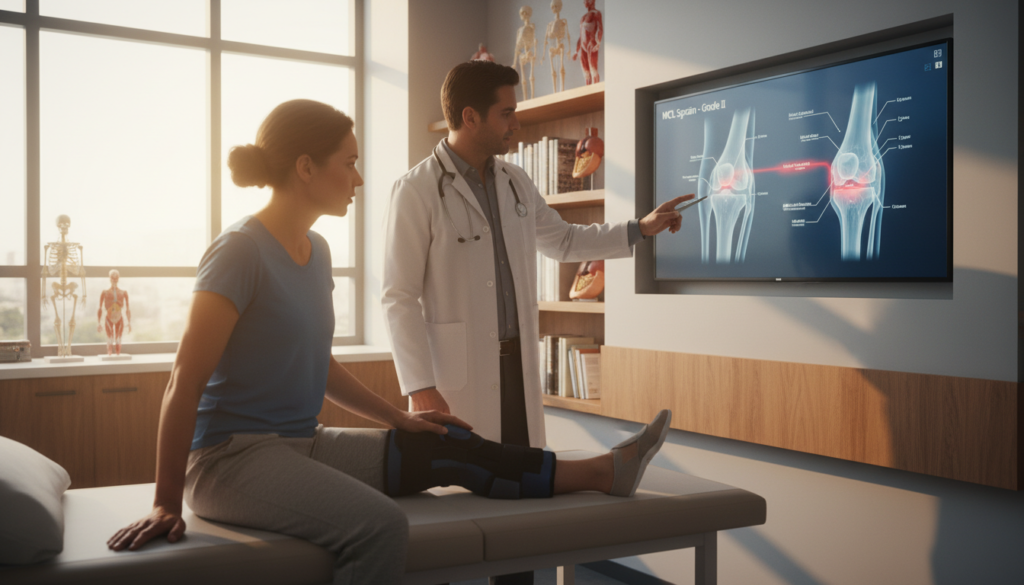
While home care is important, certain symptoms clearly signal the need for expert evaluation. Knowing these signs helps you avoid long-term complications.
Indicators of a More Serious Injury
Persistent pain or a knee that feels like it will buckle during daily activities are major red flags. These signs suggest the ligament damage may be significant.
A professional assessment is crucial to rule out combined injuries. An ACL tear often occurs alongside an MCL injury, requiring more complex management.
If you are unsure about the severity, a physical therapist can perform a clinical exam. They determine the correct grade of your torn MCL from the three grades.
Facilities like The Jackson Clinics, serving 18 locations in Northern Virginia, offer this expert care. Their team creates a personalized recovery plan.
Early intervention by a qualified healthcare provider ensures you get the right treatment. This step prevents the issue from worsening over time.
Resuming Daily Activities and Sports Safely
Re-engaging with physical pursuits after a ligament injury requires a blueprint for gradual progression. The goal is to rebuild confidence in your joint without risking a setback.
This phase is a vital part of the overall recovery journey. Rushing back can compromise the healing ligament.
Strategies for a Gradual Return to Movement
Your physical therapy team designs a custom plan. It includes functional exercises that mimic the specific demands of your sport or job.
These movements prepare the knee for real-world stress in a controlled setting. This methodical approach helps prevent re-injury.
Monitoring your pain levels is non-negotiable. A slight ache may be normal, but sharp discomfort signals you to pull back.
Increasing the intensity of activities should happen slowly over time. Your healthcare provider sets clear milestones, especially after surgery or a high-grade tear.
Following this structured treatment plan allows for a safe transition. It ensures the long-term health of your MCL and the entire joint.
Consistent care and professional guidance are the keys to lasting stability. They help you return to the activities you love with greater resilience.
Prevention and Long-Term Knee Health
Building a resilient knee for the future starts with proactive habits today. This focus on prevention is the most effective way to safeguard your joint from recurring issues.
Our approach centers on strengthening the body’s natural support system. A consistent routine targeting key muscle groups is fundamental for lasting health.
Strength Training and Prevention Strategies
Maintaining long-term knee stability requires dedicated strength training. The quadriceps and hamstrings are primary muscles that absorb impact during activities.
Strengthening these areas reduces stress placed on your MCL. This is a crucial strategy for preventing future injuries.
Proper warm-ups before exercise prepare your muscles for movement demands. This simple step is a key part of any intelligent treatment plan focused on prevention.
If you have a history of mcl injuries or a prior torn mcl, your physical therapist might suggest wearing knee brace during sports. This extra support can prevent recurrence.
Investing time in your physical therapy and overall recovery now is the best defense. It helps protect your ligament and can often avoid the need for future surgery.
Consult your healthcare provider to develop a personalized plan. This proactive care ensures your knee remains strong for all life’s activities.
Advanced Recovery Strategies and Medical Options
Exploring advanced recovery strategies opens doors to specialized medical options for complex ligament injuries. Most MCL issues heal without surgery, but some cases require more focused treatment.
While conservative care works for many, a high-grade mcl tear might need advanced strategies. Your healthcare provider could discuss specialized bracing or, rarely, an operation.
A multidisciplinary team approach ensures access to current medical options for your specific injury type. This collaborative care model is vital for complex knee problems.
We encourage patients to stay informed about their recovery progress. Open communication with your provider about any concerns is essential.
Even with advanced medical interventions, the foundation remains consistent physical therapy and dedicated rest. This combination supports long-term joint health and a return to activities.
Conclusion
Recovering from damage to the medial collateral ligament demands a dedicated approach focused on long-term joint health. This vital band of tissue on the inside knee requires time and care to mend fully.
Healing from this injury is a patient journey. The vast majority achieve full recovery without needing surgery. Understanding the ligament‘s role helps you appreciate each step.
Working with a professional physical therapy team is crucial. They guide you through a treatment plan to restore knee health and function. Following their advice ensures a safe return to activities.
Remember, the medial collateral ligament needs time to heal. Listen to your healthcare provider and adhere to your personalized strategy. For detailed timelines, explore our guide on MCL sprain recovery time.
We hope this information provides a clear path toward lasting knee health and confident movement.