
What if the knee injury you fear most isn’t actually the most severe? Many active people and athletes share this concern when they feel a pop or twist in their joint.
Ligament damage in the knee is common. Two frequent culprits are the anterior cruciate and medial collateral ligaments. Understanding which one is affected changes everything about recovery.
Dr. Christopher Cook, a board-certified orthopedic surgeon at Advanced Ortho and Spine, treats these complex injuries. His practice in Mt. Juliet and Hermitage helps active patients return to their lives.
We created this guide to clear up the confusion. Our goal is to compare these two ligament problems. We look at healing time, treatment options, and long-term joint health.
You will learn the critical differences between an ACL tear and an MCL sprain. This knowledge is your first step toward a smart recovery plan.
Key Takeaways
- The anterior cruciate ligament (ACL) and medial collateral ligament (MCL) are both vital for knee stability.
- Each type of ligament injury has a distinct healing timeline and treatment protocol.
- Professional diagnosis is essential to determine the exact structure damaged in your knee.
- Understanding your specific injury empowers you to follow the correct recovery path.
- Long-term joint health depends on proper initial care and rehabilitation.
- Advanced Ortho and Spine provides expert care for these sports-related injuries near Nashville.
- Not all knee ligament damage means the end of an athletic season or activity.
Introduction
For athletes across the nation, a sudden knee twist can mean the end of a promising season. Damage to the anterior cruciate and medial collateral ligaments are among the most feared diagnoses in sports medicine.
These knee injuries are incredibly common in the United States. They frequently occur in high-impact sports like football, soccer, and basketball.
We often meet patients who are confused by complex medical terms. Our goal here is to simplify the nature of these common joint problems.
Proper diagnosis is the critical first step. An undiagnosed or poorly managed ligament issue can lead to long-term instability and chronic pain. It also raises the risk of early-onset arthritis.
This guide provides a clear overview. We will explore the anatomy of these vital structures, how damage happens, and the specific treatment protocols required for each.
Understanding Knee Ligament Anatomy
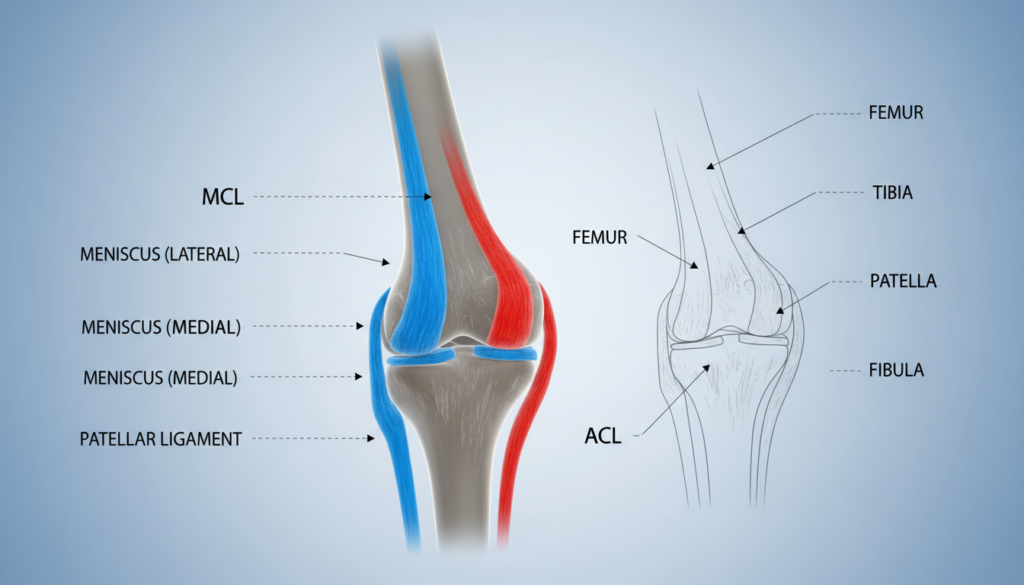
Two primary ligament groups, the cruciate ligament and collateral ligament families, form the cornerstone of joint stability. Knowing their specific roles is key to understanding injury impact.
These structures work together to control motion. They prevent the femur and tibia from moving in unsafe directions during activity.
ACL Structure and Role
The anterior cruciate ligament is a robust, rope-like structure. It measures roughly 38mm long and 10mm wide.
This cruciate ligament connects the femur to the tibia deep inside the joint. Its primary job is to stop the tibia from sliding forward.
It also provides vital rotational stability. This function is crucial for cutting and pivoting in sports.
MCL Structure and Role
The medial collateral ligament is a broad, flat band on the inner side of the knee. It extends 8-10cm in length.
This collateral ligament links the medial femoral condyle to the medial tibial condyle. It acts as a primary restraint against inward bending forces, known as valgus stress.
Together with the anterior cruciate and other ligaments, the medial collateral ligament ensures balanced stability for daily movement.
Injury Mechanisms: How ACL and MCL Tears Occur
A sudden pivot or a direct collision—each event stresses different knee structures. The way damage happens provides vital clues for your doctor.
Knowing the mechanism helps with accurate diagnosis. It also guides effective prevention strategies for athletes.
Non-Contact vs. Contact Injuries
ACL tears often happen without any contact. An athlete plants a foot and rapidly changes direction.
This is common in soccer or basketball. The ligament fails under extreme rotational force.
In contrast, contact injuries frequently cause an MCL problem. A direct blow to the outer knee forces the joint inward.
High-impact sports like football see this often. A severe collision can even cause the “terrible triad,” damaging multiple structures at once.
Biomechanical Forces Behind the Tears
These tears occur when force exceeds a ligament’s strength. The tissue stretches and then fails.
This event is often marked by an audible pop. Immediate swelling usually follows, a key symptom to note.
Understanding these acl mcl injury forces is crucial. Athletes can train to improve landing mechanics.
Proper technique protects the knee from these damaging biomechanical events.
Diagnosis and Grading of Knee Injuries
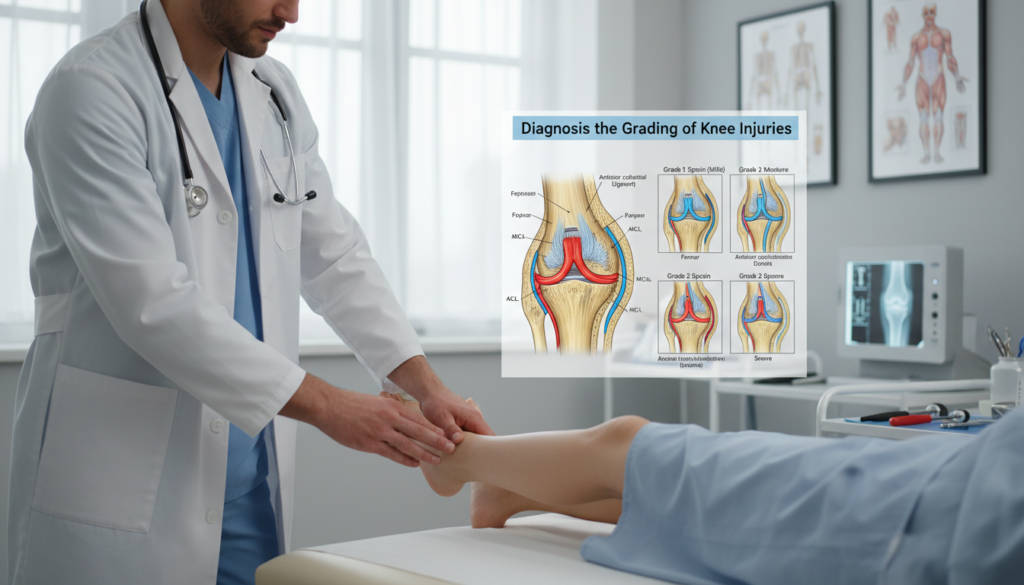
Understanding the severity of a ligament injury begins with a standardized grading system. This process is essential for crafting the right treatment plan.
Grading Scale for Ligament Injuries
Orthopedic specialists classify damage on a scale from one to three. Each grade reflects the extent of tissue disruption.
- Grade 1: The ligament is stretched but not torn. Microscopic fiber damage may occur.
- Grade 2: A partial rupture creates noticeable joint looseness during examination.
- Grade 3: This indicates a complete rupture. The ligament is fully torn.
A grade three injury often requires surgical intervention for joint stability. Accurate grading directly informs whether a conservative or surgical approach is best.
Recognizing Symptoms and Immediate Indicators
Patients often report immediate swelling and a popping sensation. These are classic signs of a serious knee injury during physical activity.
Pain and swelling are common in both anterior cruciate and medial collateral ligament tears. Early recognition allows for better management of these symptoms.
We emphasize seeing a surgeon for an accurate diagnosis. This step is necessary to determine the exact structure damaged and the appropriate recovery path.
Is MCL sprain worse than ACL tear?
Our clinical experience shows that the answer to this question is rarely straightforward. Severity depends on multiple patient-specific and injury-specific factors.
Key Considerations in Comparative Severity
One major factor is the body’s natural healing capacity. The acl mcl comparison often highlights this. The medial collateral ligament has a robust blood supply, aiding healing.
Most acl tears lack this advantage. This leads to a higher likelihood of surgical intervention for active individuals.
Initial pain and instability can be significant in both types of injury. However, the long-term path diverges sharply.
“The true measure of an injury’s severity isn’t just the initial damage, but the pathway to full functional restoration.”
The table below outlines critical differences that guide our clinical decisions.
| Factor | ACL Tear | MCL Tear |
|---|---|---|
| Healing Capacity | Limited; poor blood flow | Good; excellent vascular supply |
| Typical Treatment | Often requires reconstruction | Conservative treatment often succeeds |
| Average Recovery Time | 9-12 months for sports | 3-8 weeks for lower grades |
| Common for Surgery? | Frequent for active patients | Rare, except for grade III |
Ultimately, the need for surgery and the length of recovery are pivotal. A patient’s activity level and the grade of the damage are the final arbiters.
Comparing Treatment Options for ACL and MCL Injuries
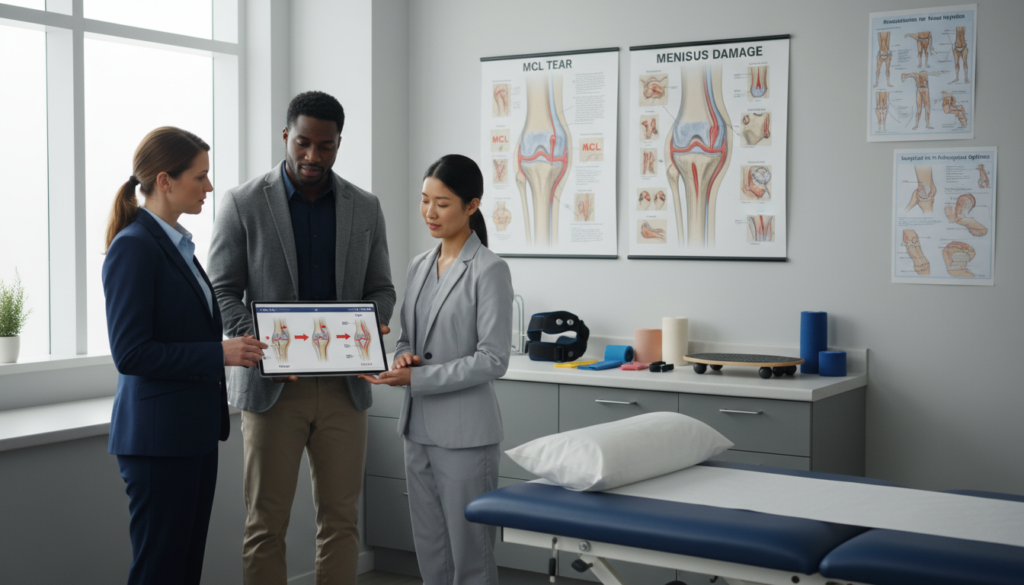
Choosing the right path for knee ligament recovery hinges on understanding two distinct treatment philosophies.
Our approach is never one-size-fits-all. The optimal plan depends on the specific structure damaged, the injury grade, and the patient’s activity goals.
Conservative Versus Surgical Approaches
For many ligament tears, non-operative management is the first line of defense. This is especially true for medial collateral ligament issues.
Conservative treatments, like functional bracing and targeted physical therapy, form the gold standard for most grade one and two cases. Research supports these conservative management protocols for effective healing.
Surgical reconstruction enters the picture for different reasons. It is frequently recommended for active individuals with complete anterior cruciate ligament tears.
The goal is to restore essential rotational stability and prevent secondary damage to the meniscus. This intervention addresses the chronic instability that can hinder daily life.
Dr. Daniel Hagaman, a fellowship-trained surgeon at Advanced Ortho and Spine, specializes in advanced knee arthroscopy and ligament repair.
He utilizes precise techniques to reconstruct damaged structures. We tailor every treatment plan, ensuring both acl and mcl injuries receive appropriate care.
While some patients heal fully without an operation, surgery remains a necessary step for others to regain confident mobility.
Recovery Timelines for ACL vs. MCL Tears
The road to full function after a knee injury varies dramatically depending on which ligament is affected. Setting realistic expectations is a key part of our treatment plan.
We provide patients with a clear map of their healing journey. This helps with motivation and adherence to the rehabilitation program.
Short-Term Recovery Expectations
The initial weeks focus on controlling inflammation and protecting the joint. Managing swelling and restoring a full range of motion are our primary goals.
For a medial collateral ligament issue, this phase is often shorter. Many patients see significant improvement within the first few weeks.
Long-Term Rehabilitation Milestones
The later stages target strength and functional stability. We work to rebuild the quadriceps and hamstring muscles to their pre-injury levels.
This process takes months of dedicated effort. Final clearance for sports comes only after passing sport-specific agility tests.
We monitor progress closely throughout these months. This prevents a premature return that could cause re-injury.
| Recovery Phase | ACL Reconstruction | MCL Tear (Grade I-II) |
|---|---|---|
| Initial Healing Focus | Reduce swelling, regain motion (0-6 weeks) | Bracing, pain control (1-3 weeks) |
| Strength Building | Months 3-6: Progressive loading | Weeks 4-8: Gradual return to activity |
| Full Sport Clearance | Typically 9-12 months | Often 1-3 months |
This structured approach ensures each recovery is safe and effective. Your specific timeline depends on the injury grade and your personal goals.
Rehabilitation Protocols and Strategies
A structured rehabilitation plan is the bridge between injury and a full return to activity. We design these protocols to restore function and prevent future problems.
Physical Therapy Techniques
Physical therapy is the cornerstone of recovery for both types of ligament damage. Our sessions focus on muscle activation and neuromuscular control.
We implement techniques that emphasize eccentric strengthening and balance training. These prepare the knee for the demands of sports.
These methods rebuild the dynamic stability needed for cutting and jumping. Patients recovering from a medial collateral issue will focus on lateral stability exercises.
Those with an anterior cruciate problem must prioritize rotational control.
Return-to-Activity Strategies
Our return-to-play strategies involve objective testing. We use hop tests and strength assessments to ensure readiness.
We follow a phased approach, gradually increasing intensity to match sport-specific demands. Consistent attendance at therapy sessions is vital for success.
It helps patients regain confidence in their knee after a significant ligament tear.
Risks and Long-Term Implications of Knee Injuries
The full impact of a significant knee injury extends far beyond the weeks or months of immediate recovery. We help patients understand these potential long-term consequences to protect their joint health for years to come.
Possibility of Arthritis Development
One major concern is post-traumatic arthritis. This risk increases, especially if the meniscus cartilage was also damaged during the initial ligament tear.
Chronic pain and stiffness can develop if the joint remains unstable. This is why we emphasize a complete rehabilitation program before returning to full activity.
Prevention of Re-Injury
Stopping future problems requires an ongoing commitment. Strength training and protective bracing during sports are key strategies.
We educate our patients on maintaining hip and core strength. This reduces the load placed on the knee during movement.
By addressing the root cause of the injury, we help minimize the risk of future tears.
| Long-Term Risk Factor | Associated with ACL Injuries | Associated with MCL Injuries |
|---|---|---|
| Arthritis Development | Higher risk, especially with meniscus damage | Lower risk if treated properly |
| Chronic Instability | Common without surgical reconstruction | Rare after conservative treatment |
| Prevention Focus | Neuromuscular & agility training | Medial support & bracing |
Understanding these risks for both acl tears and an mcl tear is crucial. A proactive plan safeguards your mobility.
Surgical Intervention—When and Why It’s Needed
When non-surgical methods cannot restore joint stability, surgical intervention becomes a necessary step. We only recommend an operation for a knee ligament injury when conservative treatments fail to provide the stability required for a patient’s desired activity level.
ACL Reconstruction Procedures
Surgical intervention for an ACL tear involves replacing the damaged ligament with a graft. This tissue is often harvested from the patient’s own hamstring or patellar tendon.
The goal is to restore essential rotational stability. This prevents secondary damage to the meniscus cartilage.
MCL Repair Options
While surgery is rarely needed for an MCL tear, a skilled surgeon may perform a repair. This is typically considered if the ligament has avulsed, or torn completely, from the bone.
This procedure reattaches the native tissue to restore medial support.
Our surgical team at Advanced Ortho and Spine uses minimally invasive techniques. Patients often experience less pain and faster recovery times.
Understanding these specific surgical options for both acl and mcl injuries helps patients make informed decisions about their orthopedic care and long-term knee health.
Immediate Self-Care and Early Management
Proper care in the immediate aftermath of a ligament injury can significantly influence the entire healing journey. Your actions in the first hours are a powerful first step toward recovery.
R.I.C.E. Method for Initial Treatment
The R.I.C.E. method is the cornerstone of early treatment. This acronym stands for Rest, Ice, Compression, and Elevation. Its primary goal is to manage swelling and pain immediately after a knee incident.
Rest means avoiding activities that cause pain. More critically, patients should avoid putting full weight on the affected joint. This prevents further damage to the delicate ligamentous structures.
Applying ice, using an elastic bandage for compression, and keeping the leg elevated work together. This combination fights inflammation effectively. A hinged brace can also provide crucial support while awaiting professional evaluation.
This early management is critical for both acl tears and an mcl tear. Reducing initial swelling helps the ligament begin its repair process. We advise seeking medical attention promptly for significant swelling or an inability to bear weight.
Expert Opinions on Knee Injury Management
The perspective of a seasoned orthopedic surgeon can dramatically shape a patient’s healing journey. We combine years of clinical experience with the latest research to guide each unique recovery plan.
Orthopaedic Surgeon Insights
Our team emphasizes a personalized approach. Every patient’s anatomy and athletic goals are unique, requiring care tailored to their specific needs.
For an anterior cruciate ligament rupture, pre-operative physical therapy can significantly improve surgical outcomes. Strengthening the muscles before an operation sets the stage for a smoother recovery.
Expert insights also highlight the benefit of immediate, protected motion for medial collateral ligament issues. This strategy prevents stiffness while allowing the damaged tissue to heal naturally.
Surgeons and therapy specialists collaborate closely. This partnership creates a seamless transition from the acute injury phase to full functional recovery.
By staying current with the latest evidence, we provide the most effective care for all types of acl and mcl injuries seen in our clinic.
Impact on Athletic Performance and Return-to-Play
The journey back to peak performance after a knee injury is a test of patience and discipline. Whether dealing with acl tears or an mcl tear, athletic output often drops temporarily.
This requires a careful adjustment of training intensity over several months of dedicated rehabilitation. Our team creates a personalized roadmap for every athlete.
Sport-Specific Limitations
Not all sports demand the same from the knee. A ligament issue like an acl tear can sideline an athlete from cutting or pivoting for many weeks.
We develop a gradual return-to-play plan. It ensures athletes are physically and mentally ready for their sport’s unique demands.
Rushing back to high-impact sports raises the risk of re-injury. We use strict objective criteria for clearance to prevent this.
Our goal is to help every patient regain their pre-injury performance level. We follow a safe, structured, and science-backed process.
| Sport Type | Primary Limitation | Key Consideration | Typical Timeline |
|---|---|---|---|
| Running/Jogging | Straight-line force | Impact tolerance & swelling | 3-6 weeks post-injury |
| Cutting/Pivoting Sports | Rotational stability | Confidence in change of direction | 2-4 months minimum |
| High-Impact Contact Sports | Medial/lateral stress | Bracing for protection | 4-6 months or more |
Understanding these acl mcl recovery differences is crucial. It sets realistic expectations for a successful comeback after such tears.
Conclusion
Navigating the aftermath of a knee ligament injury requires clear knowledge and a tailored plan. Understanding the differences between ACL and MCL tears is vital for managing your recovery journey and setting realistic expectations.
Both types of damage cause significant knee pain. However, the best treatment options vary greatly based on the specific ligament involved and the severity of the tear.
We encourage anyone with persistent knee injuries to seek professional evaluation. This explores the optimal path toward healing and stability.
Proper rehabilitation, including dedicated physical therapy, remains the most effective way to address a tear mcl or a more complex acl tears scenario.
Our team is committed to providing the highest quality care. We help you overcome these challenges and return to the sports you love.